/-/https/www.sciencebuddies.org/cdn/Files/21464/5/sb-logo.png)
/-/https/www.sciencebuddies.org/cdn/Files/21464/5/sb-logo.png)
Cleaner Coasts
The 25th Annual California Coastal Cleanup Day is this Saturday, September 19, 2009. Part of the California Coastal Commission's Adopt-a-Beach initiative, California Coastal Cleanup Day encourages volunteers of all ages to head to the beach to help protect the marine environment. Last year, more than 70,000 people joined together on Coastal Cleanup Day to gather more than 1,600,000 pounds of trash and recyclable materials strewn along beaches and waterways throughout California.
Group efforts like California Coastal Cleanup Day or International Coastal Cleanup Day (organized by the Ocean Conservancy and also on September 19 this year) underscore the importance of social responsibility and foster awareness of the fragile nature of marine habitats. When families and classes join together to take a stand in protecting our natural resources, student experience firsthand the value of volunteerism—and the realities of coastal trash. According to the California Coastal Commission, "over 800,000 Californians have removed more than 13 million pounds of debris" from the state's coast since the first cleanup day in 1985.
The following Science Buddies' science fair project ideas explore trash-related concepts, from biodegradability and composting to recycling and the use of trash as an energy source.
- The Big Dig
- From Trash to Gas: Biomass Energy
- Landfills
- "Carly M's Science Fair Project", a student journal as she worked on a recycling-based science fair project idea
Categories:
You Might Also Enjoy These Related Posts:
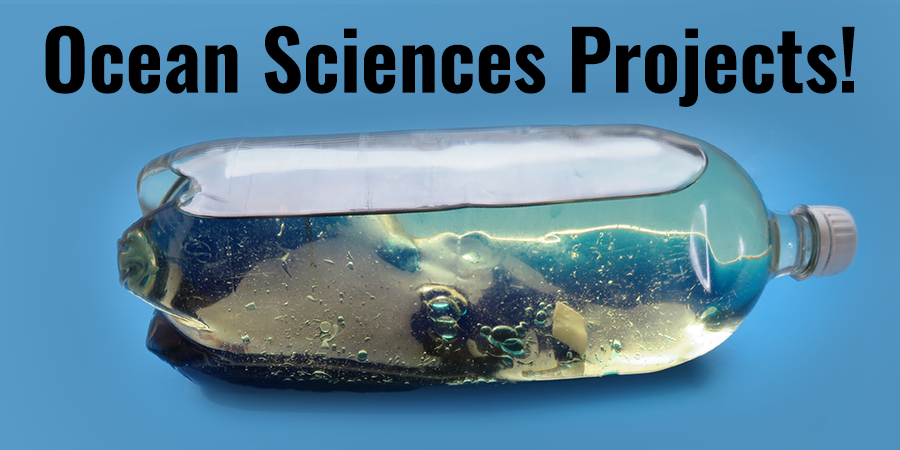
- Ocean Science Projects, Lessons, and Experiments
- Women in STEM! More than 60 Scientists and Engineers for Women's History Month
- Black History Month STEM - Learn More About These 40 Scientists for Black History Month!
- 10 Reasons to Do the Ball Run Engineering Challenge
- 40 New and Cutting-Edge Science and Engineering Projects in 2025
- 25+ Coding Projects for Beginners and Beyond - CSEdWeek Resources
- 2025 Nobel Science Connections and Projects for K-12 Students
- Chemical Reactions and Spice - STEM Projects for National Chemistry Week 2025
/-/https/img.youtube.com/vi/zroT8YEKpmI/0.jpg)
/-/https/img.youtube.com/vi/bH5WaKM3A8A/0.jpg)
/-/https/img.youtube.com/vi/D3gCs8A9dXI/0.jpg)