/-/https/www.sciencebuddies.org/cdn/Files/21464/5/sb-logo.png)
/-/https/www.sciencebuddies.org/cdn/Files/21464/5/sb-logo.png)
Scientist's Pick: The Physics of an Ollie
Note: A core team of scientists at Science Buddies work on an ongoing basis on the development of science fair project ideas that are grounded in real-world science and current events and are engaging. Working to excite a wide range of students, our scientists often work on projects that uncover and highlight the science that underwrites even everyday activities. Each month, we'll be asking one of our scientists "What's your favorite project idea from the ones you've recently authored and why?" With each monthly Scientist's Pick, we'll give you a behind-the-scenes look at what our scientists are thinking when they come up with the ideas they turn into project ideas for Science Buddies. We'll find out why they picked a certain project or problem to explore and why they enjoyed a certain project. We're kicking off this new blog feature with a pick from staff scientist, Michelle Maranowski. ~ Science Buddies' Editorial Staff
Project: Popping an Ollie: How Skateboarders + Physics = A Really Cool Trick
Scientist: Michelle Maranowski
Science Buddies' Difficulty Level: 4
Have you ever seen skateboarders in your city? The way they balance on a small plank of wood, dodging and weaving around obstacles, is amazing. I have always been fascinated by the skill, stamina, and strength that skateboarders exhibit. Most adults that I know find skateboarders kind of annoying and think of skateboarding as a silly hobby.
I spent some time with a typical skateboarder, Jonathan Perez, and I realized that for skateboarders like Jonathan, skateboarding is more than a hobby. Jonathan is passionate about skateboarding because he believes it is an art form. He also believes that his hobby has improved his balance and focus.
After watching Jonathan jump and spin, I realized that while there is art to skateboarding, the sport also demonstrates physics at work. I thought that writing a project on the physics of skateboarding might interest a lot of students who think that science has no application in real life and just belongs in the laboratory.
In the project "Popping an Ollie" we look at the how to do the most basic trick, the Ollie, and the physics behind it. The Ollie is the first step in more complicated tricks like the 360 kick flip. Some of the forces that act on a skateboarder are gravity, the weight of the skateboarder, and the force of the ground pushing back up on the skateboarder. In "Popping an Ollie," the skateboarder experiments with how his or her speed affects the height and the distance of the Ollie.
~ Michelle
If you enjoy skateboarding, try this Science Buddies project along with the other skateboarding project in the Sports Science section of Science Buddies.
Categories:
You Might Also Enjoy These Related Posts:
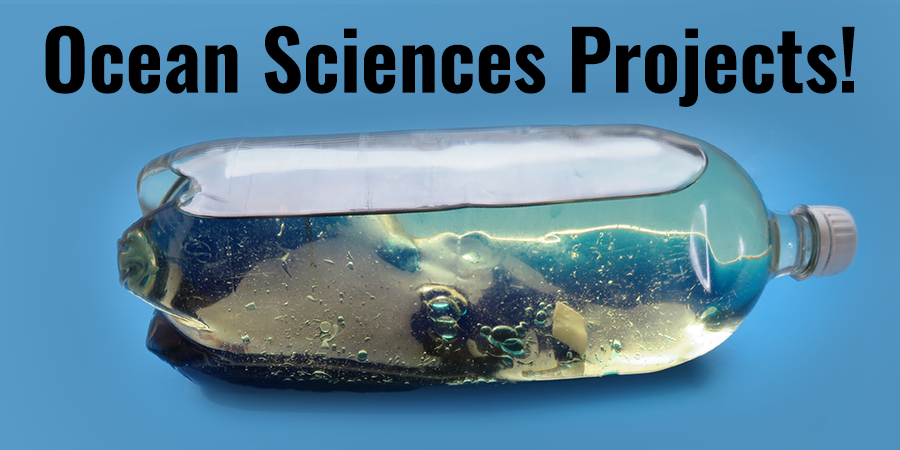
- Ocean Science Projects, Lessons, and Experiments
- Women in STEM! More than 60 Scientists and Engineers for Women's History Month
- Black History Month STEM - Learn More About These 40 Scientists for Black History Month!
- 10 Reasons to Do the Ball Run Engineering Challenge
- 40 New and Cutting-Edge Science and Engineering Projects in 2025
- 25+ Coding Projects for Beginners and Beyond - CSEdWeek Resources
- 2025 Nobel Science Connections and Projects for K-12 Students
- Chemical Reactions and Spice - STEM Projects for National Chemistry Week 2025

/-/https/img.youtube.com/vi/TnHPLc87XiM/0.jpg)
/-/https/img.youtube.com/vi/rbhzoCb0xWM/0.jpg)
/-/https/img.youtube.com/vi/lYITnkFxa5A/0.jpg)