/-/https/www.sciencebuddies.org/cdn/Files/21464/5/sb-logo.png)
/-/https/www.sciencebuddies.org/cdn/Files/21464/5/sb-logo.png)
Turn Your Pencil Into a Dimmer Switch
Put holiday lights and pencils to use in this introductory circuits and electronics project!
If the holidays are in force in your house during the days of December, you might just have materials lying around that could shed a bit (or less) light on some fundamental principles involved in working with electricity and simple circuits. The Sliding Light: How to Make a Dimmer Switch Project Idea is a fun and hands-on electronics project that lets you explore what happens when you increase or decrease resistance in a circuit.
How does the electrical current output change relative to resistance? Shed some light on the situation to find out! (You'll need a No. 2 pencil. The eraser is optional!)
Making Connections
With homework on hold for the winter break, you might find it illuminating to shave down a spare No. 2 pencil (all the way to the graphite center!), hook it up to a tree light bulb and a 9 volt battery, and investigate the role of resistance in a circuit as you create a functional "dimmer," like ones you may have in your house that let you brighten or darken a room. Depending on where you touch the graphite core with the slider (to complete the circuit), you'll see a difference in the light output.
If you like to tinker, this is a fun project, and the results are ones you can see!
/-/https/www.sciencebuddies.org/cdn/science-fair-projects/project_ideas/Elec_img144.jpg)
Taking It Further
If you don't already have a light meter, like like this one (available at Amazon.com), now might be a perfect time of year to let your parents know how useful such a tool might be for your exploration of electronics and electricity!
If the No. 2 pencil-based dimmer project inspires you, you might be interested in these other Science Buddies Project Ideas that use (or can be adapted to use) a light meter:
- Measure Luminescence in Glow-in-the-Dark Objects
- What is in this Water? Experiments with a Homemade Turbidity Meter
- Crime Scene Chemistry—The Cool Blue Light of Luminol
- Star light, Star bright: How Does Light Intensity Change with Distance?
- Wire Wilt: How Light-Emitting Diodes Fade As Temperature Increases
If you try this project out, just for fun, we'd love to know how it goes!
Categories:
You Might Also Enjoy These Related Posts:
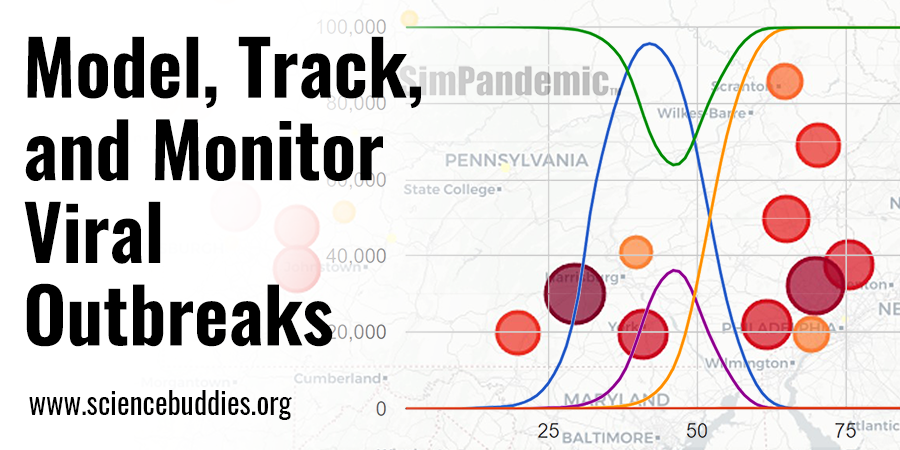
- Model and Track Virus Outbreaks - Student STEM
- Sun and Solar Science Projects - Solar Energy STEM
- 10 STEM Projects to Get Started Building Circuits on a Breadboard!
- Ocean Science Projects, Lessons, and Experiments
- Women in STEM! More than 60 Scientists and Engineers for Women's History Month
- Black History Month STEM - Learn More About These 40 Scientists for Black History Month!
- 10 Reasons to Do the Ball Run Engineering Challenge
- 40 New and Cutting-Edge Science and Engineering Projects in 2025


/-/https/img.youtube.com/vi/m_K0zZHPrBs/0.jpg)
/-/https/img.youtube.com/vi/MgoHEhYt7cc/0.jpg)
/-/https/img.youtube.com/vi/6unFkUjR964/0.jpg)