/-/https/www.sciencebuddies.org/cdn/Files/21464/5/sb-logo.png)
/-/https/www.sciencebuddies.org/cdn/Files/21464/5/sb-logo.png)
Abstract
Have you ever wondered what goes on in your dog's mind? Even though humans have the benefit of language, trying to understand another person's thoughts can be hard enough sometimes. Your dog can't talk, so how can you find out what its brain is capable of? The obvious answer is to study its behavior. This project will show you some behavioral tests you can use to measure canine I.Q.
Summary
To do this experiment you will need a good rapport with dogs, and access to a large number of dogs to test, with the help of their owners.
Readily available
Adult supervision required.
- Test procedures and images are from the BBC:
BBC, 2004. Test Your Pet, BBC, Science & Nature. Retrieved August 21, 2006.
/-/https/www.sciencebuddies.org/cdn/Files/2621/8/MamBio_img018.jpg)
Objective
The goal of this project is to measure canine intelligence with some simple behavioral tests.
Introduction
Dogs have been human companions and helpers for thousands of years. Dogs have been bred and trained for companionship, protection, and many specialized tasks. For example, think of sheep dogs, sniffer dogs, or seeing eye dogs. Dogs can do some pretty clever things, but how smart are they, really? Are there ways to find out what's going on in a dog's mind?
This project has some interesting ideas for assessing the mental capabilities of dogs. Does a dog realize an object still exists even when they can't see it? Can a dog figure out how to get around an obstacle to retrieve a desired object? Choose one or more of the tests and try them out on a large number of dogs. See what you can learn about the mind of a dog.
Terms and Concepts
- Animal behavior
- Behavioral testing
- Animal intelligence
Bibliography
- BBC, 2004. Test Your Pet, BBC, Science & Nature. Retrieved August 21, 2006.
- This website has descriptions and calculators for several statistical tests, including the Student's t-test that you can use in this project:
Kirkman, T., date unknown. "Student's t-Tests," Department of Physics, College of St. Benedict & St. John's University. Retrieved February 23, 2006.
Materials and Equipment
To do this experiment you will need the following materials and equipment:
- A large number of dogs to test, with owner's cooperation:
- ideally, try to test somewhere between 50–100,
- to see why, read the Science Buddies resource, How Many Participants Do I Need?
- Dog treats
- Large can, or shoe box
- Low table or tray (top needs to be above dog's eye level, you can hold a tray above the dog's eye level for large dogs)
- Small cushion or towel
- Piece of sturdy string or shoelace, about 1 m in length
- A couple of chairs
Experimental Procedure
/-/https/www.sciencebuddies.org/cdn/Files/20483/6/icon-flask.png)
- Choose 3–5 of the tests below (click on the links for background on each test and for the test procedure). Try them on a small sample of dogs (your own, and some friends' dogs, for example) so that you have some experience with the tests before trying them on a large number of dogs.
- Test 1: Is the Treat Still There?
- Test 2: Spatial Perception
- Test 3: Obstacle Course
- Test 4: Spoken Commands
- Test 5: Pull the String
- Note: Test procedures and images are from the BBC (BBC, 2004).
- Find dogs to test. For example, you could bring your test materials to a local park where dog owners gather and do the tests there.
- Keep track of the test results in your lab notebook. For each dog you test, get the dog's gender, breed, age, and number of years with the current owner.
- For each of the tests, make sure that you have permission of the dog's owner. It will be best if you have their active assistance as well. The dog is likely to respond best if the owner gives the commands for the tests.
- Also remember the following:
- Don't force a dog to do any of the tests. If a dog is unwilling to take part, try again later.
- Do give each dog the time, space, and quiet that it needs to have a good go at the test.
- Make sure an adult is present when you test your pet.
- We suggest the following steps for analyzing the results:
- Scoring the tests:
A = 3 points
B = 2 points
C = 1 point - A good way to examine the results of each test is to make a histogram of all of the individual scores. Look at the outline of the histogram. Are the results normally distributed (i.e., in a bell-shaped curve)? What are the mean, median, mode, and standard deviation for each test?
- Normalizing the scores will make it easier to compare the results between dogs. The following equation shows one way to calculate a normalized score for each test for each individual dog:

With this equation, dogs scoring below the mean will have a negative normalized score, and dogs scoring above the mean will have a positive normalized score
- Scoring the tests:
- Which dogs scored highest? Lowest?
- Which test had the widest variation in scores? Which test had the narrowest variation in scores?
/-/https/www.sciencebuddies.org/cdn/Files/2629/8/MamBio_img026.jpg)
Test 1: Is the Treat Still There?
This test can give you a glimpse of how a dog understands the world around itself. To do well on this test, the dog must be able to understand that an object continues to exist, even if it can no longer be seen. Note that the treat or toy used for this test should not have a strong smell, which the dog could use to confirm that the object is still there.
Procedure for Test 1
- The owner should have the dog sit, and let it see the treat or toy as it is placed on the floor.
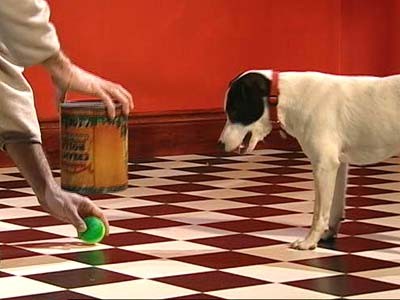
Figure 1. Let the dog see a treat or toy as it is placed on the floor. (BBC, 2004) - Place the can or box over the treat or toy.
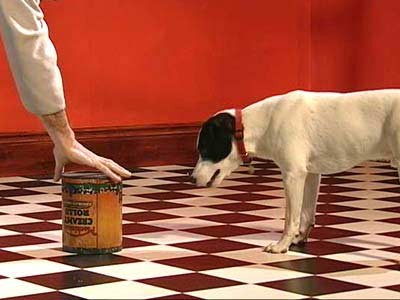
Figure 2. Cover the treat or toy. (BBC, 2004) - The owner should release the dog from sitting, with an "OK," or similar neutral command.
- How does the dog react?
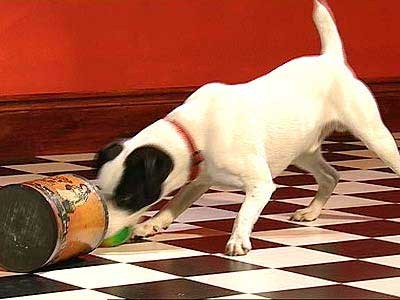
Figure 3. How does the dog react? (BBC, 2004) - Interpreting the results:
- Dog flips the can/box over.
- Dog shows an interest in the can/box, but gives up.
- Dog completely ignores can/box.
- If option A - The dog understands what psychologists call "object permanence". It realises that objects continue to exist even after they have disappeared from view. This is cleverer than you may imagine. To understand this, it must have a representation of the world that goes beyond what it can immediately perceive.
- If option B - The dog shows signs that it understands that the treat still exists under the cover. This could be because it can still smell the treat, or it could be because it still imagines it to be there. The latter takes some thought and the dog is being fairly smart. You might also consider trying the test with another vessel or on another surface in case it was just too difficult to flip over.
- If option C - The dog has shown that it doesn't understand the idea that an object exists when it isn't perceived. For many dogs this is a natural response; it takes a leap of imagination to picture a world beyond the one that we see in front of us. We humans act the same way until we are about 9 months old.
/-/https/www.sciencebuddies.org/cdn/Files/2614/8/MamBio_img011.jpg)
/-/https/www.sciencebuddies.org/cdn/Files/2615/8/MamBio_img012.jpg)
/-/https/www.sciencebuddies.org/cdn/Files/2616/8/MamBio_img013.jpg)
Test 2: Spatial Perception
This test can show how well the dog understands spatial relationships between objects, especially horizontal objects. Dogs that move about more in 3 dimensions should do better at this than those that move only on the ground.
Procedure for Test 2
- The owner should have the dog sit in front of the table, or should hold the tray, so that the surface is above the dog's eye level.
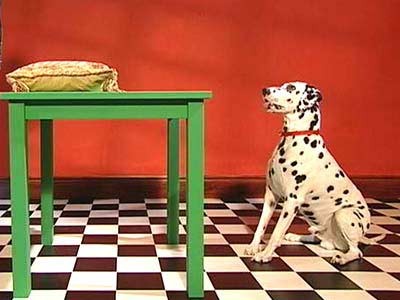
Figure 4. (BBC, 2004) - Place a cushion or folded towel on the table or tray. This is so that treat or toy will not make much sound when it is dropped.
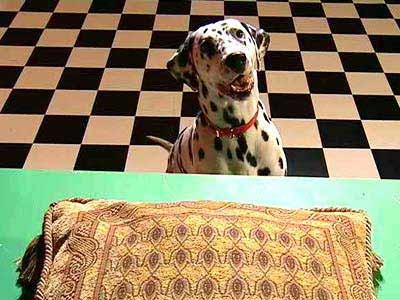
Figure 5. (BBC, 2004) - Stand on the opposite side of the table or tray from the dog. Hold the treat above the table or tray, and, when the dog is watching it, drop the treat onto the cushion.
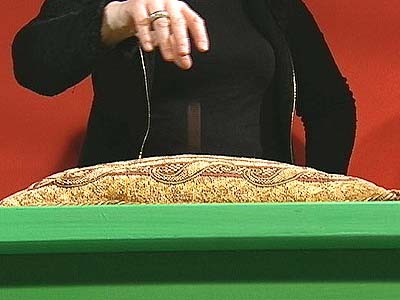
Figure 6. (BBC, 2004) - How does the dog react? (You'll have to keep a sharp eye on the dog for this one.)
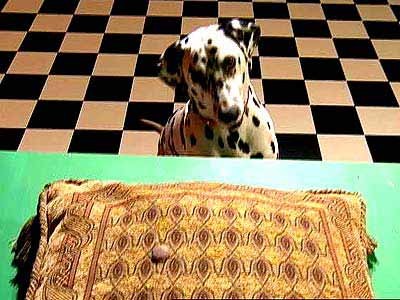
Figure 7. (BBC, 2004) - Interpreting the results:
- Dog looks at the table top or tray.
- Dog looks at the floor, then back up at the table or tray.
- Dog looks on the floor for the treat.
- If option A - The dog understands the way that horizontal objects relate to each other. This may not seem like much, but many animals have difficulty with this test.
- If option B - The dog was surprised that the treat didn't hit the floor, but quickly worked out where it was likely to be. Many animals have trouble with this test.
- If option C - The dog expected the treat to fall to the floor. This shows that the dog hasn't grasped the way in which horizontal objects relate to the other objects in their world.
/-/https/www.sciencebuddies.org/cdn/Files/2617/8/MamBio_img014.jpg)
/-/https/www.sciencebuddies.org/cdn/Files/2618/8/MamBio_img015.jpg)
/-/https/www.sciencebuddies.org/cdn/Files/2619/8/MamBio_img016.jpg)
/-/https/www.sciencebuddies.org/cdn/Files/2620/8/MamBio_img017.jpg)
Test 3: Obstacle Course
This is both a spatial perception and a problem-solving test. First the dog has to work out a route to the reward, and then it has to walk away from the treat in order to get it.
Procedure for Test 3
- Arrange the two chairs so that they face each other. Lay them on their sides, so that their bases make a V-shaped barrier with a gap in the middle that is too small for the dog to fit through.
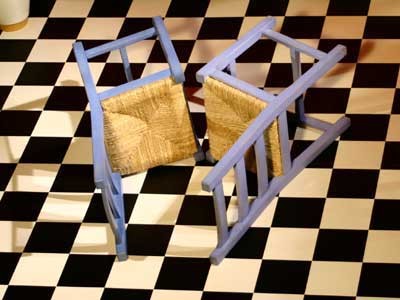
Figure 8. (BBC, 2004) - The owner should have the dog sit outside the V-barrier next to the gap.
- Stand outside the barrier, with the dog, and drop the treat onto the floor the other side of the barrier so that the dog can see it through the gap. The owner should release the dog from sitting.
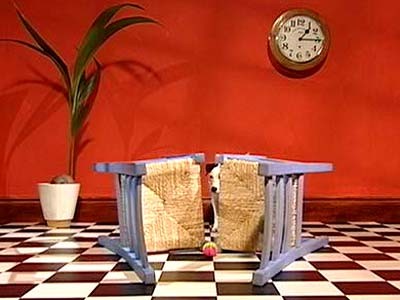
Figure 9. (BBC, 2004) - How does the dog react?
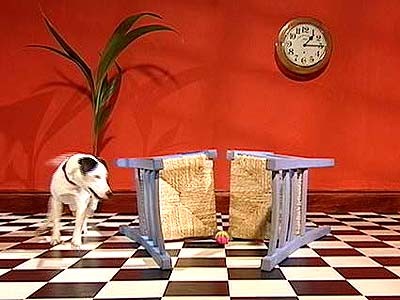
Figure 10. (BBC, 2004) - Interpreting the results:
- Dog walks immediately around the barrier to retrieve treat.
- After some time, dog walks around the barrier to retrieve treat.
- Dog ignores the test or simply tries to get at the treat through the gap.
- If option A - The dog cracked this puzzle remarkably quickly. This may be because it has come across a similar situation before, or it may be very good at looking at physical problems and coming up with solutions. This takes a fair deal of brain power.
- If option B - The dog took a little time to crack this puzzle. It may be that it spent a few moments trying to get at the treat before deciding on a less direct action, or it could have simply stumbled upon the solution by mistake as it walked away. If you repeated the test, it may do it more quickly now it knows what to do.
- If option C - The dog wasn't able to crack this puzzle. It may seem obvious to you, but to do this successfully, the dog must have a good understanding of its physical world, and be prepared to walk away from a treat in order to get at it. This is no mean feat.
/-/https/www.sciencebuddies.org/cdn/Files/2621/8/MamBio_img018.jpg)
/-/https/www.sciencebuddies.org/cdn/Files/2622/8/MamBio_img019.jpg)
/-/https/www.sciencebuddies.org/cdn/Files/2623/8/MamBio_img020.jpg)
Test 4: Spoken Commands
This is both a learning test and a memory test. The dog learns your words, phrases, body language, and vocalisations so that it can understand us and can guess what we're going to do next. The number of commands that an animal can understand is to do with both its ability to learn and the size of its memory.
Procedure for Test 4
- Have the owner go through all the commands the dog responds to, including verbal commands, vocalizations such as whistles and hand signals. Count each of the commands to which the dog responds properly, demonstrating that it understood the command.
- How many commands does the dog know?
- Interpreting the results:
- More than 25 commands,
- 11–25 commands,
- 1–10 commands.
- If option A - The dog is obviously skilled at learning and remembering commands. When it learns a new command, the dog is associating the sound or body signals that you create with one of its own actions. The dog's learning and memory has probably got a lot to do with your own training habits as an owner. It looks like you've given the dog plenty of opportunity to learn.
- If option B - The dog has learned and remembered a broad selection of the commands that it finds most useful to pay attention to. When it learns a new command, the dog is associating the sound or body movement that you create with one of its own actions. The dog's learning and memory has probably got a lot to do with your own training habits as an owner. They may be able to learn more commands with the right encouragement.
- If option C - The dog has learned and remembered a small number of commands. When it learns a new command, the dog is associating the sound or body movement that you create with one of its own actions. Some dogs are better at doing this than others, but the dog's capacity to learn and memory has also got a lot to do with your own training habits as an owner.
Test 5: Pull the String
This is a speed-of-learning test. The dog is presented with a task that it hasn't encountered before. It has to learn how to solve it by trial and error, but can it learn in just three attempts?
Procedure for Test 5
- Tie the treat to one end of the string.
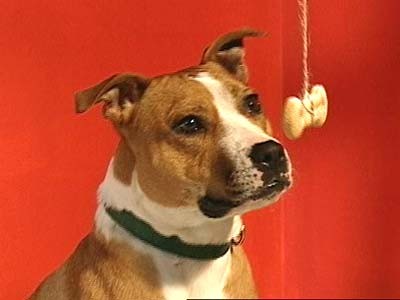
Figure 11. (BBC, 2004) - While the dog is watching, have the owner hide the treat under a sofa or any other suitable object so that it is out of reach, but the dog can still see it. Leave at least half of the string trailing out from under the object.
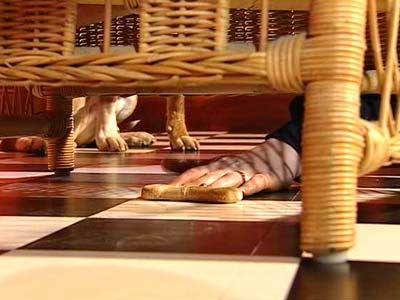
Figure 12. (BBC, 2004) - Have the owner encourage the dog to pull the shoelace to get at the treat, but don't let it eat it. If the dog does nothing, have the owner show it how to pull the string.
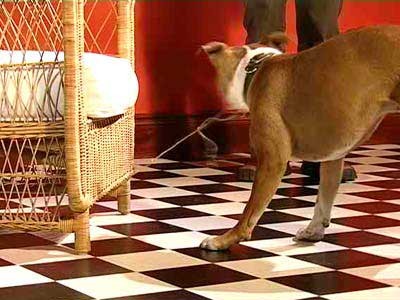
Figure 13. (BBC, 2004) - Repeat steps 1–3 again, so that the dog gets used to the idea.
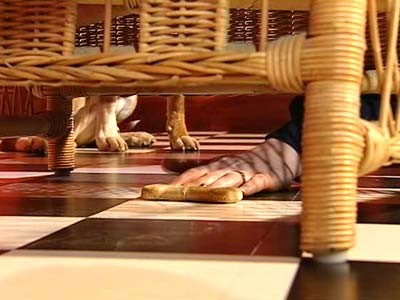
Figure 14. (BBC, 2004) - Repeat steps 1–3 a third time, but this time, leave the dog to work it out on its own. What does the dog do?
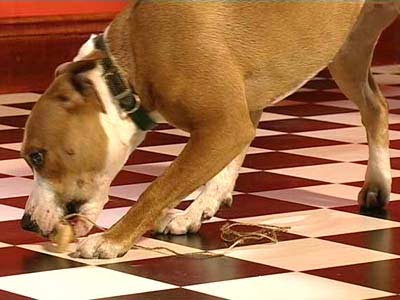
Figure 15. (BBC, 2004) - Interpreting the results:
- Dog pulls or paws the string/shoelace and gets the treat immediately.
- Dog takes some time before it pulls or paws the string/shoelace to get the treat.
- Dog doesn't manage to get the treat.
- If option A - The dog has very quickly associated the action of pulling the string with the delivery of a reward. It could be that the dog has experience of performing this action already, and that it therefore took to this task quickly, or maybe the dog is simply very good at learning new physical tasks.
- If option B - The dog has worked out that if it carries out the physical action of pulling the string, it will be rewarded. This is pretty impressive because pulling a string may be an entirely novel thing for the dog to do.
- If option C - The dog has not learned that pulling the string will lead to the reward. This could be because carrying out the action of pulling the string is either a difficult or very strange thing for the dog to do, or it could be that the dog is not that good at associating a physical task with the arrival of a reward.
/-/https/www.sciencebuddies.org/cdn/Files/2624/8/MamBio_img021.jpg)
/-/https/www.sciencebuddies.org/cdn/Files/2625/8/MamBio_img022.jpg)
/-/https/www.sciencebuddies.org/cdn/Files/2626/8/MamBio_img023.jpg)
/-/https/www.sciencebuddies.org/cdn/Files/2627/8/MamBio_img024.jpg)
/-/https/www.sciencebuddies.org/cdn/Files/2628/8/MamBio_img025.jpg)

Ask an Expert
Variations
- Probably more so than any other domesticated animal, dogs are highly attuned to their humans. This is one of the reasons we suggest having the owner of the dog give the commands for the tests in this project. Another interesting idea would be to compare test results when commands are given by a stranger vs. by the owner. You'd need to do two separate test sessions. Half of the dogs should be tested first by the owner, and later by a stranger. Reverse the order for the other half. Is there a signficant difference in the dogs' scores when tested by a stranger?
- If you can get enough test subjects, you could use these tests to compare intelligence between two (or more) different dog breeds. Are some dogs smarter than others?
- For a more basic project, test for paw preference in pooches. See the Science Buddies project: Paw Preference in Pets.
Careers
If you like this project, you might enjoy exploring these related careers:
/-/https/careerdiscovery.sciencebuddies.org/cdn/Files/872/17/iStock-883216142.jpg)

/-/https/careerdiscovery.sciencebuddies.org/cdn/Files/1856/17/pexels-photo-5487067.jpg)
/-/https/careerdiscovery.sciencebuddies.org/cdn/Files/1864/17/pexels-photo-6234618.jpg)

/-/https/img.youtube.com/vi/WJ06mrNliC0/0.jpg)
/-/https/img.youtube.com/vi/Th6GQiSHfKk/0.jpg)
/-/https/img.youtube.com/vi/kvTjzGID3oM/0.jpg)