/-/https/www.sciencebuddies.org/cdn/Files/21464/5/sb-logo.png)
/-/https/www.sciencebuddies.org/cdn/Files/21464/5/sb-logo.png)
Abstract
Have any of your friends or family members ever had an allergic reaction to eggs? In this science project idea, you'll investigate how to modify recipes so that even egg-allergic friends and family members can enjoy them.Summary
Kristin Strong, Science Buddies
/-/https/www.sciencebuddies.org/cdn/Files/3348/5/BioChem_img031.jpg)
Objective
In this science fair project, you will evaluate the ability of egg substitutes to mimic the binding, leavening, or thickening properties of eggs in baking and cooking.
Introduction
Egg allergy affects up to 2 percent of all children and is second only to milk protein as the top allergen in children. Reactions to eggs can be mild to severe. Some children outgrow their allergy by the time they reach elementary school, but in the past two decades, allergists have reported that greater numbers of children are experiencing egg allergy into their high school years and beyond.
If you, a friend, or a family member has experienced egg allergy, then you know how difficult it is to eat out in restaurants, or to find processed foods from grocery stores without eggs. Egg proteins are hidden under many different chemical names in foods. You can find egg proteins in:
- Batters for meats and fish
- Many desserts and baked goods
- Marshmallows and nougats
- Some pastas and breads
- Many dressings and sauces
- Soups using clear broths, and
- Even the foam on special hot drinks.
For safety, families who experience egg allergies must prepare many foods from scratch at home. In this science project, you'll explore how to modify recipes so that foods that require eggs are safe to eat for egg-allergic friends and family members.
Eggs are used in baking and cooking in three key ways:
- As a binder (to hold other ingredients together)
- As a leavening agent (to make a food rise)
- As a thickener (to make a food or sauce thicker)
How can you tell the purpose of an egg in your recipe? By looking at the other ingredients. If, for example, there is little other liquid in the recipe, then you know the egg is being used to add moisture. If there is no baking powder or baking soda, but there is an acid (like lemon juice, orange juice, or vinegar), then you know the egg is being used as a leavening agent. If there is nothing else in the recipe to act as a "glue," such as flour or nuts or bread crumbs, then you know the egg is likely serving as a binder.
For this science project, you'll investigate egg substitutes-ingredients that mimic the function of egg. Table 1 shows some common egg substitutes for the three functions of egg that you'll be focusing on: binding, leavening, or thickening.
| Binder | Leavening Agent | Thickener |
| Ground flax seed | Baking powder + Extra oil | Applesauce |
| Gelatin | Vinegar | Tapioca flour |
| Banana | Lemon juice + Baking soda | Banana |
| Silken tofu | Orange juice + Baking soda | Tofu |
| Arrowroot powder | Buttermilk + Baking soda | Fruit puree |
| Agar powder | Corn starch |
Table 1. Common substitutes for egg, based on the function of egg in a recipe.
The substitute you choose to try for your recipe will depend upon the egg function you are trying to replace, and the taste you are trying to achieve (for example, would a fruity tasting substitute be a good combination with the other ingredients, or would a bland, neutral-tasting substitute work better?). Let's get cooking!
Terms and Concepts
- Egg allergy
- Allergen
- Allergist
- Egg substitute
Questions
- Can an egg substitute completely serve as a replacement for all the properties of egg?
- Which substitute mimics the properties of egg the best for the egg function you have chosen to investigate?
Bibliography
- This source provides information on the amount of egg substitute you should use to replace each egg in a recipe. It also describes any special preparation that is required to prepare the substitute for use in a recipe:
The Cooking Inn. (2008). Egg Substitutes. Retrieved March 27, 2008.
Materials and Equipment
- Lab notebook
- Ingredients for your test recipe; keep in mind that you will be testing your recipe three times with eggs and three times with each egg substitute, so be sure you have enough ingredients for at least 12 tests. See the http://www.thecookinginn.com/eggsub.html for information on the amount of each substitute you will need to replace each egg.
- Egg substitutes from one of the columns in Table 1
- Supplies for preparing your recipe or egg substitutes, which might include a blender, mixer, measuring cups, measuring spoons, mixing bowls, baking dishes, and access to an oven or stove
- Ice cream scoop, melon baller, or other similar tool, if making individual servings
-
If you're measuring binding:
- Knife
-
If you're measuring leavening:
- Ruler
-
If you're measuring thickening:
- Plate
- Teaspoon
- Thick books (2)
- Stopwatch
- Digital camera (optional)
- Graph paper
Experimental Procedure
/-/https/www.sciencebuddies.org/cdn/Files/20483/6/icon-flask.png)
- Select which egg function you want to investigate: binding, leavening, or thickening.
-
Select a test recipe that uses egg as a binder, as a leavening agent, or as a thickener. Below are a few example recipes.
Egg as a Binder Egg as a Leavening Agent Egg as a Thickener Meatloaf Cakes Custard Quick breads Cupcakes Lemon sauces Cornbread Meringues Soufflés
- Choose several egg substitutes from Table 1 to test. Be sure to select substitutes only from the column of the function your egg substitute will perform in the recipe.
-
Make a data table to record your measurements from the tests, as shown below:
Egg Substitute 1 Substitute 2 Substitute 3 Trial 1 Trial 2 Trial 3 Sum of Trials Average of Trials
- Make your recipe three times with egg, and then three times each for each of the egg substitutes that you are testing. For recipes that create individual servings, like cookies and cupcakes, you need to use an ice cream scoop, melon baller, or measuring cup so that the servings are uniform.
-
After each trial, measure and record in your lab notebook the amount of binding, leavening, or thickening (depending on which function you chose) in one of each of the finished products, as described below:
- If you're measuring binding, cut the product in half on a plate or paper towel, or cut a uniform slice off the product. Count the number of crumbs after the cut. Use a clean paper towel or plate and a clean knife for each test. Take photos for your display board, if desired.
-
If you're measuring leavening, measure the height of the product at its highest point, as shown in Figure 1. Take photos for your display board, if desired.
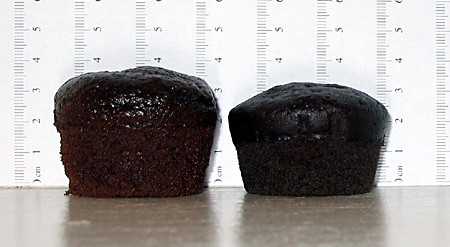
Figure 1. Example of how to measuring leavening.
-
If you're measuring thickening, stack the two books on top of each other. Place 1 teaspoon of your thickened sauce on a plate. Tilt the plate by resting the plate edge on top of the two books. Use the same books for each trial so that the amount of tilt (the slope of the plate) is a constant. Wait 30 seconds, and then lay the plate flat again. Measure the distance the sauce has run on the plate, as shown in Figure 2. Be sure to clean the teaspoon and the plate after each trial. Temperature affects viscosity (which is how the sauce resists flow), so make sure the sauces are at the same temperature when you test them (for example, room temperature or refrigerated). Take photos for your display board, if desired.
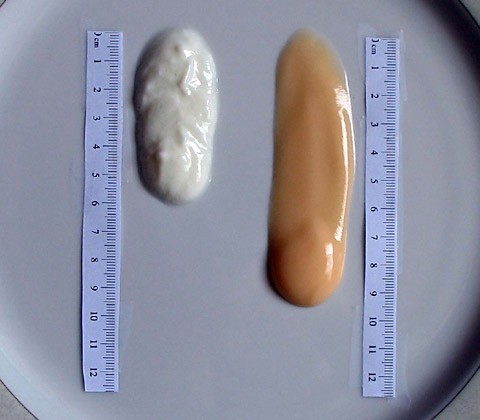
Figure 2. Example of how to measure thickening.
- Plot the average measures of binding, leavening, or thickening for egg and for each substitute that you tested.
/-/https/www.sciencebuddies.org/cdn/Files/3347/5/BioChem_img030.jpg)
/-/https/www.sciencebuddies.org/cdn/Files/3348/5/BioChem_img031.jpg)

Ask an Expert
Global Goals
The United Nations Sustainable Development Goals (UNSDGs) are a blueprint to achieve a better and more sustainable future for all.
/-/https/www.sciencebuddies.org/cdn/Files/19746/5/E-WEB-Goal-03.png)
Variations
-
In addition to conducting the substitute performance tests described in the experimental procedure, conduct taste tests and then score ease of preparation for each of your trials. Then create a composite score for each trial that includes taste, ease of preparation, and performance. For example, score taste tests and ease of preparation from 1 (worst) to 5 (best) and record your scores in data tables like the ones below:
Taste score Egg Substitute 1 Substitute 2 Substitute 3 Trial 1 Trial 2 Trial 3 Sum of Trials Average of Trials
Ease of Preparation Egg Substitute 1 Substitute 2 Substitute 3 1 (easy) to 5 (difficult)
- Give each of these results a 20 percent weight in your composite score so they contribute (at most) 1 point to the total composite score.
-
Then compute a performance ratio that compares the average binding, leavening, or thickening performance of each substitute to the performance of egg in a ratio:
- For binding, the ratios are the average number of crumbs for the recipe with egg divided by the average number of crumbs for the recipe with egg substitutes.
- For leavening, the ratios are the average height of the recipe with egg substitutes divided by the average height of the recipe with egg.
- For thickening, the ratios are the average drip length for the recipe with egg divided by the average drip length for the recipe with egg substitutes.
-
Create your composite score for each trial:
Composite Score = 0.20 x (Taste test score) + 0.20 x (Ease of preparation score) + Performance ratio
-
Think of a way to measure the moisturizing and glazing functions of egg so that egg substitutes for those (shown below) can be tested, too.
Adding Moisture Glazing Applesauce Butter Banana Margarine Fruit juice Fruit juice Soy milk Water Milk
Careers
If you like this project, you might enjoy exploring these related careers:
/-/https/careerdiscovery.sciencebuddies.org/cdn/Files/1316/17/unsplash-ePJQise0OkQ.jpg)

/-/https/careerdiscovery.sciencebuddies.org/cdn/Files/1203/17/iStock-1210522370.jpg)
/-/https/careerdiscovery.sciencebuddies.org/cdn/Files/1309/18/unsplash-vGA1ei1yxos.jpg)
/-/https/careerdiscovery.sciencebuddies.org/cdn/Files/1107/19/pexels-photo-3938023.jpg)

/-/https/img.youtube.com/vi/wG3OVpaHGkc/0.jpg)
/-/https/img.youtube.com/vi/l-VWX6ndGpA/0.jpg)
/-/https/img.youtube.com/vi/FMcbAiTfx7A/0.jpg)