/-/https/www.sciencebuddies.org/cdn/Files/21464/5/sb-logo.png)
/-/https/www.sciencebuddies.org/cdn/Files/21464/5/sb-logo.png)
Abstract
Have you ever been in an earthquake? What did it feel like? Did you jiggle back and forth? Up and down? Was there a jolt? Or a rolling motion? Come build a house Hansel and Gretel would love to eat, a special table to shake it on, and see how different soil types can amplify shaking.Summary
Kristin Strong, Science Buddies
This project is based on a DragonflyTV episode.
The shake table for this project was modified from:
MCEER Information Service. (2008). Building a Shake Table. The Research Foundation of the State of New York.
- Play-Doh® is a registered trademark of Hasbro, Inc.
- StyrofoamTM is a registered trademark of The Dow Chemical Company.
/-/https/i.ytimg.com/vi/W3FUb_DQ7HM/maxresdefault.jpg)
Objective
In this science fair project, you will determine which type of soil amplifies side-to-side earthquake shaking motion the most.
Introduction
Have you ever seen someone cover a boiling pot with a plate, rather than with a lid? Did the plate start to rattle and move around a bit from the steam pressure below it? A similar process is happening all the time to the Earth. Heat deep inside the Earth causes tectonic plates at the surface to move. Slow movement of one plate past another over many years is called fault creep. Sudden movement of the plates is called an earthquake. Earthquakes happen when the two plates get "stuck" for a time as they are sliding past each other, and then suddenly they become "unstuck," releasing energy. It's similar to a window that's stuck. You lift and lift to try and open the window, and then finally there is sudden, fast movement.
When an earthquake occurs there is a sudden release of energy in the form of waves, called seismic waves. There are two main types of seismic waves: body waves, which can travel through the inner layers of the earth, and surface waves, which can only travel on the surface. Body waves are the fastest and have the highest frequency.
The first type of body wave is called the primary or P-wave. It pushes and pulls the solid rock or liquid matter that it is moving through and people feel it as back-and-forth or side-to-side motion. If you imagine two people holding the ends of a stretched-out slinky, with a piece of tape in the middle, and then one person squeezes some coils together on one end and lets it go, you will see a longitudinal wave go down the length of the slinky and the piece of tape will get pushed forward, and then come back to its starting position. This is how a P-wave pushes a particle of matter and creates motion (shown in Figure 1).
/-/https/www.sciencebuddies.org/cdn/Files/3303/5/CE_img048.gif)
Figure 1. This animation shows the particle motion created by a P-wave. (Michigan Technical University, 2007.)
The second type of body wave that you feel in an earthquake is called the secondary or S-wave. S-waves cannot move through liquids, only through solid rock. They move rock particles perpendicular to the direction the wave is traveling in. Don't miss wave animations, referenced in the Bibliography, where you can see body waves and surface waves in action!
In this science fair project you will focus on the pushing and pulling P-waves. You will see what happens when the waves shake houses that are sitting on different types of soil models: bedrock, gravel, alluvium, and sand. Engineers and seismologists create special shake hazard maps, which show where these different soil types are located. The type of soil affects how much shaking a house experiences. Soft soils amplify ground shaking more than hard soils do. Take a look at these seisomograms (pictures of earthquake signals) from the 1989 Loma Prieta earthquake. The graph on the left shows how much ground motion was experienced on soft sand or landfill, while the graph on the right shows how much ground motion was experienced on hard bedrock, over the same time period less than a quarter of a mile away.
/-/https/www.sciencebuddies.org/cdn/Files/3304/5/CE_img049.gif)
A small map of a section of San Francisco shows two graphs above that indicate the motion detected from an earthquake at two separate stations. The left graph is from a station built over soil made of sand or landfill and shows large spikes indicating greater movement during an earthquake. The right graph is from a station built over bedrock and shows small spikes that indicate less motion during an earthquake.
Figure 2. These graphs show recorded ground motion in San Francisco, California, from two different locations during the 1989 Loma Prieta earthquake. The motion on the left is from a location at which the soil type is sand or landfill, while the signal on the right is from a location at which the soil type is bedrock. (Exploratorium, n.d.)
In addition to being soft in nature, sand or landfill can also undergo a liquefaction process where it changes from a wet solid into a dense liquid, which further amplifies shaking.
Now it is time to build some sweet and sticky test houses, a shake table to imitate P-waves, and some soil models on which to test the houses. When you shake the table and simulate P-waves, which types of soil do you think will make your test houses crumble the most?
Terms and Concepts
To do this science fair project, you should do research so that you understand the following terms and concepts:
- Tectonic plate
- Fault creep
- Earthquake
- Energy
- Seismic wave
- Body wave
- Surface wave
- Frequency
- Primary wave (P-wave)
- Longitudinal wave
- Secondary wave (S-wave)
- Bedrock
- Gravel
- Alluvium
- Sand
- Seismologist
- Amplify
- Liquefaction
- Model
Questions
- What causes an earthquake?
- What kinds of motion are created by each of the seismic waves?
- What are the differences between bedrock, gravel, alluvium, and sand?
- If you are building a new home in an earthquake-prone area, why is it important to know the type of soil on which you are building?
Bibliography
This source displays animations of body and surfaces waves:
- National Academies. (n.d.). How does an earthquake make soil behave like a liquid?. Retrieved May 11, 2023.
The USGS reports on earthquakes, assesses earthquake impacts and hazards, and conducts targeted research on the causes and effects of earthquakes:
- U.S. Geological Survey. (n.d.). Earthquake Hazards Programs. Retrieved May 11, 2023.
This source describes the liquefaction process:
- Exploratorium. (2009). Faultline. Retrieved September 9, 2009.
This science fair project was inspired by this DragonflyTV episode:
- TPT. (2007). Earthquakes by Claire and Nisha. DragonflyTV, Twin Cities Public Television. Retrieved May 5, 2008.
Materials and Equipment
-
To build your shake table, you will need:
- Packing tape
- Coffee can lid, or any flat plastic lid with approximately 3/8" lip that can fit under the shake table tray
- Marbles, or any small balls of the same size (1-2 dozen)
- Shallow box, like the lid on a board game box
- Tray (1); any shallow, large tray that is a few inches smaller than your game box lid, but that will snugly hold the trays that will hold your test soil and houses (see the To prepare your soil trays, you will need materials list, below); consider StyrofoamTM take-out containers.
-
To build your test houses, you will need:
- Butcher paper or newspaper
- Damp cloth to wipe your hands on
- Sugar cubes (approximately 600)
- Bowl
- Spoon
- No stir peanut butter (32 oz.), or a substitute, such as soy butter if you are allergic to peanuts. Ask your parent or allergist what a good substitute is for you.
- Scissors
-
To prepare your soil trays, you will need:
-
Play-Doh® (approximately 5-6 regular-sized canisters), or homemade dough
Note: If you are making homemade dough, you will need:- Flour (3 ½ cups)
- Salt (½ cup)
- Oil (3 tablespoons)
- Water (2 cups, boiling)
- Grape-Nuts cereal (1 box)
- Cornstarch (1 box)
- Water (approximately 4 cups)
- Bowls (2); for mixing Grape-Nuts with water, and cornstarch with water
- Spoon
- Fork
- A handful of dried beans, marbles, or coins to simulate the weight of your sugar and peanut butter house as you check the consistency of your cornstarch, and a small container in which to put them; the container should be able to fit into your cornstarch mixing bowl.
- Trays (4); any shallow nesting trays that are bigger than your test houses, but will fit snugly inside your shake table tray, such as StyrofoamTM take-out containers, the plastic lids from frozen dinners, or packaging for fresh fruit; see Figure 5 for an example.
-
Play-Doh® (approximately 5-6 regular-sized canisters), or homemade dough
-
To test your houses, you will need:
- Stopwatch
- Lab notebook
- Camera (optional)
Experimental Procedure
/-/https/www.sciencebuddies.org/cdn/Files/20483/6/icon-flask.png)
Building Your Shake Table
- A shake table is used to create motion with which you can test your sugar cube houses' response to shaking. For your shake table, you will try to imitate the pushing-and-pulling P-waves. Figure 3 shows the components of the shake table and how it is assembled.
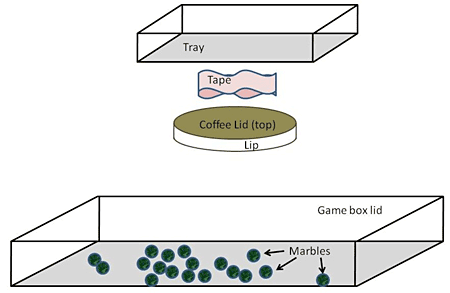
Figure 3. This is how to assemble the shake table.
- Cut off a strip of the packing tape and form it into a loop with the sticky part on the outside.
- Attach the tape to the top of the coffee can lid and the bottom of one of the trays so that the top of the lid is stuck to the bottom of the tray.
- Dump the marbles into the game box lid.
- Set the tray with its attached coffee lid so that it is resting on top of the marbles. The lip of the lid should be resting on the marbles. This tray will hold your other trays as you perform each trial. Now you're ready to shake the game box side to side to create your P-waves. Continue with the rest of the steps first.
/-/https/www.sciencebuddies.org/cdn/Files/3306/5/EnvEng_img041.gif)
Building Your Test Houses
- OK, this will be messy, but fun! Build houses, preferably tall and skinny houses. Keep in mind that you will need to build 12 of them, they should all be exactly the same, and they must fit inside your trays.
- First, spread out some butcher paper or newspaper to make cleanup a little easier. Keep a cloth or bowl of water around to clean your hands if they get super gooey during the building. You should also make some clear space on the table or another counter for your completed houses.
- Dump out some of your sugar cubes into a pile on the butcher paper or newspaper. You have a lot of sugar cubes and a lot of houses to build, so don't dump them all out at once.
- Scoop out some peanut butter (or your substitute) into a bowl and put it next to the sugar cubes.
- Now start dipping sides of the sugar cubes into the peanut butter and sticking them together. The sugar cubes are like little white bricks, and the peanut butter is like mortar. Build your first house on a section of paper that you can cut out when you are finished. Continue until you have created your first test house. Don't eat more than you build!
- Cut out the paper around the test house and set it aside until you're ready to test. The paper makes it easier to place the houses on the test soil, and to remove the houses after testing.
- Repeat steps 3-6 until you have 12 test houses that are built exactly the same and are all on their own pieces of butcher paper.
Figure 4 shows two example test houses, you will need four of them for each experimental trial, one for each soil type.
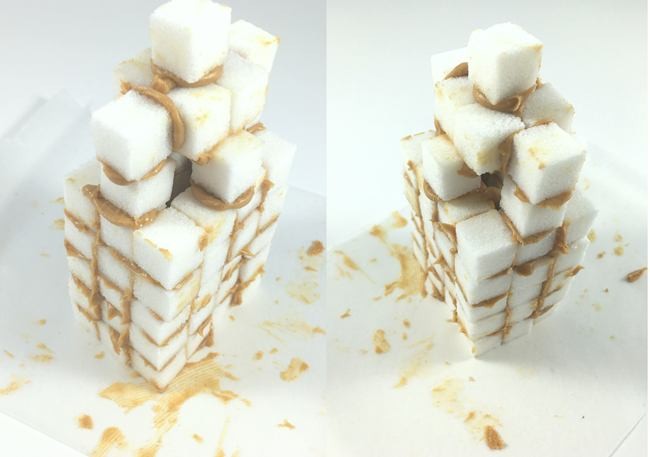
Figure 4. Here are two example test houses. -
Tips:
- Do not try to build the sturdiest houses you can make. If your test houses are so strong that none of them break, your data will not reveal which soil is the best to build a house on in an earthquake prone zone.
- Perform the testing within a day or two after you build the houses. This prevents the peanut butter from drying out and hardening.
- Do not use too much peanut butter. This can make the houses too sturdy, especially if the peanut butter is left to dry out. Figure 5 shows an example of what not to do.
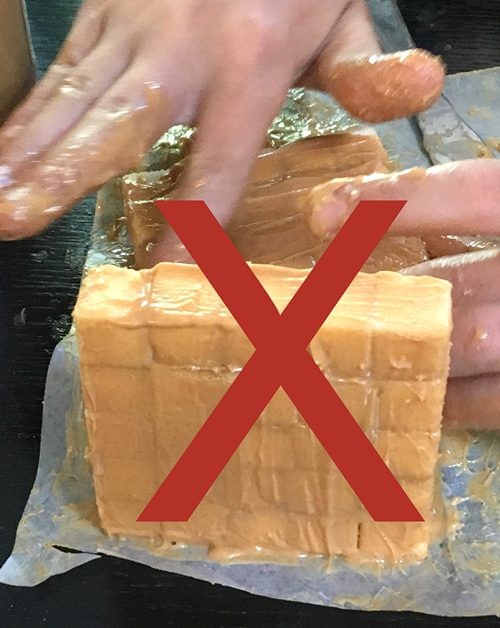
Figure 5. A sugar cube wall covered with peanut butter can get very sturdy. Do not follow this example.
/-/https/www.sciencebuddies.org/cdn/Files/14096/5/two-sugar-cube-buildings.jpg)
/-/https/www.sciencebuddies.org/cdn/Files/14097/5/sugar-cube-peanut-butter.jpg)
Preparing Your Soil Trays
- You will be preparing four trays for testing models of four different soil types: bedrock, gravel, alluvium, and sand.
-
To prepare the bedrock model, fill one tray about half full of Play-Doh (either store-bought or homemade).
- To make homemade dough, mix the flour and salt together. Have an adult help you slowly add the oil and hot water as you stir. The water is very hot so be careful! Keep stirring until the mixture is cool enough to knead (press and squeeze and fold on a hard, lightly floured surface). Knead the dough well and then place it in the tray.
- To prepare the gravel model, pour dry Grape-Nuts cereal into another tray until the layer is at least 1 inch deep.
- To prepare the alluvium model, mix about 2-3 cups of dry Grape-Nuts cereal with about 1 cup of water and pour the mixture into another tray. The layer should be at least 1 inch deep. If needed, mix up another batch and pour it over the first layer in the tray.
-
To prepare the sand model, you will need a ratio of about two parts cornstarch to one part water. Put 3 cups of cornstarch in a bowl. Slowly add about 1 ½ cups of water to the cornstarch, mixing as you go with a fork or with your hands. You will know that you have the right consistency of the cornstarch mixture when it is firm enough to support a test house, but still liquid enough that you can slowly and gently press your finger down into it. Another clue is that when you slowly press your finger down into it and then shake the mixture from side to side, it will kind of feel like your finger is in a liquid. If the mixture is too hard, and you can't slowly press your finger into it, or it doesn't quiver and feel a bit like a liquid when you shake it, add a little more water. If the mixture is too thin and runny, like when a sugar cube placed on the mixture slowly sinks in, add a little more cornstarch. Once you get the consistency just right, pour your cornstarch mixture into another tray. The layer should be at least 1 inch deep. If needed, mix up another batch with the same consistency and pour it over the first layer in the tray. Figure 6 shows an example of how your prepared trays should look. Read the additional notes below before you begin making your cornstarch mixture.
- To test whether the cornstarch mixture will support a test house, put a small container on top of the mixture in your mixing bowl and fill it with something like dried beans, marbles, or coins-something that weighs about the same as one of your sugar and peanut butter houses. See if the container sinks way down into the cornstarch mixture, or if it rests mostly on top. (You want it to sink down just a little bit-not to the bottom of the bowl.) By using a container and small weights, you can test the cornstarch consistency without potentially ruining a sugar and peanut butter house before you are ready to run your experiment.
- Note: You are not using real sand for this model because you are trying to model the liquefaction process—the process in which sand changes from a solid to a liquid when it is shaken in an earthquake. With your simple, hand-powered shake table, you cannot shake real sand fast enough to achieve liquefaction; so instead, a cornstarch mixture is used, which can support a test house when there is no shaking going on, but that behaves more like a liquid under the influence of hand-powered shaking.
- The cornstarch mixture has very unusual properties—sometimes it acts like a liquid, sometimes it acts like a solid. The faster you stir it, the more it acts like a solid! This is why you need to mix it up slowly with a fork or with your hands, rather than rapidly with a spoon. You will notice that the mixture feels very strange. You can read more about its amazing properties in the Bibliography.
- Important Cleanup Notes: Do not ever pour any large amount of cornstarch and water mixture down the drain. It will clog it up! Instead, dump any extra mixture into a large plastic garbage bag and throw it away in the trash.
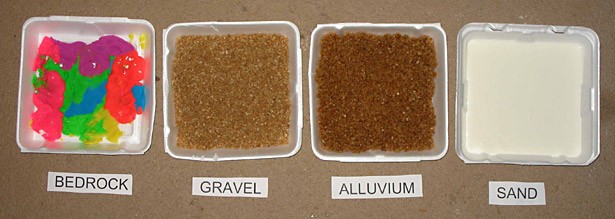
Figure 6. These prepared trays hold models of four different soil types.
- Create a data table in your lab notebook to record the results of your shaking tests, like the one below:
/-/https/www.sciencebuddies.org/cdn/Files/3308/5/EnvEng_img043.jpg)
| Bedrock | Gravel | Alluvium | Sand | ||
|---|---|---|---|---|---|
| Trial 1 | Number of Broken or Fallen Walls | ||||
| Qualitative Observations | |||||
| Trial 2 | Number of Broken or Fallen Walls | ||||
| Qualitative Observations | |||||
| Trial 3 | Number of Broken or Fallen Walls | ||||
| Qualitative Observations | |||||
| Sum of Number of Broken or Fallen Walls | |||||
| Average Number of Broken or Fallen Walls | |||||
Testing Your Shake Houses
- Now it's time to try this out! You finally get to shake your test houses on the four different soils.
- Begin trial 1 with bedrock. Slide a test house and its paper gently onto the middle of the bedrock tray. Press the house down slightly into the test soil so that there is good contact between the test soil, the paper, and the test house, and the test house does not slide around on top of the test soil during testing.
-
Place the prepared bedrock tray into the empty shake table tray. The bedrock tray should "nest" snugly into the empty tray in the shake table.
- Have a helper time you shaking the box lid for 30 seconds. When you're ready to start, have the helper say, "Go!" and start a stopwatch.
- Now shake or vibrate the game box lid from side to side very rapidly until 30 seconds have passed and your helper says, "Stop!". During the shaking, your hands should move from side to side no more than an inch or two, and you should avoid letting the tray bump the sides of the game box.
-
Record the number of broken or fallen walls in your data table. In the Figure 7 example, below, the test house in alluvium resulted in three fallen walls, so the number "3" would be recorded in the data table.
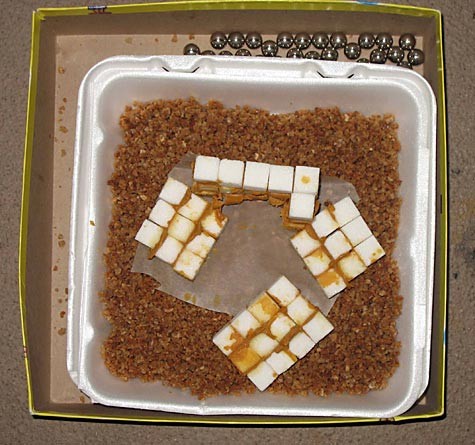
Figure 7. This is a test house in alluvium at the end of shaking, which shows three fallen walls.
- Take photographs for your display board, if desired.
- Take notes of qualitative observations. Look closely, did the house or its debris sink into the test soil or did it stay on top?
- Remove the prepared tray and remove the broken test house from the test soil.
- Repeat steps a-e for the three remaining soil types: gravel, alluvium, and sand. Be sure to record your results in your data table after each shaking test.
- Repeat "Testing Your Shake Houses" steps 1-4 for two additional trials per soil type so that all 12 houses are tested.
- If no houses broke during the testing, keep your data and add another round of testing to see if the houses can withstand longer or more vigorous shaking. Make sure to repair any houses before using them again. Make a new data table like Table 1, clearly write down what you changed (duration, how hard you shake or both) and start testing.
/-/https/www.sciencebuddies.org/cdn/Files/3309/5/EnvEng_img045.jpg)
Analyze Your Data
- Make a bar graph of the average number of broken walls. List the soil type on the x-axis.
- Use your graph and your qualitative observations to try to answer following questions:
- Which soil type caused your test houses to break apart the most?
- Which soil type caused your test houses to break apart the least?
- On which type of soil might it be safest to build a home if you live in an earthquake-prone city?
- Do your observations show signs of liquefaction? If so, how and in which soil types?
- Did the experiment answer the questions you had when you started this project? What would you do differently if you had to do the experiment again?
- Are there any unresolved questions or new questions? Can you find experiments to resolve these?

Ask an Expert
Global Goals
The United Nations Sustainable Development Goals (UNSDGs) are a blueprint to achieve a better and more sustainable future for all.
/-/https/www.sciencebuddies.org/cdn/Files/19752/5/E-WEB-Goal-09.png)
Variations
- The experiment described in this science fair project keeps the test house a constant and changes the soil type. As a variation, try keeping the soil type a constant and changing the test house. Choose one soil type-bedrock, gravel, alluvium, or sand-and test the ability of differently shaped structures to withstand shaking. For example, build, test, and compare structures shaped like an "L," a "T," an "O," a rectangle, and a square when all shaken on gravel.
- Build a different kind of shake table that can imitate the motion of another type of seismic wave, such as a surface wave. The sources in the credits will show you how. Test the ability of identical houses to withstand surface-wave shaking on different type of soils.
- Build two different kinds of shake tables, one that generates P-waves or S-waves, and one that generates surface waves. Choose one type of soil and compare the response of identical houses to different types of motion.
- The test houses in this project simulated masonry (brick and mortar). As a variation, use the Bibliography to build and test houses that simulate wooden or steel frame structures.
Careers
If you like this project, you might enjoy exploring these related careers:
/-/https/careerdiscovery.sciencebuddies.org/cdn/Files/1133/17/pexels-photo-3862135.jpg)

/-/https/careerdiscovery.sciencebuddies.org/cdn/Files/1783/17/nrcseprd423668.jpg)
/-/https/careerdiscovery.sciencebuddies.org/cdn/Files/1125/17/pexels-photo-3862390.jpg)
/-/https/careerdiscovery.sciencebuddies.org/cdn/Files/1359/18/VNIIOarctic.jpg)

/-/https/img.youtube.com/vi/MgoHEhYt7cc/0.jpg)
/-/https/img.youtube.com/vi/WJ06mrNliC0/0.jpg)
/-/https/img.youtube.com/vi/bIfo0anMI98/0.jpg)