

Summary
Areas of Science
Difficulty
Time Required
Average (6-10 days)
Prerequisites
None
Material Availability
Readily available
Cost
Very Low (under $20)
Safety
This project may require the use of a sharp knife and the oven. Adult supervision is required.
*Note:
For this science project you will need to develop your own experimental procedure. Use the information in the summary tab as a starting place. If you would like to discuss your ideas or need help troubleshooting, use the Ask An Expert forum. Our Experts won't do the work for you, but they will make suggestions and offer guidance if you come to them with specific questions.
If you want a Project Idea with full instructions, please pick one without an asterisk (*) at the end of the title.
If you want a Project Idea with full instructions, please pick one without an asterisk (*) at the end of the title.
Abstract
If you've ever been on a long hike, you probably already know how hungry all that walking can make you. But if you're going a long distance, the last thing you want is a heavy pack of snacks on your back. So what can you bring along for a healthy, hunger-satisfying, lightweight snack? How about dried foods, like banana chips or beef jerky? Many foods have high water content. The drying process removes much of the water from the food, leaving behind a lighter, but equally nutritious snack. Just how much water is removed during drying? Find out for yourself by making your own supply of dried banana chips (or another fruit of your choice). You'll need to research different drying techniques and remember to weigh the bananas before and after drying to calculate how much water was lost. For a more advanced science fair project, you can try comparing the results of different drying techniques, or comparing the amount of water lost from different types of foods during drying. Happy snacking!
Ask an Expert
Do you have specific questions about your science project? Our team of volunteer scientists can help. Our Experts won't do the work for you, but they will make suggestions, offer guidance, and help you troubleshoot.
Careers
If you like this project, you might enjoy exploring these related careers:
Career Profile
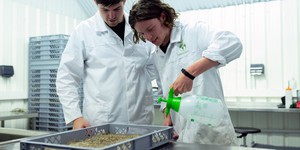
There is a fraction of the world's population that doesn't have enough to eat or doesn't have access to food that is nutritionally rich. Food scientists or technologists work to find new sources of food that have the right nutrition levels and that are safe for human consumption. In fact, our nation's food supply depends on food scientists and technologists that test and develop foods that meet and exceed government food safety standards. If you are interested in combining biology, chemistry,…
Read more

Career Profile
Good taste, texture, quality, and safety are all very important in the food industry. Food science technicians test and catalog the physical and chemical properties of food to help ensure these aspects.
Read more

Career Profile
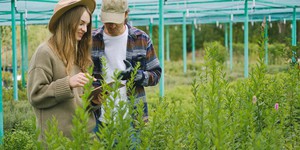
As the world's population grows larger, it is important to improve the quality and yield of food crops and animal food sources. Agricultural technicians work in the forefront of this very important research area by helping scientists conduct novel experiments. If you would like to combine technology with the desire to see things grow, then read further to learn more about this exciting career.
Read more
Related Links

Cite This Page
General citation information is provided here. Be sure to check the formatting, including capitalization, for the method you are using and update your citation, as needed.MLA Style
Science Buddies Staff.
"Dried Foods: The Science Behind Making Lightweight Snacks." Science Buddies,
20 Nov. 2020,
https://www.sciencebuddies.org/science-fair-projects/project-ideas/FoodSci_p015/cooking-food-science/dried-foods.
Accessed 19 Apr. 2024.
APA Style
Science Buddies Staff.
(2020, November 20).
Dried Foods: The Science Behind Making Lightweight Snacks.
Retrieved from
https://www.sciencebuddies.org/science-fair-projects/project-ideas/FoodSci_p015/cooking-food-science/dried-foods
Last edit date: 2020-11-20
Explore Our Science Videos
The Engineering Design Process: An Eggstronaut Mission
The Impossible Arrow Illusion
Video: Winding Coil