/-/https/www.sciencebuddies.org/Files/21464/5/sb-logo.png)
/-/https/www.sciencebuddies.org/Files/21464/5/sb-logo.png)
Abstract
You may have heard the expression, "You can't get blood from a stone." But what about oil? Can you get petroleum oil from a stone? In this geology science fair project, you'll find out what kinds of stones make the best storage rocks for oil. You'll see which ones can soak up oil like a sponge, and which ones cannot soak up oil or let it pass through, but can act as a "cap" to contain the oil in secret underground traps. Can a hard rock really act like a soft sponge... maybe SpongeBob SquarePants could change his name to RockBob SquarePants? Try this science fair project and find out!Summary
Kristin Strong, Science Buddies
This science fair project idea was based on an experimental procedure outlined in the following source:
- Harcourt Science. What Kinds of Rocks Store Petroleum? Harcourt School Publishers, 2000. pp. E10-E11.
/-/https/www.sciencebuddies.org/Files/3740/5/Geo_img069.jpg)
Objective
To determine what types of sedimentary rock make the best storage rocks for petroleum oil.
Introduction
Stop, look down, and wiggle your toes. Are you wearing shoes? If you are, chances are good that some part of those shoes is made from petroleum oil. Now look at the fabric of your clothes, your chair cushion, your bedspread, mattress, carpet, and drapes. Many of these fabrics were made from oil. Wander into the kitchen for a glass of milk or soda. The wax in that milk carton and materials in the soda bottle were made from oil. Open up the fridge and look at all the fruits and vegetables—those were grown with the help of fertilizers and pesticides, which are also oil-containing products. Check out your cupboards. All the packaging you see is made from oil, and the canned goods have additives made from oil, too.
Next, head to the bathroom and take a look at all the makeup, medicines, lotions, toothpaste, shampoos, and bandages made from oil. The laundry room also has oil-derived detergents to keep all those oil-made fabrics clean. And even the roof that keeps you dry needs oil to make it waterproof. Oil products are outdoors, too—in car tires, roads, and in the fuel that powers cars and ships, and heats homes. Seems like everywhere you look around your home, from the ink in your pen to the CD's in your player, you see something that was made from oil.
Where do petroleum geologists and petroleum engineers find the petroleum oil to meet all these human needs? As shown in Figure 1 below, they find it inside the earth, where it was made from the remains of tiny sea animals and plants, called plankton, that died millions of years ago, and settled to the floor of ancient seas. Over millions of years, layer after layer of sandy sediment covered up the decaying plankton. Heat and pressure turned the plankton into source rock containing oil and gas. Heat and pressure also turned the sandy sediment into reservoir rock. Reservoir rock is permeable meaning oil and gas can pass or flow slowly through it. Reservoir rock is also porous—it has tiny spaces or pores where it can store oil or gas.
Muddy sediments were layered on top of the reservoir rock and became cap rock. Cap rock is impermeable, meaning it will not let oil or gas pass through. It acts as a seal or cap and will trap any oil or gas that is below it, preventing it from making its way to the surface. The spaces below the cap rock where oil and gas can be trapped are thought to be created by the movement of the earth's surface. The movement causes the sandy sediments to deform or fold into dome-shaped traps. So, after the oil is formed in the source rock, it slowly moves upward through the porous reservoir rock and then gets stuck in the traps, because the cap rock above the traps won't allow it to go any farther.
Have you ever seen piles of shells along a beach? Well, above the impermeable cap rock is another layer of rock made from these shells. This layer is porous and permeable and will let oil and gas pass through. If this rock happens to come into direct contact with the reservoir rock, because of the earth's movement near a fault, then the oil and gas will not get stuck in a trap. Instead, they can pass all the way up to the surface, alerting petroleum engineers to the location of oil fields.
/-/https/www.sciencebuddies.org/Files/3740/5/Geo_img069.jpg)
Oil wells are built above fault lines where movements in the Earth's crust trap oil and gas near the surface. Wells drill through impermeable cap rock to reach oil that floats on top of reservoir rock. Reservoir rock is permeable so oil and gas from deeper within the Earth can rise towards the surface. When movement in the Earth's crust bring cap rock and reservoir in contact with each other oil can be extracted.
Figure 1. This figure shows good places under the earth to try and find petroleum oil and natural gas.
The first known oil wells to tap into the traps under the cap rock reached a depth of about 800 feet. They were drilled in China around 347 CE (Common Era) using drill bits (cutting tools) attached to bamboo sticks. The people used the oil recovered from these wells not to run cars, of course, or even to heat their homes, but to evaporate brine (very salty water) and make salt, which was highly prized. Oil wells today routinely reach depths of 1 mile, and the deepest well ever drilled is in Russia and has a depth of 7.2 miles! In spite of the ability to reach these tremendous depths, oil reserves are limited, and by the end of this century, people will have to find alternatives to petroleum oil for all their food, homes, construction materials, and transportation needs.
The remaining petroleum oil is only found in sedimentary rock, one of the three main types of rocks found on Earth. Common types of sedimentary rock are limestone, chalk, sandstone, and shale. In this geology science fair project, you will test three of these types of sedimentary rock, and see which ones are porous and permeable, and would make good storage or reservoir rocks, and which one is impermeable and would make a good cap rock. This will allow you to discover which kinds of sedimentary rocks petroleum engineers explore when trying to find the last oil reserves on Earth.
Terms and Concepts
- Petroleum oil
- Petroleum geologist
- Petroleum engineer
- Plankton
- Source rock
- Sediment
- Source rock
- Reservoir rock
- Permeable
- Porous
- Pore
- Cap rock
- Impermeable
- Deform
- Fault
- Natural gas
- Sedimentary rock
- Limestone
- Sandstone
- Shale
Questions
- What are some of the ways petroleum oil is used in your home?
- How is petroleum oil formed?
- Where do geologists and petroleum engineers try to find oil?
Bibliography
These sources describe how petroleum is formed, how it is used, and where to find it underground:
- Energy Institute. (n.d.) What made oil?. Retrieved April 1, 2010.
- Petroleum. (2008). The Need Project. Retrieved February 6, 2009.
- King, C. (n.d.) Where shall we drill for oil? Earthlearning team. Retrieved March 8, 2013.
Materials and Equipment
These items can be purchased from Carolina Biological Supply Company, a Science Buddies Approved Supplier:
-
Sedimentary rock samples, of approximately the same size. Carolina Biological sells packs of 10. You will only need 3 samples from each pack.
- Limestone (3 samples)
- Sandstone (3 samples)
- Shale (3 samples)
- Optional: Magnifying glass
You will also need to gather these items:
- Paper plates (3)
- Optional: Camera
- Eyedropper
- Mineral oil; available at drug stores
- Clock
- Lab notebook
Disclaimer: Science Buddies participates in affiliate programs with Home Science Tools®, Amazon.com, Carolina Biological, and Jameco Electronics. Proceeds from the affiliate programs help support Science Buddies, a 501(c)(3) public charity, and keep our resources free for everyone. Our top priority is student learning. If you have any comments (positive or negative) related to purchases you've made for science projects from recommendations on our site, please let us know. Write to us at [email protected].
Experimental Procedure
/-/https/www.sciencebuddies.org/Files/20483/6/icon-flask.png)
Preparing Your Rock Samples For Testing
-
Place one sample of limestone, one sample of sandstone, and one sample of shale on each of the three paper plates.
- Try to choose samples that are similar in size to each other.
- Try to position the samples so that there is a flat surface facing upward.
- Using a pen, write the rock's name next to each sample on the paper plates.
- Take pictures of your prepared plates for your display board, if desired.
- The reason why you are preparing three plates of rock samples (instead of just one) is so that you can conduct repeat trials. Running trials allows you to ensure that your results are accurate and repeatable.
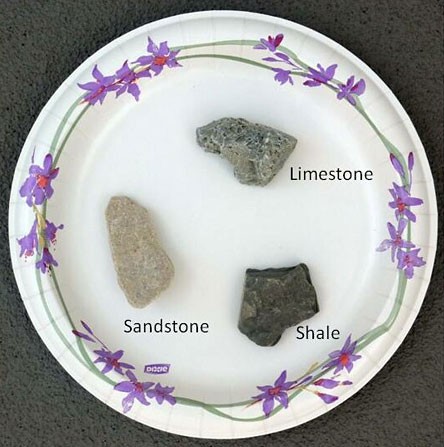
Figure 2. This photo shows an example of a prepared paper plate.
- Look carefully at the rocks (using a magnifying glass, if desired) and write down the differences you observe in your lab notebook. Can you see any pores or small spaces? Do any rocks look like they might be able to soak up oil? Do any rocks look like they might be impermeable to oil (unable to soak it up)?
/-/https/www.sciencebuddies.org/Files/3741/5/Geo_img070.jpg)
Testing Your Rock Samples
- Write down the time in your lab notebook.
- Fill up the eyedropper with mineral oil.
-
Add three drops of oil to each rock sample on each paper plate.
- Place the drops one on top of the other, not spread out over the rock.
- Write down in your lab notebook (in a data table, like the one below) how the rocks look immediately after you placed the oil on them. Be sure to examine the rocks in good light.
- Take photos for your display board, if desired.
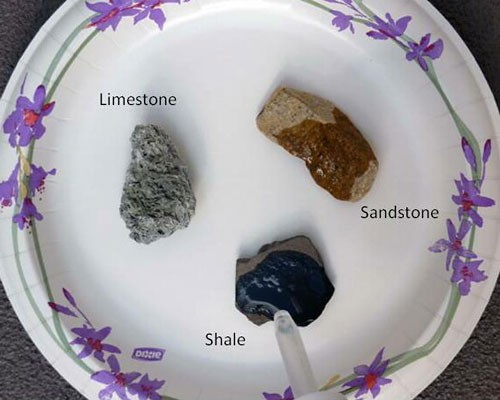
Figure 3. This photo shows the addition of three drops of oil to the rock samples.
Sedimentary Rock Testing Data Table
Rock Type Starting Observations
(right after adding drops of oil, at time equals zero)Observations after 30 min. Observations after 1 hour Limestone 1 Limestone 2 Limestone 3 Sandstone 1 Sandstone 2 Sandstone 3 Shale 1 Shale 2 Shale 3
-
After 30 minutes (min.) from the starting time, examine your rock samples again.
- Write down in the data table how the rocks look now. Be sure to examine the rocks in good light. Use a magnifying glass, if desired.
- Take photos for your display board, if desired.
- Has the oil soaked in, or is it still making a little shiny "pool" on top?
- After 1 hour from the starting time, repeat step 4.
/-/https/www.sciencebuddies.org/Files/3742/5/Geo_img071.jpg)
Analyzing Your Data Tables
-
Create a new data table, like the one shown below, that combines the results from your observations in the first data table.
- Look at the data table for the limestone samples. For each time, was the oil absorbed for the majority of samples? Write down Absorbed or Not Absorbed, or simply Yes or No, if you prefer. Record your results in the new data table.
- Repeat step 1.a of this section for the sandstone samples.
- Repeat step 1.a of this section for the shale samples.
Oil Absorption Data Table
Rock Type 0 min. 30 min. 1 hour Limestone Sandstone Shale
-
Looking at your absorption data table, which rock types do you think are permeable to oil?
- Which type absorbed oil the fastest? Did this match your prediction (before you started testing) about which one looked like it had pores and could soak up oil?
- Which rock do you think is the reservoir rock?
- Which rock do you think is the very porous rock made from shells?
- Looking at your absorption data table, which rock type do you think is impermeable to oil and would make a good cap rock?

Ask an Expert
Global Goals
The United Nations Sustainable Development Goals (UNSDGs) are a blueprint to achieve a better and more sustainable future for all.
/-/https/www.sciencebuddies.org/Files/19755/5/E-WEB-Goal-12.png)
Careers
If you like this project, you might enjoy exploring these related careers:
/-/https/careerdiscovery.sciencebuddies.org/Files/1594/17/pexels-photo-3862371.jpg)

/-/https/careerdiscovery.sciencebuddies.org/Files/1359/18/VNIIOarctic.jpg)

/-/https/img.youtube.com/vi/To3DKP99-1U/0.jpg)
/-/https/img.youtube.com/vi/OgRzJmu03VY/0.jpg)
/-/https/img.youtube.com/vi/6Xvqd8hRC6U/0.jpg)