

Summary
Areas of Science
Difficulty
Time Required
Long (2-4 weeks)
Prerequisites
None
Material Availability
Duckweed can be purchased from plant nurseries, or you can also find it growing naturally in local ponds and marshes. If you find the duckweed in a local water source, make sure you get permission from the land owner or town before taking any.
Cost
Low ($20 - $50)
Safety
No issues
*Note:
For this science project you will need to develop your own experimental procedure. Use the information in the summary tab as a starting place. If you would like to discuss your ideas or need help troubleshooting, use the Ask An Expert forum. Our Experts won't do the work for you, but they will make suggestions and offer guidance if you come to them with specific questions.
If you want a Project Idea with full instructions, please pick one without an asterisk (*) at the end of the title.
If you want a Project Idea with full instructions, please pick one without an asterisk (*) at the end of the title.
Abstract
Some plants grow only in water-logged environments. These plants are usually native to wetlands and are important for the sustainability of aquatic ecosystems. Wetland ecosystems are very fragile and susceptible to the toxic dumping of sewage and fertilizer run-off from neighboring farm land. One very common aquatic plant called duckweed inhabits many wetland marshes. Duckweed grows by asexual reproduction and floats at the surface of the water with tiny roots extending into the water below. Can you find duckweed from a local pond or wetland? You can grow the duckweed at home in bowls of water. Will the duckweed grow well in different types of water? Will it grow better in bottled mineral water than when using tap water? What will happen to duckweed grown in acidic water, or water with fertilizer? Are there other types of water contaminants you can test with duckweed? Consult the Measuring Plant Growth page for tips on how to determine which duckweed is growing the most.
Ask an Expert
Do you have specific questions about your science project? Our team of volunteer scientists can help. Our Experts won't do the work for you, but they will make suggestions, offer guidance, and help you troubleshoot.
Global Connections
The United Nations Sustainable Development Goals (UNSDGs) are a blueprint to achieve a better and more sustainable future for all.

This project explores topics key to Clean Water and Sanitation: Ensure access to water and sanitation for all.

This project explores topics key to Life on Land: Sustainably manage forests, combat desertification, halt and reverse land degradation, halt biodiversity loss.
Careers
If you like this project, you might enjoy exploring these related careers:
Career Profile
Our environment on planet Earth is made up of the air, water, and land. Environmental compliance inspectors work to protect and preserve our environment and the public by making sure communities, individuals, businesses, and state and local governments are in compliance with pollution laws and regulations.
Read more


Career Profile
Soil and water are two of Earth's most important natural resources. Earth would not be able to sustain life without nutritive soil to grow food and clean water to drink. Soil and water conservationists foster the science and art of natural resource conservation. The scientists work to discover, develop, implement, and constantly improve ways to use land that sustains its productive capacity, and enhances the environment at the same time. Soil and water conservationists are involved in improving…
Read more

Career Profile
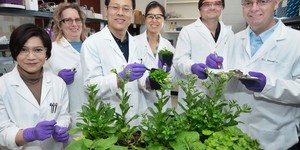
With a growing world population, making sure that there is enough food for everyone is critical. Plant scientists work to ensure that agricultural practices result in an abundance of nutritious food in a sustainable and environmentally friendly manner.
Read more
Career Profile
Have you ever noticed that for people with asthma it can sometimes be especially hard to breathe in the middle of a busy city? One reason for this is the exhaust from vehicles. Cars, buses, and motorcycles add pollution to our air, which affects our health. But can pollution impact more than our health? Cutting down trees, or deforestation, can contribute to erosion, which carries off valuable topsoil. But can erosion alter more than the condition of the soil? How does an oil spill harm fish…
Read more
Career Profile
Imagine having the superpower to ensure that everything around us is top-notch and meets the highest standards. As a Quality Control Inspector, you become a super detective. You inspect and test products like toys, technology and cars. You make sure the products are perfect before they reach the hands of customers. Paying attention to detail and commitment to perfection leads to making sure every item is made exactly as it should be.
Read more

Related Links

Cite This Page
General citation information is provided here. Be sure to check the formatting, including capitalization, for the method you are using and update your citation, as needed.MLA Style
Science Buddies Staff.
"Can Water Plants Be Used to Determine Water Quality?" Science Buddies,
15 Feb. 2024,
https://www.sciencebuddies.org/science-fair-projects/project-ideas/PlantBio_p030/plant-biology/water-quality-plants?from=Blog.
Accessed 20 Apr. 2024.
APA Style
Science Buddies Staff.
(2024, February 15).
Can Water Plants Be Used to Determine Water Quality?
Retrieved from
https://www.sciencebuddies.org/science-fair-projects/project-ideas/PlantBio_p030/plant-biology/water-quality-plants?from=Blog
Last edit date: 2024-02-15
Explore Our Science Videos

Iteration in the Engineering Design Process

Dancing Robot
How to Make a Homopolar Motor - Science Experiment