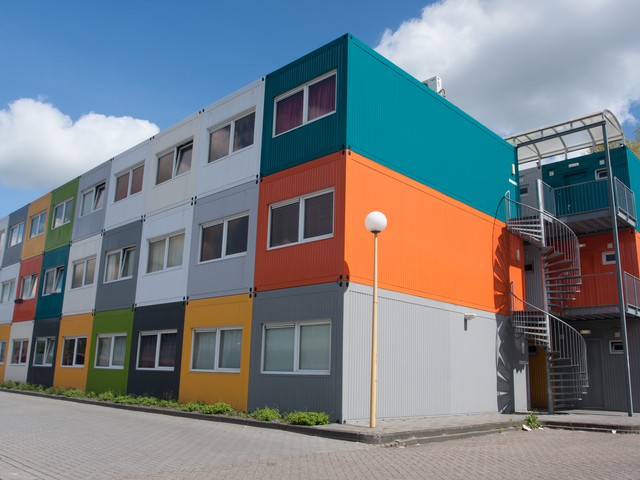
Create innovative designs for college dorms, like this one built from used shipping containers.
Shape the skyline of a city by creating plans for an iconic building.
Design and draw up blueprints for a family's dream house.
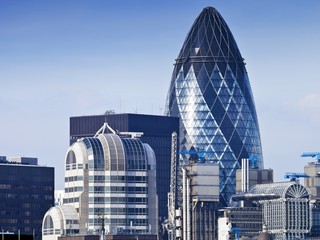
Collaborate with engineers to create modern skyscrapers, like London's Gherkin.
Overview
Listen to this section
The essayist and poet Ralph Waldo Emerson called Greek architecture the "flowering of geometry." Architects blend art and science, designing structures for people, such as houses, apartments, schools, stores, malls, offices, places of worship, museums, sports stadiums, music theaters, and convention centers. Their designs must take into account not only the structure's appearance, but its safety, function, environmental impact, and cost. Architects often participate in all phases of design, from the initial consultation with the clients where the structure is envisioned, to its completion. Architects can enrich people lives by creating structures that are as beautiful to look at as they are functional to live, work, or shop in.
Do You Have the Skills and Characteristics of an Architect?
Speaking:?Talking to others to convey information effectively.
Critical Thinking:?Using logic and reasoning to identify the strengths and weaknesses of alternative solutions, conclusions or approaches to problems.
Operations Analysis:?Analyzing needs and product requirements to create a design.
Judgment and Decision Making:?Considering the relative costs and benefits of potential actions to choose the most appropriate one.
Active Listening:?Giving full attention to what other people are saying, taking time to understand the points being made, asking questions as appropriate, and not interrupting at inappropriate times.
Complex Problem Solving:?Identifying complex problems and reviewing related information to develop and evaluate options and implement solutions.
Reading Comprehension:?Understanding written sentences and paragraphs in work related documents.
Coordination:?Adjusting actions in relation to others' actions.
Monitoring:?Monitoring/Assessing performance of yourself, other individuals, or organizations to make improvements or take corrective action.
Writing:?Communicating effectively in writing as appropriate for the needs of the audience.
Core Tasks
Think about if you'd like the typical tasks an Architect might do:
Prepare scale drawings or architectural designs, using computer-aided design or other tools.
Plan or design structures such as residences, office buildings, theatres, factories, or other structural properties in accordance with environmental, safety, or other regulations.
Direct activities of technicians engaged in preparing drawings or specification documents.
Prepare contract documents for building contractors.
Prepare information regarding design, structure specifications, materials, color, equipment, estimated costs, or construction time.
Meet with clients to review or discuss architectural drawings.
Integrate engineering elements into unified architectural designs.
Administer construction contracts.
Consult with clients to determine functional or spatial requirements of structures.
Develop marketing materials, proposals, or presentation to generate new work opportunities.
Conduct periodic on-site observations of construction work to monitor compliance with plans.
Develop final construction plans that include aesthetic representations of the structure or details for its construction.
Monitor the work of specialists, such as electrical engineers, mechanical engineers, interior designers, or sound specialists to ensure optimal form or function of designs or final structures.
Plan layouts of structural architectural projects.
Design or plan construction of green building projects to minimize adverse environmental impact or conserve energy.
Represent clients in obtaining bids or awarding construction contracts.
Design structures that incorporate environmentally friendly building practices or concepts, such as Leadership in Energy and Environmental Design (LEED) standards.
Inspect proposed building sites to determine suitability for construction.
Perform predesign services, such as feasibility or environmental impact studies.
Create three-dimensional or interactive representations of designs, using computer-assisted design software.
Design environmentally sound structural upgrades to existing buildings, such as natural lighting systems, green roofs, or rainwater collection systems.
Gather information related to projects' environmental sustainability or operational efficiency.
Prepare operating and maintenance manuals, studies, or reports.
Calculate potential energy savings by comparing estimated energy consumption of proposed design to baseline standards.
Tasks 1/3
Salary & Job Openings
Steps to Get There: Becoming an Architect
Try it Out with an Activity or Project
On the Job
More Information
Please create a free account to view this career and access our full library of over 160 STEM careers.
With a free account you will have access to our full library of over 160 STEM careers. Each career profile includes detailed information to help you learn about a career and the requirements to get there. You can explore:
salary information by state
recommended high school coursework
fun projects and activities to test out a career
videos and interviews with professionals in the field