Chemistry Teacher

A chemistry teacher could...
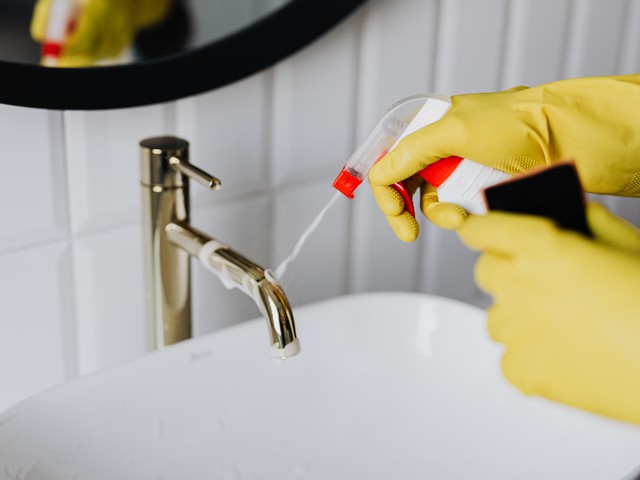
| Inspire students to explore chemistry by challenging them to create an effective, eco-friendly cleaning solution. | ![]() |
Teach students the scientific method, including how to make observations, collect and record data, and draw conclusions. | ![]() |
| Use fun kitchen projects, like making ice cream, to demonstrate what a chemical reaction is. | ![]() |
Lead a field trip to a local pharmaceutical company to help students understand how chemistry impacts their lives. | ![]() |
Key Facts & Information
| Overview | When you hear the word chemicals, you might think of laboratories and scientists in white coats; but actually, chemicals are all around you, as well as inside of you. Everything in the world is made up of chemicals, also known as matter, or stuff that takes up space. Chemistry is the study of matter—what it is made of, how it behaves, its structure and properties, and how it changes during chemical reactions. Chemistry teachers are the people who help students understand this physical world, from the reactions within our own bodies to how soaps and detergents work and why egg proteins can keep a cookie from crumbling. They prepare the next generation of scientists and engineers, including all healthcare professionals. They also help also students develop scientific literacy. | |
| Key Requirements | Enthusiasm for science and chemistry, patience, a positive attitude, observant, with a desire to work with young students and outstanding communication skills | |
| Minimum Degree | Bachelor's degree | |
| Subjects to Study in High School | Biology, chemistry, physics, geometry, algebra, pre-calculus, English; if available, foreign language | |
| Median Salary |
|
|
| Projected Job Growth (2010-2020) |
More Slowly than Average (3% to 6%)
In Demand!
|
|
| Interview |
|
|
| Related Occupations |
|
Training, Other Qualifications
The traditional route to becoming a public school teacher involves completing a bachelor's degree from a teacher education program and then obtaining a license. However, most states now offer alternative routes to licensure for those who have a college degree in other fields. Private school teachers do not have to be licensed, but might still need a bachelor's degree.
Education and Training
Typically, a bachelor's degree in chemistry, and certification to teach in high school, sometimes referred to as a single-subject certification, is necessary for teaching chemistry. These two requisites, as well as a semester of student-teaching, are usually completed simultaneously. Licensing is required by all states to teach in the public school system; however, it is not needed for private schools. Because requirements vary, contact the Board of Education within the state in which you want to teach.
Other Qualifications
In addition to being knowledgeable about chemistry and science, teachers must have the ability to communicate, inspire trust and confidence, and motivate students, as well as to understand the students' educational and emotional needs. Additional skills necessary for success as a chemistry teacher are creative thinking, problem solving, and strong time-management skills.
High school chemistry teachers must have excellent classroom management skills and be able to facilitate learning amongst a wide range of learners. The ability to multi-task is essential.
Teachers must be able to recognize and respond to individual and cultural differences in students, and employ different teaching methods that will result in higher student achievement. They should be organized, dependable, patient, and creative. Teachers also must be able to work cooperatively and communicate effectively with other teachers, support staff, parents, and members of the community. Private schools associated with religious institutions desire candidates who share the values that are important to the institution.
Nature of the Work

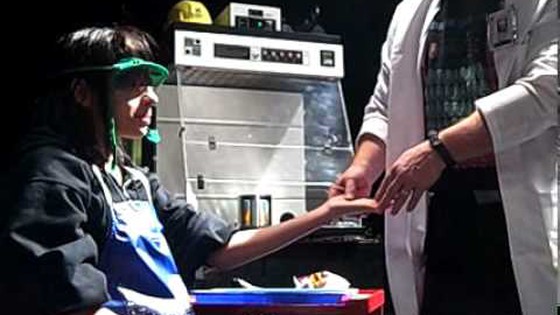
Watch this video of Chemistry teacher Dr. Lew Davis who believes that a little bit of theatrics combined with chemistry demonstrations helps students start asking questions and get excited about chemistry. See how he becomes his alter ego Dr. Death and engages students with his chemistry show.
A chemistry teacher presents concepts that are related to chemistry to high school students in public or private schools.
The majority of a chemistry teacher's time is spent with students in the classroom, with a smaller percentage spent in planning periods and meetings with other staff and parents. The duties of a chemistry teacher include creating lesson plans; preparing and delivering lectures; creating and supervising laboratory activities for students; evaluating student performance; maintaining classroom records; meeting with parents, teachers, and other professionals; and participating in campus events. They may use a variety of teaching techniques, including the use of textbooks, white boards, technology integration, and hands-on materials.
Depending upon the expectations of the employing school, additional research, supervisory, or organizational duties might also be required of a chemistry teacher. Chemistry teachers are generally expected to participate in ongoing professional development and to stay informed about developments in their field.
Work Environment
Seeing students develop new skills and gain an appreciation for knowledge and learning can be very rewarding. However, teaching can be frustrating when one is dealing with unmotivated or disrespectful students. Occasionally, teachers must cope with unruly behavior and violence in the schools. Teachers might experience stress when dealing with large classes, heavy workloads, or old schools that are run down and lack modern amenities. Accountability standards also might increase stress levels, with teachers expected to produce students who are able to exhibit a satisfactory performance on standardized tests in core subjects. Many teachers, particularly in public schools, also are frustrated by the lack of control they have over what they are required to teach.
Teachers in private schools generally enjoy smaller class sizes and more control over establishing the curriculum, and setting standards for performance and discipline. Their students also tend to be more motivated, since private schools can be selective in their admissions processes.
Teachers are sometimes isolated from their colleagues because they work alone in a classroom of students. However, some schools allow teachers to work in teams and with mentors, to enhance their professional development.
Many teachers work more than 40 hours a week, including school duties performed outside the classroom. Most teachers work the traditional 10-month school year, with a 2-month vacation during the summer. During the vacation break, those on the 10-month schedule might teach in summer sessions, take other jobs, travel, or pursue personal interests. Many enroll in college courses or workshops to continue their education. Teachers in districts with a year-round schedule typically work 8 weeks, are on vacation for 1 week, and have a 5-week midwinter break.
Most states have tenure laws that prevent public school teachers from being fired without just cause and due process. Teachers may obtain tenure after they have satisfactorily completed a probationary period of teaching, normally three years. Tenure does not absolutely guarantee a job, but it does provide some security.
On the Job
- Establish and enforce rules for behavior and procedures for maintaining order among students.
- Instruct through lectures, discussions, and demonstrations in one or more subjects, such as English, mathematics, or social studies.
- Establish clear objectives for all lessons, units, and projects and communicate those objectives to students.
- Prepare, administer, and grade tests and assignments to evaluate students' progress.
- Prepare materials and classrooms for class activities.
- Adapt teaching methods and instructional materials to meet students' varying needs and interests.
- Maintain accurate and complete student records as required by laws, district policies, and administrative regulations.
- Assign and grade class work and homework.
- Observe and evaluate students' performance, behavior, social development, and physical health.
- Enforce all administration policies and rules governing students.
- Plan and conduct activities for a balanced program of instruction, demonstration, and work time that provides students with opportunities to observe, question, and investigate.
- Prepare students for later grades by encouraging them to explore learning opportunities and to persevere with challenging tasks.
- Guide and counsel students with adjustment or academic problems, or special academic interests.
- Instruct and monitor students in the use of equipment and materials to prevent injuries and damage.
- Prepare for assigned classes and show written evidence of preparation upon request of immediate supervisors.
- Use computers, audio-visual aids, and other equipment and materials to supplement presentations.
- Meet with parents and guardians to discuss their children's progress and to determine priorities for their children and their resource needs.
- Confer with parents or guardians, other teachers, counselors, and administrators to resolve students' behavioral and academic problems.
- Prepare objectives and outlines for courses of study, following curriculum guidelines or requirements of states and schools.
- Meet with other professionals to discuss individual students' needs and progress.
- Prepare and implement remedial programs for students requiring extra help.
- Attend professional meetings, educational conferences, and teacher training workshops to maintain and improve professional competence.
- Confer with other staff members to plan and schedule lessons promoting learning, following approved curricula.
- Collaborate with other teachers and administrators in the development, evaluation, and revision of secondary school programs.
- Prepare reports on students and activities as required by administration.
- Select, store, order, issue, and inventory classroom equipment, materials, and supplies.
- Plan and supervise class projects, field trips, visits by guest speakers, or other experiential activities, and guide students in learning from those activities.
- Administer standardized ability and achievement tests and interpret results to determine students' strengths and areas of need.
- Sponsor extracurricular activities such as clubs, student organizations, and academic contests.
- Attend staff meetings and serve on committees, as required.
- Perform administrative duties such as assisting in school libraries, hall and cafeteria monitoring, and bus loading and unloading.
- Provide disabled students with assistive devices, supportive technology, and assistance accessing facilities such as restrooms.
Source: BLS
Companies That Hire Chemistry Teachers
Explore what you might do on the job with one of these projects...
- A Soluble Separation Solution
- Balloon Morphing: How Gases Contract and Expand
- Boyle's Law: Pressure vs. Volume of a Gas at Constant Temperature
- Bring on the Heat! Investigating Exothermic Reaction Rates
- Can Adults Pass a Middle School Science Test?
- Charles's Law: Volume vs. Temperature of a Gas at Constant Pressure
- Cold Pack Chemistry: Where Does the Heat Go?
- Colorful Chemistry Creations: Make Your Own Sun Print with Color and Sunlight!
- Crazy Crystal Creations: How to Grow the Best and the Largest Crystals
- Create Your Own Chemistry Color-analysis Tools
- Got Iron? Use a Color-based Test to Measure the Concentration of Iron in Water
- How Do You Get Heat from a Supercooled Solution? Explore the Chemistry Within Hand Warmers
- Investigate the Kinetics of the Amazing Iodine Clock Reaction
- Keep Your Candy Cool With the Power of Evaporation!
- Minds of Their Own: A Chemical Reaction that Changes, then Changes Back!
- More Solubility Ideas
- Presto! From Black to Clear with the Magic of Photochemistry
- Rainbow Fire
- Saturated Solutions: Measuring Solubility
- Scintillating Scents: The Science of Making Perfume
Ask Questions
Do you have a specific question about a career in Chemistry that isn't answered on this page? Post your question on Science Buddies Ask an Expert Forum.
Additional Information
- American Federation of Teachers: www.aft.org
- National Board for Professional Teaching Standards: www.nbpts.org
- National Center for Alternative Certification: www.teach-now.org
- National Council for Accreditation of Teacher Education: www.ncate.org
- National Science Teachers Association: www.nsta.org
- Teacher Education Accreditation Council: www.teac.org
Sources
- O*Net Online. (2009). National Center for O*Net Development. Retrieved May 1, 2009, from http://online.onetcenter.org/
- New York State United Teachers. (2009, February 13). An award-winning high school science teacher shares his classroom insights. Retrieved May 24, 2010, from http://www.nysut.org/newyorkteacher_12139.htm
- Sloan Career Cornerstone Center. (n.d.) Myra Thayer Retrieved September 24, 2010 from http://www.careercornerstone.org/chemistry/profiles/thayer.htm
- Watson, A.P. (2010). Job Description for a High School Chemistry Teacher. Retrieved May 25, 2010, from http://www.ehow.com/facts_4827996_description-high-school-chemistry-teacher.html
- Education-Portal.com. (2010). Chemistry Teacher: Job Info and Requirements for Becoming a High School Chemistry Teacher. Retrieved May 25, 2010, from http://education-portal.com/articles/Chemistry_Teacher_Job_Info_and_Requirements_for_Becoming_a_High_School_Chemistry_Teacher.html
- Ward, Marshall. (2007, March 7). Nantucket High School Chemistry Retrieved September 24, 2010, from hhttp://www.youtube.com/watch?v=NLTbMRgU8z4