Environmental Engineering Technician

An environmental engineering technician could...
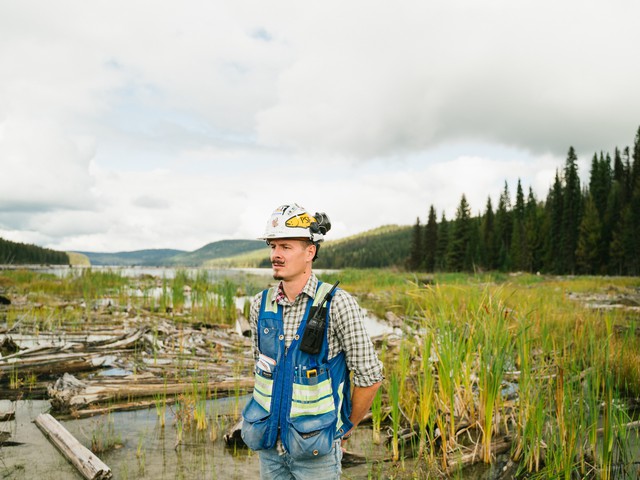
| Set up experiments to test new methods for cleaning up oil spills. | ![]() |
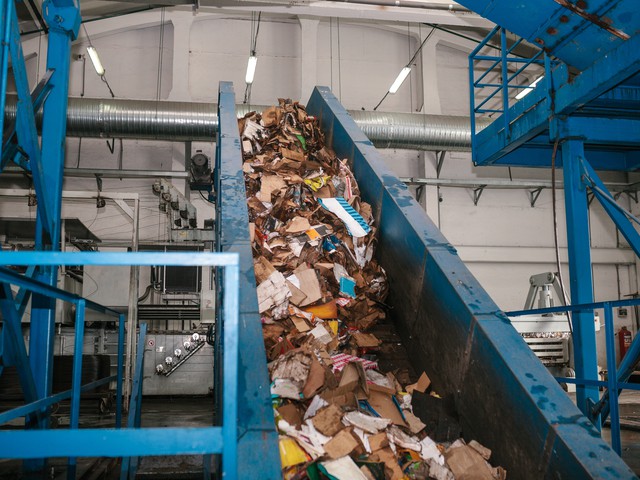
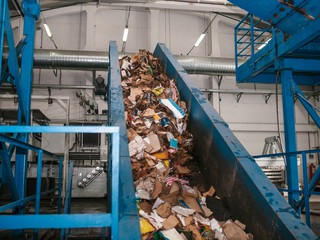
Inspect and maintain the machinery in a recycling plant. | ![]() |

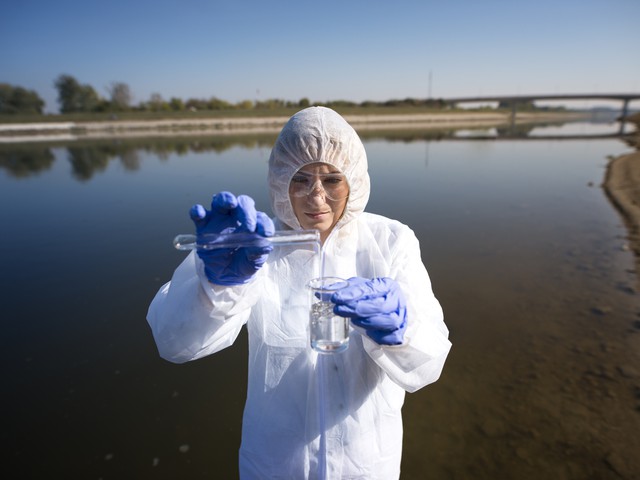
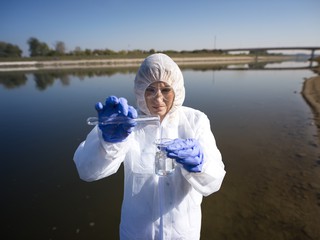
| Test water downstream from a factory to determine whether pollution control requirements are being met. | ![]() |
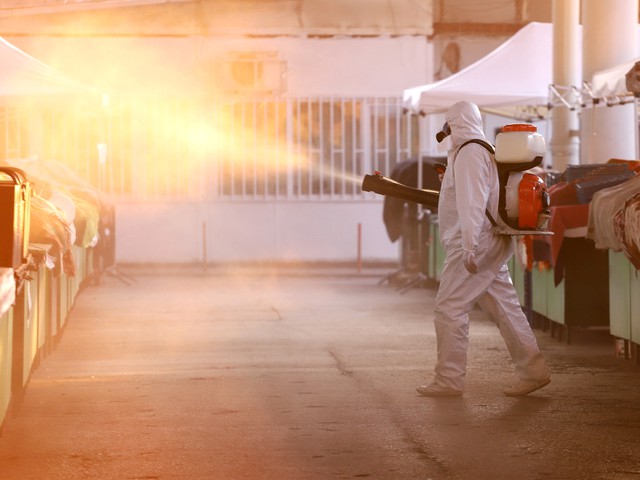
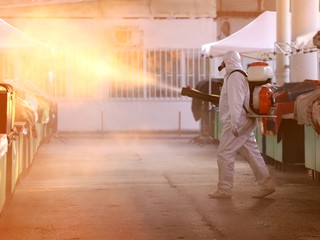
Decontaminate equipment after a hazardous materials accident. | ![]() |
Key Facts & Information
| Overview | Smog, car emissions, industry waste—unfortunately, pollution is a reality that humans have to deal with. However, we can all breathe a little easier with environmental engineering technicians on the job. These people test our water, air, and soil to help us find ways to lessen the impact of pollution. | |
| Key Requirements | The ability to tell when something is wrong or is likely to go wrong, good reasoning skills, strong written and oral comprehension, and must enjoy working on teams and with people | |
| Minimum Degree | Associate's degree | |
| Subjects to Study in High School | Chemistry, physics, algebra, geometry, algebra II, English; if available, computer science, environmental science, applied technology | |
| Median Salary |
|
|
| Projected Job Growth (2010-2020) |
Much Faster than Average (21% or more)
|
|
| Interview | Learn more about the life of an environmental technician in this interview with Simon Cole. | |
| Related Occupations |
|
Training, Other Qualifications
Most environmental engineering technicians enter the occupation with an associate's degree in environmental engineering technology. Training is available at technical institutes, community colleges, extension divisions of colleges and universities, public and private vocational-technical schools, and in the Armed Forces. Because the type and quality of training programs vary considerably, prospective students should carefully investigate training programs before enrolling.
Training in technical areas may be obtained in the Armed Forces. Many military technical training programs are highly regarded by employers; however, skills acquired in military programs are often narrowly focused and might be of limited applicability in civilian industry, which often requires broader training. Therefore, some additional training may be needed, depending on the acquired skills and the kind of job.
Environmental engineering technicians usually begin by performing routine duties under the close supervision of an experienced technician, technologist, engineer, or scientist. As they gain experience, they are given more difficult assignments with only general supervision. Some environmental engineering technicians eventually become supervisors.
Education and Training
An associate's degree in environmental engineering technology is the minimum requirement for entry-level positions. Although it may be possible to qualify for certain engineering technician jobs without formal training, most employers prefer to hire someone with at least a 2-year associate's degree in environmental engineering technology. People with college courses in science, engineering, and mathematics may qualify for some positions, but may need additional specialized training and experience. Prospective environmental engineering technicians should take as many high school science and math courses as possible to prepare for programs in environmental engineering technology after high school.
The type of technical courses required depends on the specialty. Those preparing to work in environmental engineering technology need courses in environmental regulations and safe handling of hazardous materials.
Other Qualifications
Because many environmental engineering technicians assist in problem solving, creativity is desirable. Good communication skills and the ability to work well with others are also important, as environmental engineering technicians are typically part of a team of engineers and other technicians.
Nature of the Work

Watch this video about environmental engineering technicians. Do you think that you would like to be an environmental detective and figure out ways to reduce the impact of pollution?
Environmental engineering technicians use the principles and theories of science, engineering, and mathematics to solve technical problems in research and development, inspection, and maintenance. Their work is more narrowly focused and application-oriented than that of scientists and engineers. Many environmental engineering technicians assist engineers and scientists, especially in research and development. Environmental engineering technicians who work in research and development build or set up equipment, prepare and conduct experiments, collect data, calculate or record results, and help engineers or scientists in other ways, such as making prototype versions of newly designed equipment.
Environmental engineering technicians work closely with environmental engineers and scientists to develop methods and devices used in the prevention, control, or correction of environmental hazards. They inspect and maintain equipment related to air pollution and recycling. Some inspect water and wastewater treatment systems to ensure that pollution control requirements are met.
Work Environment
Most environmental engineering technicians work 40 hours a week in laboratories, or outdoors. Some may be exposed to hazards from equipment, chemicals, or toxic materials.
On the Job
- Receive, set up, test, and decontaminate equipment.
- Maintain project logbook records and computer program files.
- Conduct pollution surveys, collecting and analyzing samples such as air and ground water.
- Perform environmental quality work in field and office settings.
- Review technical documents to ensure completeness and conformance to requirements.
- Perform laboratory work such as logging numerical and visual observations, preparing and packaging samples, recording test results, and performing photo documentation.
- Review work plans to schedule activities.
- Obtain product information, identify vendors and suppliers, and order materials and equipment to maintain inventory.
- Arrange for the disposal of lead, asbestos and other hazardous materials.
- Inspect facilities to monitor compliance with regulations governing substances such as asbestos, lead, and wastewater.
- Provide technical engineering support in the planning of projects, such as wastewater treatment plants, to ensure compliance with environmental regulations and policies.
- Improve chemical processes to reduce toxic emissions.
- Oversee support staff.
- Assist in the cleanup of hazardous material spills.
- Produce environmental assessment reports, tabulating data and preparing charts, graphs and sketches.
- Maintain process parameters and evaluate process anomalies.
- Work with customers to assess the environmental impact of proposed construction and to develop pollution prevention programs.
- Perform statistical analysis and correction of air or water pollution data submitted by industry and other agencies.
- Develop work plans, including writing specifications and establishing material, manpower and facilities needs.
Source: BLS
Companies That Hire Environmental Engineering Technicians
Explore what you might do on the job with one of these projects...
- Are You in Hot Water? Use the Sun's Energy to Heat Your Own Water
- Cold Room? Heat It Up with A Homemade Solar Air Heater
- Decomposing Energy: Extracting Heat Energy from a Compost Pile
- From Brine to Beverage: Solar-Powered Salt Removal
- Goo-Be-Gone: Cleaning Up Oil Spills
- He Huffed, and He Puffed, But Didn't Blow the House Down! How Can Straw Make a Sturdy Building?
- Killing 'Vampires': Saving Money and Power by Turning Off Computer Peripherals
- Printing Power! Save the Environment, One Printer Page at a Time
- Solar-Powered Water Desalination
- Wild Winds: Detecting Turbulence Around Structures
Ask Questions
Do you have a specific question about a career in Environmental Engineering that isn't answered on this page? Post your question on Science Buddies Ask an Expert Forum.
Sources
- BLS. (2009). Occupational Outlook Handbook (OOH), 2008-09 Edition, Bureau of Labor Statistics. Retrieved May 1, 2009, from http://www.bls.gov/oco/
- O*Net Online. (2009). National Center for O*Net Development. Retrieved May 1, 2009, from http://online.onetcenter.org/
- ConstructionSkills. (2008). Environmental Technician - Simon Cole. Case Studies. Retrieved October 23, 2009, from http://www.cskills.org/workinconstr/inconstruction/casestudies/Envtech.aspx
- State of New Jersey. (2009). Department of Labor and Workfoce Development. Retrieved January 26, 2010, from http://lwd.dol.state.nj.us/labor/wfprep/coei/media/English_Video_List_UnCap.html
Additional Support
We'd like to acknowledge the additional support of:
- Chevron