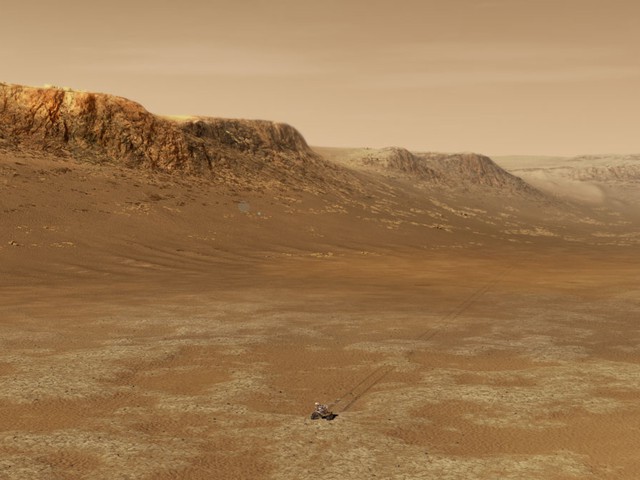
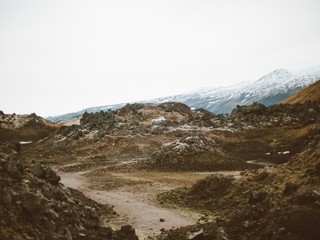
Study the composition of soils on Mars to determine what elements they contain.
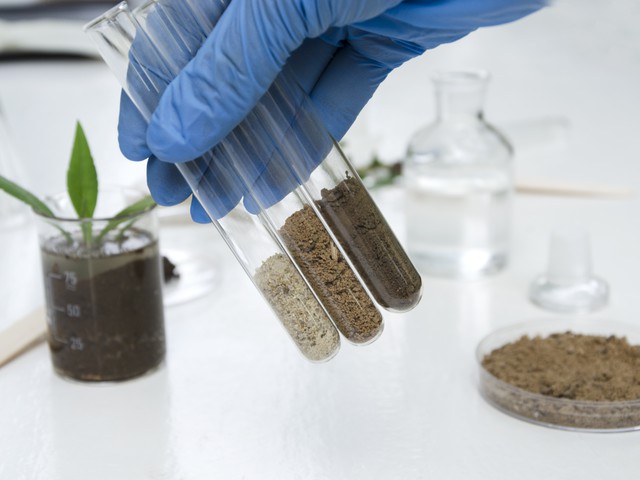
Chemically evaluate soil nutrient levels in a farming community to determine what crops would grow best there.
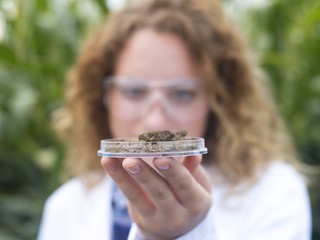
Analyze soil from an archeological site to determine how the landscape previously looked.
Help determine the likelihood of future soil erosion in an area, given soil composition and placement.
Overview
Listen to this section
Not all dirt is created equal. In fact, different types of soil can make a big difference in some very important areas of our society. A building constructed on sandy soil might collapse during an earthquake, and crops planted in soil that doesn't drain properly might become waterlogged and rot after a rainstorm. It is the job of a soil scientist to evaluate soil conditions and help farmers, builders, and environmentalists decide how best to take advantage of local soils.
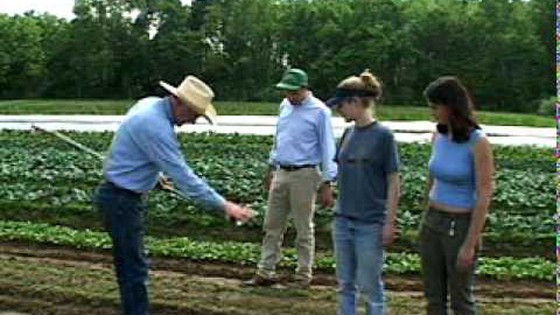
Watch this video for an overview of a day in the life of a soil scientist.
Critical Thinking:?Using logic and reasoning to identify the strengths and weaknesses of alternative solutions, conclusions or approaches to problems.
Writing:?Communicating effectively in writing as appropriate for the needs of the audience.
Judgment and Decision Making:?Considering the relative costs and benefits of potential actions to choose the most appropriate one.
Active Listening:?Giving full attention to what other people are saying, taking time to understand the points being made, asking questions as appropriate, and not interrupting at inappropriate times.
Systems Analysis:?Determining how a system should work and how changes in conditions, operations, and the environment will affect outcomes.
Core Tasks
Think about if you'd like the typical tasks a Soil Scientist might do:
Communicate research or project results to other professionals or the public or teach related courses, seminars, or workshops.
Conduct experiments to develop new or improved varieties of field crops, focusing on characteristics such as yield, quality, disease resistance, nutritional value, or adaptation to specific soils or climates.
Develop new or improved methods or products for controlling or eliminating weeds, crop diseases, or insect pests.
Provide information or recommendations to farmers or other landowners regarding ways in which they can best use land, promote plant growth, or avoid or correct problems such as erosion.
Develop environmentally safe methods or products for controlling or eliminating weeds, crop diseases, or pests.
Investigate soil problems or poor water quality to determine sources and effects.
Conduct experiments investigating how soil forms, changes, or interacts with land-based ecosystems or living organisms.
Conduct research to determine best methods of planting, spraying, cultivating, harvesting, storing, processing, or transporting horticultural products.
Investigate responses of soils to specific management practices to determine the effects of alternative practices on the environment.
Develop methods of conserving or managing soil that can be applied by farmers or forestry companies.
Study ways to improve agricultural sustainability, such as the use of new methods of composting.
Investigate responses of soils to specific management practices to determine the use capabilities of soils and the effects of alternative practices on soil productivity.
Identify degraded or contaminated soils and develop plans to improve their chemical, biological, or physical characteristics.
Develop ways of altering soils to suit different types of plants.
Tasks 1/3
Salary & Job Openings
Steps to Get There: Becoming a Soil Scientist
Try it Out with an Activity or Project
On the Job
More Information
Please create a free account to view this career and access our full library of over 160 STEM careers.
With a free account you will have access to our full library of over 160 STEM careers. Each career profile includes detailed information to help you learn about a career and the requirements to get there. You can explore:
salary information by state
recommended high school coursework
fun projects and activities to test out a career
videos and interviews with professionals in the field