Page 2 of 4

Re: Soil-Based Microbial Fuel Cells

Posted: Fri Oct 14, 2016 10:16 pm
by deleted-380572
Hi Donna,

I will go with the carbon cloth electrodes. However it may take some time for it to ship (around two weeks).

Sorry I couldn't access the paper :( . It seems like there is a lot of useful information in it though. I will try to find more papers on those subjects later. By the way I asked my science teacher if had Lead Acetate in the lab and we do! My general school proposal is due on Monday, but we only have to write about the variables and our expected results.

I am having trouble with finding ways to sequence bacteria... I don't really understand the "16S Rna sequencing" that this paper used: http://www.nature.com/articles/srep30455. Of course if I'm going to identify any mutations in bacteria species, I would have to have a genetic sequence to compare on Blast. Unfortunately I have not learned much genetics in school yet, and do not know the methods behind sequencing and their costs. I will put more research into genetic sequencing tomorrow.

Thanks!
CMS

Re: Soil-Based Microbial Fuel Cells

Posted: Fri Oct 14, 2016 10:27 pm
by deleted-380572
Here is part two of my methods:

2. Substrates of 10 mL of a 0.05% dilution of glucose/vinegar plus 10 µl of Pb+2 will be added to the mfc every 3-5 days. If needed, ph will be adjusted to around 7: https://en.wikipedia.org/wiki/Microbial_fuel_cell.

After 2-4 weeks, bacteria from the mfc will be removed and streaked onto agar dishes in serial dilutions. (Agar dish methods: Agar will be mixed with water and will be autoclaved) Limited exposure to oxygen will be preferred. A series of agar dishes with varying levels of lead will be created (10 µl and up). Dishes will be incubated at 25 degrees celcius in an anaerobic chamber. Colonies will be counted via a computer imaging code that I will make. The top three largest colonies will be transferred to a liquid nutrient broth with a small amount of Pb+2. (The nutrient broth will be boiled to remove oxygen.) After 24 hours of incubation in an anaerobic chamber, lead concentrations will be measured using the kit. A decrease in lead will hopefully be observed. Additionally turbidity of the broths will be measured before and after the 24 hours.

4 groups will be established: R1, R2, and R3 consisting of a bacteria strain each, and R4 consisting of all 4 bacteria. Observation of lead degradation efficiency will be observed.

An attempt to find the mechanism behind lead remediation will be performed if there is extra time:

One experiment will be conudcted: To find if the lead is reduced to a less toxic form or if lead is absorbed into the bacteria:
1. Daphina Magna will be exposed to a positive control (only lead), Dapnia Magna + a pre-made solution of bacteria and lead incubated for 24 hours, Daphnia Magna + distilled water (negative control). If the solution with Daphnia + the bacteria and lead solution affects less Daphnia than the positive control, it can be concluded that the lead was reduced to a less toxic form. Observation of insoluble Pb will also be observed.

Re: Soil-Based Microbial Fuel Cells

Posted: Sat Oct 15, 2016 7:39 am
by donnahardy2
Hi CMS,

You are making great progress.

I will see what I can do to answer the sequencing question and upload a copy of the review article by tomorrow morning.

The bottle of lead acetate is great news.

Donna

Re: Soil-Based Microbial Fuel Cells

Posted: Sat Oct 15, 2016 6:56 pm
by donnahardy2
Hi CMS,

The problem with the reference that you found is that the authors did not describe how to d0 16s rRNA sequence analysis; they probably assumed that all of their readers would know how to do this.

Here is a review article that gives more background information on this technique. This technique is used to identify microbes in a mixed culture, so should be ideal for your MFC.

https://www.ncbi.nlm.nih.gov/pmc/articles/PMC523561/

And here is a commercial website that offers products for 26S sequencing for clinical applications; the website includes details on how to extract the DNA, prepare the library, do the sequencing and interpret results.

http://www.illumina.com/areas-of-intere ... ncing.html

The link for reference for the review article that describes how a microbial fuel cell works was missing some letters. Sorry. Here is the link again, but let me know if you still can’t access it.

http://www.sciencedirect.com/science/ar ... 6815000484

Donna

Re: Soil-Based Microbial Fuel Cells

Posted: Sat Oct 15, 2016 10:11 pm
by deleted-380572
Hi Donna,

Over the past few days I'll been wondering if I should run multiple mfc trials. I might end up with different bacteria for each trial since there is a lot of bacteria in soil. Should I just run one trial with the mfcs but do many trials for the tests I'm going to do?

I will finish reading the sequencing papers by tonight.

Thank you!
CMS

Re: Soil-Based Microbial Fuel Cells

Posted: Sun Oct 16, 2016 7:59 am
by donnahardy2
Hi CMS,

It's always best to do at least two trials if you have time. However, MGC experiments take a long time; it takes several days for the bacteria to start growing and form a biofilm on the electrode, which starts the flow of electrons in an MFC and then a few more days for maximum power generation. So, you can plan to do two trails, but you may run out of time and only be able to do one. Just wait and see how it goes. The same applies to the sequencing part of the experiment.

It's great if you have similar results with two trails; if you don't then you would need to provide a reasonable explanation for the science fair judges. Since you are doing so much background reading, you should be able to compare your general results with other researchers.

Donna

.

Re: Soil-Based Microbial Fuel Cells

Posted: Sun Oct 16, 2016 11:56 am
by deleted-380572
Hi Donna,

If I have a lot of extra time I will do two to three trials for the mfcs. Thanks for the clear-up!

I will attach a link to all the materials I will need for the mfc:

Containers: http://www.carolina.com/stc-secondary-r ... =container

Or

http://www.walmart.ca/en/ip/ziploc-twis ... 0016942453

Compression Fitting: https://www.lowes.ca/flexible-pvc-fitti ... 93129.html

Carbon Cloth: http://www.ebay.ca/itm/3K-200gsm-Real-P ... 1#shpCntId

I did a little reading on heavy metal contaminated soils in Vancouver, and I found that most native soil in community gardens contain hign concentrations of lead. I will find a local community garden, or my schools garden to collect some soil after building the mfc.

I read through the websites you attached last night! Next-generation sequencing seems very useful since I don't really need a whole culture. This pdf explains the whole procedure: http://www.illumina.com/content/dam/ill ... 4223-b.pdf

I'm really happy to know that 16S RRNA sequencing costs about $30 - 40 dollars and not $2000.00 like I previously thought :lol: .
https://www.ncbi.nlm.nih.gov/pmc/articles/PMC2832449/.
However that paper stated that conventional identification could cost as low as $2 per sample. I will look into bacteria identification and find which methods I should use. Since I am dealing with anaerobic bacteria, it will be difficult to conduct biochemical tests without oxygen.


Thank you Donna!
CMS

Re: Soil-Based Microbial Fuel Cells

Posted: Sun Oct 16, 2016 6:14 pm
by donnahardy2
Hi CMS,

\You are making great progress.

I like the ziplock containers, but it will probably be easier to seal the containers from Carolina, since they have a screw capped top. MFCs have to be completely sealed to keep them anaerobic.

Here is a report from a group of students from Buce Logan’s lab on inexpensive materials for MGC’s. They used 1 liter soda pop bottles and plastic milk containers. The problem with these containers is that it would be difficult to get a sample for testing during the experiment.

http://www.engr.psu.edu/ce/enve/logan/b ... al-mfc.pdf

Before you buy the carbon cloth, check to make sure it has a high surface area. I can’t tell from the description on e-bay. The description of the carbon cloth used in this Bruce Logan paper is:

The anode was either ammonia-treated or plain carbon cloth (non-wet proofed, type A, E-TEK)

https://pdfs.semanticscholar.org/a2a3/e ... 7e0317.pdf

The platinum carbon cloth used by the students for the cathode electrode would enhance performance of your MFC. However, the students said that they had to buy a yard of the cloth, and you don’t need nearly that much. See if you can buy a small quantity of platinum carbon cloth as a reasonable price.

The paper on the 16S RNA sequencing is great. I can’t tell if the authors were including labor and materials, or just material cost. They probably did not the cost of the lab set up. Do you have access to a lab where sequencing is done, or will you need to get all of the materials?

Donna

Re: Soil-Based Microbial Fuel Cells

Posted: Sun Oct 16, 2016 7:12 pm
by deleted-380572
Hi Donna,

Yeah that was what I was thinking :D . Plus the Carolina containers come in packs of 16 so I can conduct many trials with many samples. They also come in small volumes so I can fit many mfcs in an incubator.

I read that paper a while ago and I found it very useful! However I don't think I would use soda bottles for that reason, and also because I don't want to drink that much soda to get the bottles.

About the carbon cloth, I will contact the dealer to find the surface area of the cloth. What do you mean by surface area exactly? Is it the surface area of the carbon particles? I tried finding platinum cloth but the cheapest one was about $9.00 per 4 cm2. That would be out of my budget since I would need at least 4 pieces that big.

Yes I think the paper did not cover the lab set up and the labour costs. I don't think I want to buy all the equipment since it would kind of be a one - time use thing... (I don't know if I need them for next year's project). Plus they're really expensive. I will try to find access to a lab at UBC.

Thanks!
CMS

Re: Soil-Based Microbial Fuel Cells

Posted: Mon Oct 17, 2016 7:28 am
by donnahardy2
Hi CMS,

Good thinking. The Carolina containers should work very well. I’m happy that you don’t want to drink that much soda to get soda bottles.

When you call the carbon cloth dealer, ask them if it is similar to non-wet proofed, type A, E-TEK.

The platinum carbon cloth is definitely too expensive.

For the sequencing, you definitely need access to a microbiology lab with sterile pipettes and other special equipment. When you get to that point, you can decide how many samples to do. Maybe just one or two samples from the MFC’s that perform the best would be sufficient.

Donna

Re: Soil-Based Microbial Fuel Cells

Posted: Mon Oct 17, 2016 3:53 pm
by donnahardy2
Hi CMS,

Here is a paper that used manganese dioxide as an alternative catalyst to platinum in a microbial fuel cell. The procedure sounds easy enough; just mix the MnO2 with graphite and PVDF and coat the carbon cloth with a brush.

https://www.researchgate.net/profile/Zh ... b7aa0d.pdf

The catalyst increases the rate of oxygen reduction in the cathode chamber of most MFC’s. Since you will be reducing Pb+2, we don’t know if a catalyst will be essential at this point. If you don’t see any reaction with your MFC, then you may need to add a catalyst. So file this paper away for possible future reference.

Here is another reference to file away for possible future reference. MFC cells are usually powered by mixed bacterial cultures, and these authors wanted to know if was possible for one organism to degrade cellulose and generate electricity. They started with a mixed culture from a paper recycling plant, and diluted the culture to extinction 19 times until they obtained a pure culture that worked well. Since you are interested in the identity of the bacteria, you could use this technique to develop of pure culture, maybe next year. You can’t add anything to your experiments for this year.

http://pubmedcentralcanada.ca/pmcc/arti ... 600-08.pdf

Donna

Re: Soil-Based Microbial Fuel Cells

Posted: Mon Oct 17, 2016 7:26 pm
by deleted-380572
Hi Donna,

Thank you so much for the paper! I'm not quite sure if my school has any polyvinylidene fluorine or meganese dioxide. This will definately be a consideration if my school has these materials!

Yeah I was thinking about running a few microbial fuel cells with the most efficient lead-reducing isolated bacteria so that I can look at the voltages they generate. However I realized that it may be way too much work :) .

How would I be able to determine the mechanisms behind the bacteria reduction of lead? I know that they could use them as final electron acceptors, undergo cell accumulation, enzymatic detoxification, acid production, and a few biotransformation reactions: http://pubs.sciepub.com/plant/1/3/4/.

Of course if this step is too complicated or time-consuming, I may leave it for next year's project. I have a few ideas to detect the reduction of Pb+2 to insoluble lead, bioaccumulation, and acid production by the bacteria, but I have no idea how to detect enzymatic detoxification or biotransformation reactions. Here is my summary of ideas:

1. Detection of Pb+2 to insoluble lead: use a spectrophotometer to run through a liquid culture of bacteria grown with Pb+2 before and after the addition of lead. Potential concerns: bacteria may grow and cause turbidity, thus results are not valid. The idea is that insoluble lead will sink to the bottom of the culture, thus absorbance will be reduced.

2. Bioaccumulation: Measure lead content before and after addition of lead to liquid bacteria culture. Tests for insoluble and soluble lead will be used. (I kind of hope that the bacteria I isolate can undergo this, as the heavy metals can be extracted for recycling from the cells) The idea is that the bacteria will absorb all the lead (or most).

3. Acid production: Measure pH and find acid responsible for the pH. Then measure lead concentrations.

Please note that I have done no research on the validity of those methods. I will do more research on this later.

Thank you! Your advice so far is really helpful! :mrgreen:
CMS

Re: Soil-Based Microbial Fuel Cells

Posted: Tue Oct 18, 2016 1:53 pm
by donnahardy2
Hi CMS,

The reference you found is a general all purpose review of bioremediation, but does not have the details that we need. The two citations that supposedly have the details about lead reduction (43 and 44) do not come up in a Google search, not even the abstracts, so there may have been an error in the manuscript. Or, since the authors are from a non-English speaking country, perhaps the original papers were not written in English. You could try sending an e-mail message to the author of the review paper asking for assistance since the two references might be very useful for your project.

You can keep looking, but a literature reference describing the mechanism of lead reduction by microorganisms does not seem to exist. In general, anaerobic bacteria use metal ions as an electron acceptor in energy metabolism, similar to the way that humans use oxygen. You will need to be able to discuss anaerobic respiration for the science fair judges, but you won’t have the specific details for lead. You probably need to save this part of the project for the future.

The test kit that you are ordering will measure Pb+2. If you skip the first step in the protocol, then the concentration of soluble Pb+2 will decrease over time in your sample. Pb(0) is a solid and should not be detected by the test kit.. Please do check with the lead test kit manufacturer to verify this assumption.

And, since you will presumably be plating Pb onto the cathode electrode, the sold lead should appear on the electrode. If you measure the dry weight of the electrode before you set up the MFC, and then dry it and weigh it after the experiment, the increase in weight should reflect the accumulation of Pb (0). You would need access to an analytical balance for this step.

A microscope with camera might also be useful to show the formation of solid lead.

Measuring the pH of both the cathode and anode chambers is an excellent idea. Do you have a multimeter to measure voltage and current? And a thermometer to measure temperature?

Donna

Re: Soil-Based Microbial Fuel Cells

Posted: Tue Oct 18, 2016 6:42 pm
by deleted-380572
Hi Donna,

I just sent the email asking the manufacture of the lead test kit about the lead it measures! I also asked if anything will interfere with the results and a few other questions.

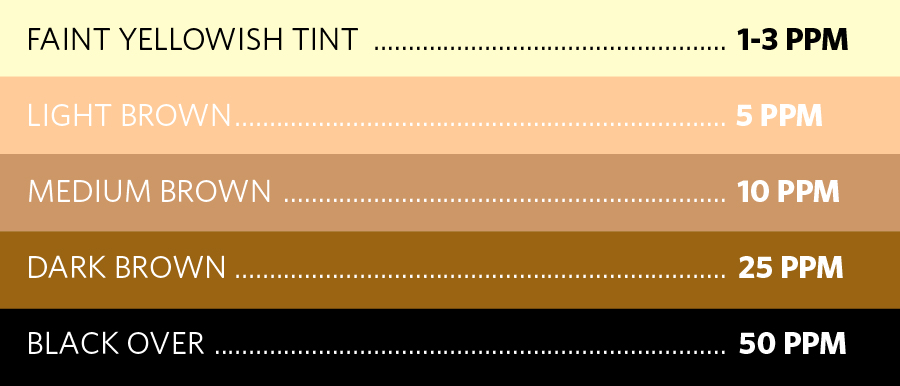
I took a look at the detection limits of the kit, and I realized that my measurements would be really qualitative. Should I first make a few dilutions of lead and use the kit, and then run the finished samples through a spectrophotometer so that I can estimate the lead contents quantitatively? Alternatively I can use a multimeter to measure conductivity and not use the kit at all.

Here is the chart:
Image

I am thinking of measuring the tolerance to lead of the bacteria samples when I first collect them so I know what concentrations of heavy metals I should put in the mfcs. I will do a serial dilution on lead-enriched agar dishes and put them in an anaerobic chamber.

What do you mean by plating Pb onto the electrode? This sounds pretty interesting. I can then observe the electrodes under the microscope.

My dad tried teaching me electronics over summer break, so I have a really fancy multimeter. My friend has a ph meter that I can borrow, and my school has a bit over 300 thermometers that I can borrow :D .

Thanks Donna!
CMS

Re: Soil-Based Microbial Fuel Cells

Posted: Tue Oct 18, 2016 6:53 pm
by deleted-380572
Here is another Lead test kit that seems more accurate: http://www.ebay.ca/itm/281537710793?_tr ... EBIDX%3AIT. However it is more expensive, and will be more difficult to use a spectrophotometer to measure the lead content.

Re: Soil-Based Microbial Fuel Cells

Posted: Wed Oct 19, 2016 3:52 pm
by donnahardy2
Hi CMS,

If you have enough reagent to set up a standard curve and samples, you should be able to read results on the spectrophotometer. You would set up a standard curve from about 0 to 50 ppm and then read the OD of the samples and interpolate from the standard curve. This would work as long as the standard curve is linear.

Since there is the possibility of doing a quantitative assay, it might be best to purchase the reagents separately instead of the test kit.

Here is a link for the details of setting up a lead analysis method. I have not read it in detail yet, but I can see there are some very toxic reagents involved, so this might not feasible.

https://www.cdc.gov/niosh/pdfs/78-158d.pdf

You can also search for dithizone reagent for sale. It looks like the eBay has the cheapest price.

Sigma Aldrich also sells this reagent and they have some research articles that describe how to use the reagent. Look at the bottom of the page for the peer-reviewed papers:

http://www.sigmaaldrich.com/catalog/pro ... &region=US

Measuring the lead tolerance of the bacteria in your sample will be a good experiment to do.

Plating lead. You have a number of experiments that you are planning to do in your project. One experiment is to use the soil from the lead-contaminated garden soil and see what happens to the lead in that sample when you set up in the anode chamber of the MFC. The second part is to use the electrons generated in the anode chamber that are sent to the cathode chamber to reduce Pb+2 (lead ions) to Pb (lead metal). Lead metal is much less toxic compared to lead ions.

To set up a conventional MFC, you will aerate the cathode chamber with lots of oxygen so that the electrons and hydrogen ions from the anode chamber will be transferred to oxygen to create water. (the platinum catalyst facilitates this reaction.) I do recommend setting up a standard MFC first just to make sure you have a set up that is working.
To set up a lead plating MFC, you would put lead acetate in the cathode chamber and exclude oxygen, so that the electrons will be transferred to Pb+2 (in solution) to reduce it to Pb(0), solid lead. This process is called plating and the Pb should be deposited on the cathode electrode.

Go back and read the copper plating paper for more on this topic.

The Wikipedia article on reduction/oxidation reactions may help in understanding the chemistry. The carbon food source that you feed the MFC microbes will be oxidized to produce energy and the oxygen or Pb +2 in the cathode chamber will be reduced. Reduction/oxidation reactions always occur together in complementary reactions.

https://en.wikipedia.org/wiki/Redox

Donna

Re: Soil-Based Microbial Fuel Cells

Posted: Wed Oct 19, 2016 9:10 pm
by deleted-380572
Hi Donna,

I am pretty sure that I have enough reagents to set up a standard curve since 1 - 50 ppm is pretty low, and I am planning to buy a 24 sample kit (I would only need to use 3 tests per trial. I don't think that I will be purchasing separate reagents, since it would a) cost too much and b) take too long to ship. By the way the manufacturer of the kit replied! They only answered one of my questions vaguely, but they said it worked by reacting with sodium sulfate to form black particles.

I was able to find that the manufacturer also had a science fair project outline on their site! :D They explained the chemistry behind the kit: http://www.leadinspector.com/learn/scie ... t-outline/

"The active ingredient in the Indicator Solution is Sulphide anions (S–). When mixed with water, reacts with lead cations (Pb++) to produce a distinctive brownish-black color. The chemical equation is as follows:

Na2S + H2O + Pb++ > PbS + Na+ + OH- + H2S

~
Sodium Sulphide mixed with water and lead produces lead sulphide (PbS). Bi- products in reaction include hydrogen sulfide H2S gas, sodium ions (Na+) and hydroxide ions (OH-)
Balanced equation: 2Na2S + 2H2O + Pb++ > PbS + 4Na+ + 2OH- + H2S"
Could you please explain these equations ? I am not very familiar with chemistry as you can see.

I am pretty sure that the kit tests lead acetate since it requires the use of vinegar. I did some readings and apparently making lead acetate from lead metal requires the use of white vinegar (OTC). Then I read over the instructions for the kit which says that objects must first be immersed in vinegar for 4 hours before adding the other reagents. I'm guessing that step was to turn insoluble lead into lead acetate so that the ion can be detected.

I decided that I'm going to be using glucose or sucrose for my substrates, since I am worried that vinegar will inhibit microbial growth due to its ph. I will be adding my substrates in the beginning of the mfc construction, and sometime after the voltages stabilizes.

I just skimmed through the copper article again. So all we have to do to set up a lead plating MFC is to put the lead in the cathode and exclude oxygen? I have a few questions:

1. In this case what use would the bacteria in the anode be except for creating electrons?

2. How would I exclude oxygen in the cathode?

This actually seems so much more interesting than the project I envisioned. This means that the bacteria in the anode can be any anaerobic bacteria, and that the lead can be removed so much easier. However the cathode would have to contain wastewater infected with lead and not soil? Will that work out? I thought that the anode should contain the wastewater. Can you recommend some more research papers on this subject? I cannot find anything so far.

If I go on with plating, I would not have to go and sequence the bacteria. I'm still not 100% sure about lead plating though since I need a better understanding on this topic. So far I cannot find any research on this other than the copper one.

Thank you!
CMS

Re: Soil-Based Microbial Fuel Cells

Posted: Thu Oct 20, 2016 2:25 pm
by donnahardy2
Hi CMS,

Good work on researching the lead test kit. The manufacturer’s representative may not have understood the chemistry of the test when they send the reply, but since the chemical equation was provided, we know exactly how it works.
Here’s a quick chemistry lesson.

Pb+2=lead ion, S=sulfur, S-2 = sulfide CH3C00-=acetate ion Na+=sodium ion

The lead has a plus 2 charge, sulfide isminus 2, acetate is minus 1, and sodium is plus 1. Plus 1 means that the atom has lost an electron, so there is one more proton compared to electrons. Minus 1 means the atom has gained an extra electron.

First, I would simplify the equation to include just the ions that are involved in the reaction. (The kit manufacturer’s equation is confusing). When lead acetate is mixed with sodium sulfide, the sulfide combines with the lead to form an insoluble precipitate, lead sulfide. The sodium and acetate ions remain in the solution. The “aq” in the equation means that the ions are in solution, the “s” means the product is a solid. This type of reaction is called a precipitation reaction.

The PbS is a black precipitate, so this is what is causing the change in color of the samples.

Pb(CH3COO)2(aq) + Na2S(aq) = PbS(s) + 2 NaCH3COO(aq)

The vinegar is included in the test to allow all of the lead to dissolve before it is tested. You should test each sample with and without the vinegar step. The test without vinegar will measure the free soluble lead in the sample; the test with vinegar will measure the total lead in the sample. Solid lead will dissolve in acetic acid if oxygen is present.
Anaerobic bacteria can use acetate, lactate, or glucose as a carbon source. Sucrose is a disaccharide and the bacteria would have to have an extra enzyme to break down sucrose. Your bacteria would grow, but you would select for bacteria that could use sucrose. Also, sucrose has not been used by any of the references we have read, so I don’t recommend using this. There’s plenty of energy available from acetate, so don’t worry about using this as a carbon source. You will need to check references to find out what concentration to use.

Also, acetic acid is a weakly ionized ion, so the pH will not be too low. You will be adding a small quantity, if you use this.

Here are answers to your questions:

1. In the lead plating experiment, the anode bacteria would be supplying the electrons for the cathode reaction. Metabolizing glucose or acetate for energy creates extra electrons. The supply of electrons will depend on how rapidly the bacteria are metabolizing the carbon source.

2. The copper paper authors flushed the microbial fuel cell with nitrogen gas to exclude oxygen. They set up the MFC with an aerobic cathode chamber in the beginning and then switched to copper sulfate and anaerobic conditions for the plating part of the experiment:

https://www.ncbi.nlm.nih.gov/pmc/articles/PMC4473641/

Yes, this project is becoming very interesting. This always happens when you review the literature on a topic and find out what has been done and what needs to be done. You are right; you would not have to do the sequencing part of the experiment. . Optimizing the lead plating part of the project will probably give you plenty of work to do.

I don’t think anyone has used a MFC for plating lead; this would make your project completely unique. However, the problem is that there are probably some unknowns that you will need to solve.

Donna

Re: Soil-Based Microbial Fuel Cells

Posted: Thu Oct 20, 2016 10:12 pm
by deleted-380572
Hi Donna,

The explanation was very comprehensive. Thank you! I just have one question: What does the 2 in this part of the equation mean: Pb(CH3COO)2(aq)? Is it a plus two charge?

Yeah I don't want to naturally select bacteria that have the enzymes required to degrade sucrose. I will go with the acetate substrate.

How should I exclude oxygen in the cathode? I will probably start with a oxygenated environment first. I am completely stumped with ideas to remove oxygen, as I do not have any access to nitrogen gas. I did realize that without oxygen, water would not be able to be formed in the cathode. Does this mean that there will be excess hydrogen in the chamber? Should I attach a tube to remove excess gas?

In this case I want to only test soil samples from one location. All the fuel cells will be set up, except one would be using the plating method and the other would have the anode exposed to lead. This will be comparing bacteria reduction of lead and plating reduction of lead.

I'll be back tomorrow with more ideas and questions.

CMS

Re: Soil-Based Microbial Fuel Cells

Posted: Fri Oct 21, 2016 3:50 pm
by donnahardy2
Hi CMS,

The 2 in the formula for lead acetate means that there are two acetate ions in the molecule. The lead has lost two electrons, so has a plus 2 charge, so needs two negative charges to make a neutral molecule. Acetate (CH3COO- ) has a minus 1 charge, so two acetates are needs for each Pb+2 ion.

The acetate is a good carbon source, so I’m sure it will work well for you.

Oxygen could also be excluded with carbon dioxide generated by dry ice or burning a candle. I’ll try to think of another way to do it also.

The copper paper authors started the MFC’s for electricity generation and then switched over to the plating application once the MFC was up and running and generating electrons.

I will be gone from my computer for most of tomorrow, but I’m looking forward to your new ideas and questions as soon as I return on Sunday morning.

Donna

Re: Soil-Based Microbial Fuel Cells

Posted: Mon Oct 24, 2016 8:03 pm
by deleted-380572
Hi Donna,

Sorry for the delay. I had a few exams and projects I needed to complete.

I'm just wondering how exactly does lead get plated onto the electrode? I can't seem to find an explanation anywhere, except for electron acceptors? I thought that occured in the anode only?

I found this study: Cathodic Reduction of Cu2+ and Electric Power Generation Using a Microbial Fuel Cell
and this: http://journals.plos.org/plosone/articl ... ne.0113379

This will be useful since I will be comparing anode reduction of lead using bacteria and plating reduction of lead onto the cathode electrode.

I am quite sure that my experiment will yield exciting results.

Why is it nesccessary to exclude oxygen in the chamber? I can insert a candle upside down into the cathode lid, and light it. Then I can simply put the lid back on and it will create an anerobic chamber. How much water should I have in the chamber?

Thank you!
CMS

Re: Soil-Based Microbial Fuel Cells

Posted: Tue Oct 25, 2016 3:34 pm
by donnahardy2
Hi CMS,

Welcome back! I know it’s challenging to keep up with all of your other subjects and allow time to plan the science fair project.

You are absolutely right about the electrons being generated in the anode chamber. Anaerobic bacteria utilize the carbon source and generate excess electrons in the anode chamber. In a MFC, the electrons are transferred to the anode electrode and then carried to the cathode chamber where oxygen is used as the final electron acceptor.
The two copper papers report results of two different investigations.

The paper you found is a really great paper. journals.plos.org/plosone/article?id=10.1371/journal.pone.0113379)

The authors measured the effect of adding copper to the anode chamber. The authors (Feng et. al.) were investigating possible problems in using wastewater as a carbon source for microbial fuel cells and wanted to know what happened when toxic metals are suddenly added to the feed stream. They found that a sudden additional of copper to the anode chamber did inhibit power generation and microbial growth, but certain organisms were able to recover and grow and continue the processing of the feed stream to generate electricity.

Here’s the authors description of the purpose of their paper:
“Wastewater composition could contain potential toxicants such as heavy metals. Sudden surges of high concentration of metals could deteriorate the performance of the biological treatment process. In view of the potential risks of heavy metals in various wastewater steams [15]–[16], developing new quick-responding and cost-effective detection system are necessary.

The authors did find that Enterobacter species were able to grow in the presence of copper and they used the 16S RNA analysis to identify species of bacteria.

In the copper paper I posted,, (https://www.ncbi.nlm.nih.gov/pmc/articles/PMC4473641/ ) the authors (Motos, et. al.) were trying to use a MFC to recover a valuable metal, copper, as well as removing the copper as an environmental contaminant.. They used a standard set up for the anode chamber and used copper sulfate in the cathode chamber and demonstrated that the electrons from the anode chamber could be used to reduce the copper and plate it onto the cathode electrode.

Here’s the way the authors started the purpose of their experiment, from the first paragraph of the introduction.

“Heavy metals pose a serious problem when they are released into the environment due to their toxicity for humans and its negative effect on biodiversity (Norgate and Rankin, 2002). Therefore, removal, and recovery of heavy metals, remediation of polluted sites, and decontamination of waste streams is needed in heavy metal and mining industries. Today, the conventional method to recover metals, such as copper, is by electrowinning, which uses electric power to electrochemically reduce dissolved metals to their metallic form.”

Other noteworthy information from the one of the references from the Feng paper cited the use of a different catalyst on the cathode chamber, Iron phthalocyanine (FePc), as an alternative to platinum.

https://www.ncbi.nlm.nih.gov/pmc/articles/PMC4401482/

The other thing I like in the Feng paper is the precise vocabulary that you might want adopt:

Exoelectrogenic: electricity generating ability

Exoelectrogens: microbes that can transfer electrons from the anode chamber to the electrode.

Answer to question. When using a MFC to generate power, the standard set up uses as much oxygen as possible in the cathode chamber. The oxygen is used as an electron acceptor. When using it to plate a metal ion, such as copper or lead, oxygen must be excluded so will not be used as the final electron acceptor. The metal ion in solution, such as Cu +2 or Pb+2 should be the only possible electron acceptor.

You do need to state your project question before you start your experiments. If you substitute lead for copper in the above papers, you might be able to define the main purpose of your project. The exception is that lead is not a valuable metal, but is much less toxic when present as the metal.

Do you want to demonstrate the lead tolerance and exoelectrogenic ability of the microbes in the lead-contaminated soil? Or, do you want to demonstrate the ability of a MFC to plate lead? You could probably do both by using the lead-contaminated soil as a source of microbes in the anode chamber and adding lead acetate to the cathode chamber

Here is the information on project questions from this website that should help you. What is your project question?
https://www.sciencebuddies.org/science- ... ctquestion

Yes, I’m sure your results will be exciting, no matter what you decide the ultimate objective is.

Donna

Re: Soil-Based Microbial Fuel Cells

Posted: Tue Oct 25, 2016 7:38 pm
by deleted-380572
Hi Donna,

Wow! Thank you so much for the amazing explanations! I have included my full science proposal below:

Introduction: A microbial fuel cell is a fuel cell that harnesses electrons produced by active exoelectrogenic bacteria. There are three main components: the anode, cathode, and PEM (Proton exchange membrane). The anode harbours bacteria in an anaerobic environment, as well as organic substrates that the bacteria oxidize and in turn create electrons and protons. The electrons are conveyed through the PEM into the cathode, where pure water is formed (Rhaimnejad et al, 2015).

One of the potential applications of microbial fuel cells is wastewater treatment. Sewage can be placed in the anode where the original bacteria can effectively generate electricity while purifying water. Various environmental pollutants can be removed (Gude, 2016).

The proposed research consists of the analysis and comparison of two methods that microbial fuel cells can be used to reduce Pb2+. The first will utilize bacteria from the anode to degrade lead, while the second will utilize a novel cathode-based reduction of Pb2+ into Pb0 via plating. Previous research has indicated success in the reduction of Cu2+ with percentages as high as 99.97% (Wang, 2010). Research has also indicated the success of reduction in the anode using the bacteria itself (Feng, 2014). However there had never been any research comparing the two emerging methods, or any research covering microbial fuel cell reduction of lead. Thus this project will be the first examining lead reduction by microbial fuel cells in depth.

Problem/Question: Are microbial communities from lead-contaminated soils effective in both lead plating and physical reduction? This question is meant to be answered through a detailed study involving multiple experiments.

Microbial communities from lead-contaminated soils are naturally selected or mutated to adapt to harsh lead environments. Thus the bacteria may be able to more effectively use lead as electron acceptors in the cathode during anaerobic respiration. Since the bacteria are exposed to so much lead, they may have adapted unique degradation capabilities which would be useful for the anode degradation portion of the experiment.

Materials and Methods:
R1: Physical bacterial degradation mfc. R2: Lead plating degradation mfc

I) a. A standard curve will be created to measure lead content. Four varying concentrations of lead 1 - 25 ppm will be created. The lead will be exposed to and indicator solution by Lead Inspectors, which will result in a specific colour relating to the ppm of lead. The resulting solutions will be examined through a spectrophotometer for absorbance.

The lead inspector kit works as follows: Pb(CH3COO)2(aq) = NA2S(aq) = PbS(s) + 2 NaCH3OO(aq)
When lead acetate is mixed with sodium sulfide, the sulfide combines with lead to form lead sulfide. The lead sulfide is a black precipitate, so the solution turns black.

b. Soil will be obtained from the heavy metal contaminated community garden, and will be sifted and dampened. The sample will then be placed in the anode of the microbial fuel cell along with a carbon cloth electrode. A serial dilution of the soil will be plated on agar infused with varying concentrations of Pb2+ to determine lead resistance. Bacteria colonies will be analyzed via a colony counting python program.

c. R2 will be prepared by creating an anaerobic chamber using a candle, and lead contaminated water will be added to cover the salt bridge entrance. R1 will be measured for lead content and additional lead will be incorporated to match the concentration in R2.

Notes: The mfcs will be fed with 0.05% acetic acid substrates once the voltage stabilizes. (around two weeks). The ph of the mfs will be maintained at 7 using phosphate buffers for optimum results.

II) a. The reduction of lead in R1 will be analyzed by sampling soil and recording lead content using the lead inspector kit. One trial will be run without the addition of vinegar, and the other with addition of vinegar. (This will measure Pb2+ and Pb0 contents separately) Results will be compared to the standard curve.

Ther reduction of lead in R2 will be analyzed by measuring the mass of the cathode electrode using an analytical balance. Observations under the microscope will also be recorded. Finally a portion of the lead will be scraped and measured for lead content before and after exposure to vinegar.

b. During a month, bacteria will be swabbed and analyzed for changes in both colony sizes, quantity, and lead resistance. Bacteria will be grown in an arduino-monitored anaerobic incubator at 25 degrees celsius for 24-48 hours. pH will be monitored with a pH meter. The top 3 largest colonies from both R1 and R2 will be examined via SRna sequencing if there is time.

Further Research:
Identification of the pathways involved with R1 degradation will provide insight on this subject. Additional enzyme analysis of the soil before and after a month can be observed to find the enzymes being produced to degrade Pb2+.


I will be handing this in tomorrow :D If it is approved I can begin my project!

Thank you!
CMS

Re: Soil-Based Microbial Fuel Cells

Posted: Wed Oct 26, 2016 8:02 am
by deleted-380572
Hi Donna,

Quick problem: the safety hazard sheets on lead indicate that we should not put it near fire because it may spread. In order to create an anaerobic chaber in the cathode, I would need to put a candle in it. Do you think that that will be a problem?

Thanks,
CMS

Re: Soil-Based Microbial Fuel Cells

Posted: Wed Oct 26, 2016 4:28 pm
by donnahardy2
Hi CMS,

I’ll answer the quick question first. It’s good that you are reading the MSDS for the lead acetate.

The lead acetate in the cathode chamber will be dissolved in the cathode buffer, so there should be no problem in burning a candle for a few seconds in the air space of the cathode chamber. You could also mix vinegar and baking soda and direct the resulting carbon dioxide into the space with tubing. Carbon dioxide is heavier than air, so it should stay in place.

When you are handling lead acetate to prepare it, you should always wear gloves and safety goggles and avoid touching the solution.

Your project introduction and experimental outline are great. In the future you will need to focus the presentation to make sure you communicate your ideas quickly on the science fair display board, but a comprehensive presentation is perfect for now.

Your project proposal is very good and could be turned in at this point if you have an assignment due. Here are some specific comments in case you have time for any revisions.

The main purpose of your project is to solve the worldwide problem on lead contamination in the environment, so you should introduce this topic first. Include a brief history, describe the toxicity of lead and describe the traditional methods for minimizing lead toxicity (sequestering, adding phosphate).

Next is your first paragraph, which is a good description of a microbial fuel cell. A drawing or photograph showing the main components of a MFC would be great added in here.

The short paragraph on using a MFC for wastewater treatment is good.

Next, describe what previous researchers have done with MFC’s and toxic metals, Include the copper paper you found on the effect of adding copper to the anode chamber and its effect on MFC output and microbial composition. Include the references for using MFC’s for metal recovery:

http://spot.colorado.edu/~zhre0706/pape ... Review.pdf

3.https://www.researchgate.net/publicatio ... monitoring

Include this paper, which is a reference that used sulfate-reducing bacteria to convert soluble lead to lead sulfide:

http://www.sciencedirect.com/science/ar ... 8107001397

Insert the paragraph on microbial communities here. A couple of references are needed. I would change the wording to state that the bacteria from lead-contaminated soils are more tolerant of lead, or they have the ability to grow in the presence of lead.

If you have found any information about the contaminated community garden, you could add it in here. Include a map with the location, a description of how it became contaminated, what the lead levels are, and how using the land for a community garden with the lead-contaminated soil covered is the best use of the land.

Your “the proposed research:” paragraph is a great summary of the purpose of your project.
Next, insert the problem/question.

Materials and Methods.

You need to start making a list of all of the materials you will be using.
a. The description of the lead inspector kit is good.

b. Check the directions for setting up MFC’s. Normally, the soil is collected and added to the MFC as quickly as possible. If you sift it and otherwise handle it, sensitive anaerobes could be killed by exposure to oxygen. You do need to test the soil sample to find out what lhe concentration of lead in the sample is.

Unfortunately, I’m out of time at the moment. I will post additional comments a little later or early tomorrow morning

Re: Soil-Based Microbial Fuel Cells

Posted: Wed Oct 26, 2016 10:17 pm
by deleted-380572
Hi Donna,

That's great! I was worried that there would be a fire :D . The baking soda idea seems good too!

About sifting: I'm worried that insects and sticks would be stuck in the anode. But I do understand that the anaerobic bacteria would be disturbed. Yes I will definately need to test the lead content in the soil.

I am a bit busy this week so sorry for my late replies!

Thanks!
CMS

Re: Soil-Based Microbial Fuel Cells

Posted: Thu Oct 27, 2016 1:39 pm
by donnahardy2
Hi CMS,

Collecting soil sample: I understand your concern about insects and sticks. You certainly wouldn’t want to put a live worm or bug into the MFC. Perhaps you could dig down a couple of inches and get a sample below the bug zone. You don’t know how hard the dirt will be, so this might be difficult. If you can find a sample with some organic material, there will be more anaerobic bacteria present. I guess you should leave the details of this step open for the moment and describe what you do at the time you collect your sample.

Since this is a public garden, do you think you should check with someone and get permission to collect your samples?
The protocol is good to turn in for approval, but I will continue with comments so you can think about the details of what you will do. It’s very important to have a clear idea of what you will do, so the procedure can be clarified and revised before you actually start.

Back to comments on original method proposal. b. You have a lot of work to do in this project and I think it will be important to focus on your main objective of making the MFC, so the bacterial plating step on the original soil sample could probably be omitted. Doing plate counts is a lot of work, and you may not get a lot of useful data from doing it.

Most of the papers we have read report bacterial analysis of the MFC after it has been operating for a while and the authors analyze the population of bacteria that are actively growing, not the original population in the soil sample.
We have read a few statements in the papers that indicate that the number of bacteria in the MFC is proportional to the amount of current generated. So, if you had two MFC’s running under identical conditions, except one contained lead-contaminated soil and the other contained no lead, you could use the voltage and current measurement to show the effect of the lead on the growth of the bacteria. This is what Feng et. al did with copper in their paper; when copper was added to the anode chamber, the generation of current decreased the this was interpreted as inhibition of growth. Voltage and current would give you a measurable result that you could use to show the effect of lead on bacterial growth.

Perhaps to test the lead tolerance of the microbes, you could set up a MFC with no lead or with the lead-contaminated soil, and then add some lead in increments every day to measure the effect of increasing lead on the current and voltage output.

c. This step is not clear. In the Motos copper paper, the authors set up the MFC with a standard aerobic chamber and monitored it until current was flowing, then they switched the cathode chamber from using oxygen as a final electron acceptor to using copper under anaerobic conditions. I think this is a good idea because if you do not see any evidence of lead being reduced, you need to know if the problem is with the set up of the cathode chamber or with the growth of the bacteria in the anode chamber.

Perhaps to measure the conversion of Pb+2 to Pb (0), you could start with a known concentration of lead (Pb+2)acetate in the cathode chamber and then measure the decrease in Pb+2 (as it is reduced to Pb)0) using the lead inspector kit It’s going to be hard to see lead plated onto a carbon electrode, but you should be able to measure the lead left in solution.
Notes: This is good to mention that you are going to feed the microbes during the experiment and use phosphate buffer to maintain the pH. Your final protocol should include the quantity of acetic acid and phosphate buffer added, and you should include pH measurements with your results.

I don’t think you mentioned temperature monitoring. You should measure the temperature of the MFC’s as you go along. If you see some variation in the output of the MFC’s from one experiment to the next, you might be able explain the results if you have recorded a difference in the temperature.

II) a. Your experiment is about lead, not about the amount of acetate added to the chamber. In a science experiment, you can only vary one parameter at a time. Many authors have used several concentrations of acetate to optimize this parameter, so you should be able to find an optimum concentration in the literature that you will add to your MFC’s. Your control should be an MFC without any lead. Unfortunately, you will have to use a soil sample from a non-contaminated source to do this, so it won’t be a perfect control.

The reduction of Pb+2 to Pb(0) measurements. Again, I think that starting with a known concentration of lead acetate in the cathode chamber, and then measuring the decrease in the lead in solution in the cathode chamber will be the best way to do this. If you weigh the cathode electrode before you start, and then dry it and weigh it after the experiment, you might be able to measure the addition of lead to the carbon paper. However, this will be challenging to do, and you may not be able to measure results if your balance is not sensitive enough. The microscopic observation is a qualitative test, but you should definitely include this as it is key for your experiment.

II) b. The culturing and sRNA sequencing analysis would certainly be a good addition to the experiments after a month. By this time, the MFC’s will contain the populations of bacteria that are exoelectrogenic.

Further research: Quick chemistry lesson. Pb (lead) is an element and cannot be degraded and its intrinsic elemental properties cannot be changed. Otherwise, you could work on a project to remove 3 protons and turn it into gold (Au). Pb has 82 protons and 82 neutrons, and can have either 80 or 82 electrons. Pb+2, with 80 electrons, can be reduced to Pb(0) (82 electrons) and Pb(0) can be oxidized to Pb+2 . (There is also a Pb+4 with 78 electrons, but it is rare).

The acetate that you will be adding as a carbon (energy) source will be metabolized, oxidized, or degraded in the MFC to hydrogen and carbon dioxide to produce energy for the bacteria to grow. This process is called anaerobic respiration and the electrons produced by the oxidization process are the basis of the MFC operation. Here is a paper that describes the mechanism of acetate metabolism.

aem.asm.org/content/72/7/5138.full.pdf
https://en.wikipedia.org/wiki/Anaerobic_respiration

Further research: If you can demonstrate the reduction of Pb +2 to Pb0, perhaps you could devise a way to scale up the application to treat lead contaminated sites. The biochemical pathway research would also be interesting, but a plan to solve the world’s lead contamination problems would be very significant.

This is a complicated project with three distinct experiments (bacterial lead tolerance, using MFC to reduce Pb+2, and 16S RNA analysis of lead tolerant bacteria.) I recommend that you sketch a display board and plan what you are going to present, including the graphs. This exercise will help you focus on what you need to do and help eliminate distractions.

When you prepare your display board in the future, it will be helpful to have photos or drawing of each step of the experiments. to help the reader understand quickly what you did.

I would also be helpful, to rewrite the experiments as separate experiments so you can follow each one step-by-step. Try to imagine what you will be doing at each step. This will help you anticipate possible problems in advance and ensure that you have all materials needed for the experiment.

I hope you meet all of your deadlines. Good luck!

Donna

Re: Soil-Based Microbial Fuel Cells

Posted: Fri Oct 28, 2016 4:37 pm
by donnahardy2
Hi CMS,

Here are some additional references that may be useful.

1. You may have this one. It’s a Bruce Logan review article that includes a troubleshooting section. It also includes the standard format for reporting energy production in an MFC:
eb.mit.edu/pweigele/www/SoBEI/Info_files/Logan%202006%20Environ%20Sci%20Technol.pdf

2. Here is an abstract that reports a concentration of acetate used from 80 to 800 mg/L and acetate was better than butyrate. Results were reports for 800/mg/L, so that must have been the optimum.
bioe.orst.edu/Faculty/Liu/2008/documents/2005-Liu-etal-EST.pdf

3. This paper used 1640 mg/L sodium acetate.
fulltext.study/preview/pdf/20243.pdf

4. This paper used 60 mg/L acetate.
https://microbialcellfactories.biomedce ... 014-0091-6

5. Here’s a method for measuring lead resistance in bacteria and isolating lead-resistant bacteria that can be used for lead remediation. I think I found this one before.
http://www.imedpub.com/articles/range-d ... near-g.pdf

6. Here is a paper that describes how bacteria can interact with heavy metals such as lead. This information would apply to the anode chamber of your MFC.
https://www.ncbi.nlm.nih.gov/pmc/articles/PMC3426676/

Donna

Re: Soil-Based Microbial Fuel Cells

Posted: Sat Oct 29, 2016 5:06 pm
by deleted-380572
Hi Donna,

I forgot about getting permission for the soil. :D . I will probably collect my soil from the fraser river because I have no idea who to contact for community gardens.

For the plating, I think I will let the bacteria grow in the mfc for a few days and then plate the bacteria. I'm worried that I will add to much lead that it would kill most of the bacteria. Unfortunately I don't think I can build another mfc because it would require too many resources. Don't worry, I think that it wouldn't be too time consuming; I have a program that can count the colonies for me :D .

How many samples do you recommend that I run for the standard curve? I realized that it would be hard to make the 1 ppm dilusion since I do not have access to a scale that can measure ug, or a micropipette. I was thinking that I could only do higher concentrations and estimate the lower ones using the graph? Otherwise I would need to make large volumes of the solution.

Thank you so much for the papers and explanations! I will hopefully finish them by tonight!

Sincerely,
CMS

Re: Soil-Based Microbial Fuel Cells

Posted: Sun Oct 30, 2016 9:49 am
by donnahardy2
Hi CMS,

It’s important to get a sample from a source that has some lead contamination, as this sample will already be naturally enriched for lead-resistant bacteria. Fortunately, the Fraser River has some lead contamination. Here is a report that’s a few years old, but probably still true. I have not had a chance to check the details, but look at the tables on pages 37 and 52, which show the levels of lead contamination at Annacis and Oak St over time. Are you close to either of these locations? You could get a 2016 sample from one of the sites and update the information.

http://www.env.gov.bc.ca/epd/regions/lo ... as_riv.pdf

See if you can find any new data from the Fraser River. Find out if the authors are still available to provide you with more information for your project.

You won’t add too much lead to the sample. Your testing will measure the lead concentration in the original sample, and you will use concentrations of lead based on references to decide how much to add. And I will post another chemistry lesson as little later today to explain how to add a precise amount of lead to your sample. I think you said you had lead acetate available from your school lab? Is this right? Do you remember what concentrations of lead other researchers have used to measure lead resistance?

For the standard curve dilutions, you can assume that the culture will have between 10 to the 7th and 10 to the 8th (10,000,000 to 100,000,000) organisms per mL. Since you want to have 30-300 colonies per plate, you should make dilutions of 10 to minus 4,5, and 6 to get a countable plate. Please let me know if you need more details on this.

Donna