Page 2 of 2
Re: Bacteria cultures in petri dishes
Posted: Sun Feb 03, 2008 8:02 pm
by procrastinationking
Hello,
1a is from a 10x10cm square in a dusty area; 1b is from an adjacent 10x10cm square in a dusty area; 1c is from another adjacent 10x10cm square. 2b is from the 1a' square after I applied Germ-x; 2b's is from 1b after treated; 2c is from 1c's square after being treated. The order of collecting the bacteria is 1a, apply Germ-X, collect bacteria for 2a; draw an adjacent square for 1b, collect the bacteria, apply Germ-X, collect bacteria for 2b, and so on. The same is for 3a,b,c and 4a,b,c except they're from the teacher's desk. For 5a&b and 6a&b, I collected the bacteria from the bathroom doorknob for 5a, applied Germ-X, collected bacteria for 6a, waited 1 day, collected bacteria for 5b from the same doorknob, applied Germ-X, collected bacteria for 6b. For 5c and 6c I collected bacteria from the classroom's doorknob for 5c, applied the antiseptic, collected bacteria for 6c. To apply the antiseptic I did 5 pumps (10ml) then used a sterile, latex glove to spread evenly. Then, I waited 30 seconds and removed the antiseptic with a napkin by letting it soak, then wiped it away.
Should I rename 5c and 6c, 7c and 8c? Also how would I put it on the chart? Should I put the kitchen counter and the classroom doorknob on a separate graph since they are both only 2 trials and they are collected from the same area?
Would I calculate resistance the same way as I did before and make a new chart for it?
Since there is no proof if they contain the marA gene should I take it out of the background info?
Here's what I'm planning:
Purpose: To find if the frequent use of antiseptics/disinfectants containing ethyl alcohol will cause bacterial resistance.
Hypothesis: If an antiseptic which active ingredient is ethyl alcohol is applied to an area that is not cleaned often, then there will be less resistant bacteria compared to an area that is cleaned often.
I'd post my procedures, data, discussion and conclusion but I'd probably change it after the bacteria grow. But since my discussion and conclusions might be the same I'll just post it anyway to see if I'm on the right track.
Discussion
These results mean that resistance had been developed because Trial 1’s dishes had a reduction of 77% while Trial’s 2 dishes had a reduction of just 33%. This means that the bacteria that survived and reproduced on the kitchen counter, during the 4 exposures to the antiseptics, had developed a resistance to it.
These results agree with the research in which antiseptics are said to cause resistance if it leaves residue. Where it disagrees is the fact that the antiseptic agent used in this experiment left no residue. Ethyl alcohol, the active ingredient in Germ-X, is said to be very effective in killing bacteria—many products that contain it, including Germ-X, claims it kills 99.99% of bacteria. However, the experiment’s results show that the first time the bacteria were treated with Germ-X, there was a 77% reduction; that’s not 99%. This may be because the 12 colonies in dishes 2 and 4 were not bacteria that caused disease (Germ-X claims to kill harmful bacteria; states nothing about neutral bacteria). Or maybe, the Germ-X bottle that was purchased did not contain the correct amount of ethanol. Perhaps the experiment did not test Germ-X’s antiseptic abilities the same way that the manufactures did when testing their product claim. Or it can simply be because the product claim is not true. To find out the truth, more experiments would need to be conducted. What also needs to be considered are the inactive ingredients in Germ-X, which, besides isopropyl alcohol and water, includes: carbomer, fragrance, glycerin, isopropyl myristate, propylene glycol, and tocopheryl acetate.
This experiment may not have accurately tested the development of resistance. This is because the experiment just measured resistance at one point in time. A future experiment could be to select colonies that survive the antiseptic (the ones that grow in the treated dishes), expose them to increasing amount of antiseptics, and see if they survive. Of course, survivors would need to be cultured in a new dish every new time the antiseptic was applied.
There were many things that went wrong during this experiment. This experiment originally had four trials. However, the agar plates prepared for the original trial 2 and trial 3 were prepared in a microwave instead of being boiled, which caused a control to change as well as the unexpected result of no bacteria growing in the agar plate. What was a minor problem was that Petri dish 3 (originally 7) had a crack on the bottom, but this was sealed and it did not seem to affect the results. Trial 2’s dishes only had one day to grow due to the limited time left until the project deadline.
Conclusion
“Superbugs,” or bacteria displaying resistance, are causing many scientists to worry. Some blame it on today’s unnecessary use of disinfectants and antiseptics which may hasten the development of resistance in bacteria. This experiment tested antiseptics and its relationship with bacterial resistance. The hypothesis, “If Germ-X (antiseptic) is applied to bacteria cultures repeatedly, then the bacteria will develop resistance to it,” can be interpreted as correct. However, due to the limited trials and the small amount of bacteria colonies in trial 2, it may not be accurate.
The independent variable, the amount of times Germ-X was applied to the kitchen counter square, had a inverse relationship with the dependent variable, the percentage of bacterial reduction. The more times Germ-X was applied, the lesser the reduction percentage would be. However, the experimental procedure is flawed due to the fact that there were only 2 trials. More trials would be beneficial to this experiment. To see more suggestions on improvements in the experimental design, refer back to the third paragraph of “Discussion.”
Based on these results, antiseptics, such as Germ-X, should include warning/caution labels stating that their product may cause bacterial resistance. Also, Germ-X should re-test their product to see if it really kills 99.99% of harmful bacteria. The same goes for other products containing similar ingredients in them. By doing so, people can slow down the development of “superbugs.”
My bibliography is here (although I still have to make a reference page and endnote my background info):
I still have to include my bibliography for my board background pictures though. EDIT: Err, on my document, if the bibliography source goes over 1 line then the line after the first line is tabbed (doesn't show here).
I didn't make an acknowledgements paragraph, yet (wasn't required for the board). How should I include you?
Something like "Donna Hardy (donnahardy2) of sciencebuddies.org provided much assistance throughout this project. With her suggestions, advice, and her help in designing the experiment, this project was able to be done. Thank you, Donna Hardy."??
I'll try very hard to finish up my new write-up but for now I need to concentrate on my math (I got a B last quarter) since I have a test tomorrow.
Re: Bacteria cultures in petri dishes
Posted: Mon Feb 04, 2008 7:55 am
by donnahardy2
Hi Andi,
You don't need to rename your samples. Just graph the before and after samples together so the reader can tell what happened to the bacteria count when Germ-X was applied. For example, graph 1 a and 2a, then 1 b and 2b, etc. together.
Put all of your data together, including the original kitchen counter results. And, yes, calculate the results the same way.
You can keep the information about the mar A gene in the background. It's not part of yout current experiment, but in the discussion section, you can mention that the next experiment would bee to test for the presence of this gene.
Purpose: You have described your original purpose. Since you have realized that you experimental design did not accomplish your original purpose, you should change this to something like "To find out if there are bacteria resistant to ethyl alcohol present in your environment."
Hypothesis: You have described your original hypothesis. In order to make your project make sense to the science fair judges, You should say something like," Since the use of antiseptics is very common, I think there will be antiseptic-resistant bacteria in the environment."
I'll post more comments later today. Do you have any colonies growing?
Donna
Re: Bacteria cultures in petri dishes
Posted: Mon Feb 04, 2008 12:24 pm
by donnahardy2
Hi Andi,
Comments on discussion:
First paragraph: Since bacteria can float in from anywhere and land on a kitchen counter, your experiments did not test for the development of resistance. Your experiments measured the percentage of bacteria resistant to the Germ-X at the time you tested them. Your experiments did not test when or how the bacteria developed the resistance. So you should discuss the existence of antiseptic-resistant bacteria, and state that you did find antiseptic-resistant bacteria, and include the percentage of bacteria that were resistant.
Second paragraph: You can then continue with your second paragraph and state that you did not expect to find antiseptic-resistant bacteria because you were testing a volatile antiseptic (ethyl alcohol) that does not leave a residue. Background research had suggested that antiseptic-resistant bacteria develop with antiseptics that leave a residue. The rest of paragraph 2 here is good because it provides possible explanation for the unexpected results.
Third paragraph: Delete the first two sentences, the start with something like: To verify the development of resistance, “a future experiment. . . .”
Fourth paragraph: This is a good paragraph, and shows that you have thought about your results.
Conclusion:
First paragraph: Start out by stating your conclusion with the hypothesis, e.g. “My hypothesis was correct because I expected to find antiseptic-resistant bacteria, and I found that ____percentage of the colonies were resistant to Germ-X antiseptic, (ethyl alcohol).” This project confirms that it is possible that “superbugs.” or bacteria displaying resistance are definitely present in our environment. Some scientists blame it on today’s unnecessary use of disinfectants and antiseptics, which may hasten the development of resistance in bacteria, and my project confirms that this is a reason for concern. However, due to the limited number of trials, my results may not be conclusive.
Second paragraph: (change to match the project, or something like): The independent variable in my project was Germ-X, which was applied to the surface being tested. The dependent variable was the number of bacteria that grew after Germ-X treatment.
Third paragraph: This is a great paragraph. You might want to be a little more tentative in your conclusions, and start out: “Based on these results, I recommend (or I think it would be a good idea or something similar) that ……
Your bibliography is excellent. Very comprehensive. I assume you are using the format recommended by your teacher.
Great job! You are almost done.
Donna
Re: Bacteria cultures in petri dishes
Posted: Mon Feb 04, 2008 7:02 pm
by procrastinationking
Hello Donna,
Thanks for the ideas on my discussions and conclusions. I'll incorporate them into my new ones (although, no personal pronouns are allowed), which I'll be making today.
Some of the bacteria are growing but some aren't...I'll post the results later.
procrastinationking wrote: didn't make an acknowledgements paragraph, yet (wasn't required for the board). How should I include you?
Something like "Donna Hardy (donnahardy2) of sciencebuddies.org provided much assistance throughout this project. With her suggestions, advice, and her help, this project was able to get finished. This is especially the case for the experimental design. Thank you, Donna Hardy."??

Is that okay? I need it for my write-up due Wednesday (acknowledgments). (I wish I could include pronouns like "my, mine, me, I."

)
Re: Bacteria cultures in petri dishes
Posted: Tue Feb 05, 2008 7:13 am
by donnahardy2
Hi Andi,
It's very good that you are paying attention to all of the guidelines for your project. Scientific papers are always written in the third person, with no personal pronouns, so you should write your report according to the rules. I don't always see this in my local school district, but it's really the best way to present a scientific report.
Acknowledgements should be very brief; you want to save most of the room on your board for the project. Just say something like ,"Donna Hardy of sciencebuddies.org provided advice for this project. " You can also include any family members that helped you with encouragement, assistance in obtaining supplies for your project, or letting you stay up all night working on the project.
I'm very interested in seeing your results. Don't forget to post them, if you have time.
Good luck!
Donna
Re: Bacteria cultures in petri dishes
Posted: Tue Feb 05, 2008 10:28 pm
by procrastinationking
# of Bacteria Before and After Treatment % of “Superbugs”
Before After Resistance
Dishes 1&2 83 2 2%
Dish 1b&2b 20 1 5%
Dish 1c&2c 13 3 23%
# of Bacteria Before and After Treatment % of “Superbugs”
Before After Resistance
Dish 3&4 9 4 44%
Dish 3b&4b 6 2 33%
Dish 3c&4c 263 8 3%
# of Bacteria Before and After Treatment % of “Superbugs”
Before After Resistance
Dish 5&6 3 1 33%
Dish 5b&6b 11 3 27%
# of Bacteria Before and After Treatment % of “Superbugs”
Before After Resistance
Dish 5&6 3 1 33%
Dish 5b&6b 11 3 27%
# of Bacteria Before and After Treatment % of “Superbugs”
Before After Resistance
Dish 5c&6c 11 4 36%
# of Bacteria Before and After Treatment % of “Superbugs”
Before After Resistance
Dish 7&8 52 12 23%
Dish 7b&8b 99 57 57%
% Of Bacterial Resistance
Dishes 1&2 2%
Dish 1b&2b 5%
Dish 1c&2c 23%
Dish 3&4 44%
Dish 3b&4b 33%
Dish 3c&4c 3%
Dish 5&6 33%
Dish 5b&6b 27%
Dish 5c&6c 36%
Dish 7&8 23%
Dish 7b&8b 57%
Average Resistance of Tested Areas (%)
Area Not Cleaned Often 10%
Teacher's Desk 27%
Bathroom Doorknob 30%
Classroom Doorknob 36%
Kitchen Counter 38%
Those are my results. I've finished my board so now I just need to make my write-up binder (which is basically the same thing except the text is in a binder). When I get my board back (turned it in today) I'll try to upload a picture of it if you want.
Thank you very much.
EDIT: Ehh, when I copy pasted my results it looked like it had the correct spacings. Apparently, it doesn't. If you need me to correct this I'll do so.
Re: Bacteria cultures in petri dishes
Posted: Wed Feb 06, 2008 3:09 pm
by donnahardy2
Hi Andi,
Thanks for sending your data! I'm so glad you had colonies to count on all of your new plates. It's very good that the results are consistent with what you had observed before. All of the tentative discussion and conclusions we had discussed will apply to this data, so I hope you didn't have to spend too much time rewriting your board. Please send me a picture of your board, if it's not too much trouble, and let me know how you did at your science fair. This is a very good project, but the outcome at the science fair always depends on what others have entered.
Donna
Re: Bacteria cultures in petri dishes
Posted: Mon Feb 18, 2008 2:50 am
by procrastinationking
Hello Donna,
Wow, I haven't replied for so long. I'm so sorry, but I had to catch up on my homework.
Ehh, the science fair seems to use a different criteria this year. The judging was much more easier. For example, the head judge--who used to make a lot of girls cry--was much more nicer this year and didn't make anyone cry. Also, for some reason I got second place out of my whole school. This made me really shocked because there were a lot more better projects than mines. The third place also seemed much more simple than some of my classmates projects as well (something about the effect of lights on plants--9th grader). The first place, though, deserved to be first place (something about the relation or something of dark matter to masses of galaxies--12th grader). I think they just wanted one from each grade that entered (9th, 10th, and 12th) so that the lower grade levels wouldn't say they'll always lose to the upper-classmen. Or maybe this year they just judged you on how well you presented (I acted like I knew I was doing

). Another big change is that last year, only 10 people were chosen to go to states, but this year about 20-30 people were chosen and they only named the who were in the top 3. There was this really good one that I though would at least beat mines. It was about combating bacteria resistance with fruit flies or something relating to that. She had helped from the university and it was really complex.
Uhh, you're probably confused about why I included high-school grade levels, but I guess I'll come clean. I'm a 10th grader
. I saw all the complex high school posts so I figured that "Responses to [my] posts...will cover concepts at a middle school level," which was true (haha, I'm probably using those brackets wrong). I feel really happy about choosing to come to this forum, though, since you came upon my topic and started helping me.
Pictures

my board

A wider view (not really
) of my board. No, that guy behind it isn't me.

The girl's board that I thought would get second place (since the first place was so good already) and beat mines. The man wearing the blue shirt was the head judge and I think he's judging the guy that got the engineering award (something about soy beans and fuel).

Some of her many data pages. I don't even know what it is. DNA sequences?
*I'm not sure where the forum rules are, but the "Do's and Don'ts" and there's no Don't post large pictures.*
P.S.
Since I'm going to states, I either have to redo my experiment or do a follow-up experiment. Which do you think I should do? I think it's either in the end of March or in the middle of April.
Re: Bacteria cultures in petri dishes
Posted: Mon Feb 18, 2008 8:12 am
by donnahardy2
Hi Andi,
Congratulations on your win! Your project board looks great! Thanks so much for sending the pictures of your board and others. The photographs of the agar plates on your board turned out very well. I think you won, not because of how complicated your project was, but because of the thoroughness and your scientific approach to the problem.
What is the name of the science fair in the states that you are coming to? The first thing to do is the check the rules and guidelines and make sure your project complies with all of the rules. Microbiology projects usually require special forms, so if your local school did not require these, you need to make sure all of the paperwork is in order before your come.
Also, what is the date of the next science fair? I will think of something for you do to improve the project, because competition will be much tougher at the next level, but I think it's important to have experiments completed at least a week before the deadline, so you will have time to write up the results without staying up all night. What do you think you should do to improve the project? Did the judge make any suggestions or write a comment card?
One possibility for an experiment would be to compare the effects of pure ethanol to the Germ-X, which contains ethanol and other ingredients. I don't think you have time to learn about cloning and do a DNA experiment, but let me know if you are interested in this possibility. One thing you could do today would be to contact the manufacturer of Germ-X and ask how they did their testing to make the product claims. You certainly seemed to be following the product directions, but you were growing bacteria that appear to be resistant to the Germ-X. Do you still have any of the colonies that grew after exposure to Germ-X?
And thanks for telling me you are in 10th grade. This information will help me in giving advice. You definitely should not be intimidated by what you think others are doing. As you know now, your project is just a good as any of the others.
Donna
Re: Bacteria cultures in petri dishes
Posted: Sat Mar 01, 2008 5:42 pm
by procrastinationking
I did it again...I was almost finished with my post but then the web page expired...
I'm very sorry for not replying earlier. I've been struggling with my other subjects (average weekday sleep time: 2:30 am).
I asked my teacher, she told me to ask the coordinator (her first year doing science fair). I asked the coordinator (also my career/life planning teacher as well as a chemistry teacher) and he too, wasn't sure (first year at school). So I went online and found that the judging is right after spring break on April 1. The website is
http://www.hawaii.edu/acadsci/HSSEFcalender2008.pdf.
I'm interested in cloning and DNA experiments, but you're right; I don't think I have the time. What I'm planning on doing (judge's suggestion) is duplicating the experiment but using a disinfectant (maybe the same type Clorox disinfectant wipes I tried in the beginning) this time since they're actually meant for surfaces while Germ-X was mean for human skin. I might instead do the pure ethanol thing you suggested. Where can I buy pure ethanol? I mainly see 70% ethanol solution.
Although you told me to contact the manufacturer on February 18, I still haven't done so. What is the best way to contact them (phone, email, etc)?
Since I had really nice judges, they unfortunately didn't give much criticism (don't really know what to improve). One question that did stump me, though, was one concerning you. When I explained that I went to the science buddies forum and received help that made the development of the experiment possible. When they asked me who had helped me, I think I replied, "an expert named Donna Hardy helped me." They then asked, "how do you know that she's an expert." I didn't know how to reply to that. I know that you are an expert but how should I respond to that question, in case they ask me again at the state's science fair?
Yes, I still have my colonies that grew after exposure to Germ-X (I was unsure of how to autoclave). I put them in Zip-Lock bags, but put they are exposed to in the day. The agar of some of the dishes have dried, though.
I know it's best to reply ASAP and I'll try to. However, I have no guarantees since I have a lot projects due soon as well as tests (quarter 3 is almost ending).
P.S.
The pictures seemed to have been cut off on the right, which explains why you probably couldn't have seen the head/chief judge.
P.S.S. Read the bold if you're busy
This had little to do with science fair.
I've declined to take physics (and AP U.S. history) and instead taking regular physics. The reason for choosing easier subjects over more challenging ones is so that I can join more extra-curricular activities since, apparently, colleges like that. Since I seem to have gotten a teacher with a lot of bad-luck + stress for math, as well as her radical methods of no calculators for Algebra II, I think I've fallen behind in understanding math (I'm probably to blame for being calculator dependent, though).This is the first time I'll probably never get an A for math as well as get a C (I'm at 80% and just bombed a recent test). I'm taking pre-cal next year so I need to focus on that.
Basic physics does not do science fair. I'm just wondering, if I want to go to a good college or get a career in the health field would it be better to change to regular physics and probably receive a C? I still have time (little) to change my schedule for next year.
Re: Bacteria cultures in petri dishes
Posted: Sun Mar 02, 2008 9:54 am
by donnahardy2
Hi Andi,
Thanks for the information. I avoid science buddy time-outs when I know I will be interrupted by writing the reply in a word file. Then I cut and paste at the last minute. It saves a lot of rewriting time. But, I'm glad you persevered and wrote another reply.
I completely agree with the judge who suggested that you just repeat the results. With your other school work, there's no time to do cloning experiments. And, you've already gone through the learning process with your current experimental design, so it should be easier for you to do.
It would be illegal and against science fair rules for you to use pure ethanol for an experiment, but you could try to find denatured ethanol from whatever company provides chemicals for your school. Or, you could ask at a local pharmacy if they know where you could find this. If you can’t get denatured ethanol, then use methanol or isopropanol Ethanol is a 2- carbon alcohol (CH3CH2OH). Methanol has one carbon, and isopropanol has 3 carbon atoms. So either methanol or isopropanol would be the closest chemically to the ethanol. A 70% solution of isopropanol is sold at every pharmacy, so would be very easy to get. Using Chlorox (sodium hypochlorite, a strong oxidizing agent) would completely change the chemistry of your project, and would make the conclusion parts of your experiment very complicated, especially if results are different.
Here's the information for contacting the manufacturer of Germ-X, which I found by googling.
http://www.germx.com/contact.aspx
Germ-X®
You can contact the Germ-X® team by using the information below.
US Headquarters
8515 Page Ave.
Saint Louis Missouri 63114
Tel: 1-866-MY-GERMX
FAX: 314.427.1010
Your comments and suggestions are welcome. For additional information regarding Germ-X® products please visit Vi-Jon.com
I recommend calling to see if you can talk to someone live. I think Missouri time is about 5 hours later than Hawaii time so you would probably want to call between 3 a.m. and noon your time (8-5 Missouri time). So try going to bed early tonight so can get up early in the morning to make the call. Introduce yourself and explain that you have done a science fair project using Germ-X and that you need additional information about the product. You should ask for the experimental design and for data that was used for the 99.99% product claim. Write down any other questions you might have so you won't forget to ask them when you are on the phone. Have a pen and paper ready, and write down the answers. If the company will share the information, you will be able to compare your experiment with yours and explain the differences. Next, ask if they have any explanation for your results. If the person who answers the phone can't answer your questions, ask if you can speak with a company microbiologist. If you don't get a response, then FAX your entire project with a list of questions to the company and ask someone to reply by e-mail. You should explain that you don't want to present any negative information about the company's product; you just want a scientific explanation for the difference in their results and yours. Do not worry if you don't get a response. Companies vary widely in their ability and willingness to respond to customer's inquiries, but any information you can get would be a good addition to your board. Let me know if you are able to get any information. I’m dying to see the product claim data.
An effective antibacterial agent should work on any surface, provided it comes in contact with the microorganism. I don’t understand why Germ-X would work on skin but not on a kitchen counter. But definitely ask the Germ-X representative if there could be a reason.
The question about science buddies from your judge was a good one. Science buddies is a nonprofit organization that recruits scientist-volunteers from companies and academic institutions to help answer questions for K-12 students who are doing science fair projects. We want kids to have a source where they can get the information they need to do the best possible science project. Science buddies has an amazing group of scientific experts available to help on just about any topic, so please tell anyone who asks to check us out next time they need help with a science project.
I have a B.S. and an M.A. in Microbiology, a teaching credential, and I currently work at a company that manufactures research products. My current job is in technical support helping customers who are using chromatography to purify antibodies and other proteins that will be used for therapeutic products. Through the years, I have helped many young relatives and neighborhood kids with their science fair projects and I have advised on projects on just about any subject you can think of. I have also judged at the local science fairs ever since I graduated from college.
It’s very good that you are planning ahead and thinking about next year and beyond. Taking regular physics is fine, because that will still give you a good background for a college-level physics class. However, you should definitely plan to get an A in physics. If you understand chemistry and physics, then you will have a good background for any college science class. It sounds like your current algebra class is a little overwhelming. If at all possible, try to get some outside help, even if it’s from someone else in the class who understands what’s going on. Try to catch up and do every problem that’s assigned. Are you having problem understanding the algebra, or are you making mistakes in doing the arithmetic by hand? If it’s the latter, then don’t worry, because you will be using a calculator in all future math classes. Since you aren’t learning from this teacher, then try to get a different teacher next year, because math is an important subject. Outside activities are important for college applications. You could volunteer at a local hospital or other nonprofit agency; just volunteer to spend 1-2 hours a week for a specific job this summer when you have more time. And it would be great if you could find time for a sports team or something similar, but save time for you to have some fun too (and to get more sleep).
Let me know what happens.
Donna Hardy
Re: Bacteria cultures in petri dishes
Posted: Sun Mar 16, 2008 11:26 pm
by procrastinationking
Hello Donna,
Thanks for your advice on how to avoid time-outs.
About contacting Germ-X is it okay to call them, fax them the project, and email them with the project attached in the email? Or would it better just to do one of those (since they might get irritated)?
Also, since Germ-X's main ingredient is ethyl alcohol, would it be okay to use isopropanol alcohol instead? A pharmacy I visited told me they didn't sell denatured ethanol (I ask where I could find it). Instead I got 70% isopropyl and 91% isopropyl alcohol. Is isopropyl alchol the same as isopropanal Ethanol (I know isopropyl alcohol is the same as isopropanal alcohol, but I'm not sure about isopropanal Ethanol)? Also if it is the same, should I use the 91% solution instead of the 70%?
Thank you for explaining about science buddies and how it works. I am very amazed that someone, as accomplished as you, is helping me with my project. I'll be sure to memorize all of the information before the judging.
About my algerbra II class, it's just overwhelming because I am very dependant on a calculator (which the teacher doesn't allow, unless it's about logarithms and the graphing). So, I make a lot of calculation errors by hand and I take much longer than other people. I fully understand algebra II (I know how the formulas work and I am able to memorize them). To me, bombing a test means getting a "C" so I'm not really failing algebra II. I don't think my teacher teaches pre-cal so I'm pretty sure I'm not gonna have her next year. Thank you for your suggestions.
I'm so sorry I didn't answer earlier. I was planning on answering yesterday but I was too exhausted from a speech tournament.
Thanks for everything,
Andi
Re: Bacteria cultures in petri dishes
Posted: Mon Mar 17, 2008 6:42 am
by donnahardy2
Hi Andi,
It's nice to hear from you again! Sounds like you've been busy, but I'm glad you are going to put the finishing touches on your project.
I think it would be better to call the Germ-X manufacturer and see if you can get a live person to help you. That person could give you their e-mail so you could then send the project to someone who would pay attention to it. If you can't get a live person, then e-mail your project to the company and see what kind of reply you get. Companies vary widely in their ability to respond to inquiries, so don't count on a response. But it would be nice if they would respond and let you know how they did their testing. It would give you something else for your discussion section.
Since you can’t get ethanol, then use 70% isopropanol. Ethanol is a 2-carbon alcohol, and isopropanol is a 3-carbon alcohol, so they are very similar chemically, and will have the same type of effect on bacteria. It’s either isopropanol or isopropyl alcohol; there’s no such thing as isopropyl ethanol, unless the two chemicals have been mixed together. It’s interesting, but 70% alcohol is more bactericidal than a higher or lower concentration, so using 91% isopropanol would not be better than 70%. And, as I recall, the concentration of ethanol in Germ-X is 70%, so you would want to match that concentration.
If you are getting a C in algebra without a calculator, and the problem is making arithmetic mistakes, then you don’t have any long-term worries because you will be able to use a calculator for the rest of your life. Understanding the algebra concepts is the most important thing. Since it just takes more time for you do to the arithmetic, why don’t you try asking your teacher for more time? Some teachers will accommodate requests like this; I know my nephew was able to get more time for chemistry and math tests when he was in high school. But if this is not possible, just try to survive until the end of the year.
Welcome back from the speech tournament. It sounds like you are good at a number of subjects! Let me know if you need more help with your science project.
Donna Hardy
Re: Bacteria cultures in petri dishes
Posted: Wed Mar 26, 2008 2:27 am
by procrastinationking
Hi Donna,
Sorry I haven't answered for almost ten days. I'm busier now than when there was school. There's so much projects from all of my core classes (mainly science and strangely, world history).
DISCLAIMER: Below I have dialogue. I have very poor hearing on telephones and horrible memory so whatever is in quotes may not be exactly what was said (just the general idea).
Well, I've finally managed to call Germ-X. The bad news is, I pretty much screwed up. I called them and a nice lady answered saying it was Vi-Jon (couldn't remember her name but she had a southern accent). I explained who I was and I did a science fair projet using Germ-X and that I needed additional information about the product. I then asked them for the experimental design and for data that was used for the 99.99% product claim. That's where things started to go wrong. She said it was proprietary or something so they couldn't disclose it. I started panicking so I just said sorry and told her bye. My teacher luckily asked me if I talked about my experiment and remembered it was one of the things I had to do (I printed out your post and highlighted the key parts but was too freaked out to remember to look at it). So I called Vi-Jon again, hoping to get a different person so I could start all of but, oh no, it was the same lady and she even remembered my name ("Hi this is XXX, you've reached Vi-Jon" <please don't be her, it sounds like her...>"hello...?" "Andi!" <oh no...>). I then managed to tell her that I tested Germ-X on surfaces and found that it didn't kill all the bacteria. She told me Germ-X is an antiseptic used for hands. I was like <aha, I'm ready for this!> so I said, using your words, "But an effective antibacterial agent should work on any surface, provided it comes in contact with the microorganism. Is there a reason why it would work o nthe skin but not on a surface?" My diminishing confidence was blasted to oblivion once she started saying "But, Andi you have to understand that for an antiseptic product to be marketed they have to go through tests and processses by the Federal _____ _____ (FDA???) in order for it's claim to be backed." She said a lot more about this but by then I knew that it wouldn't really help me. I just remember her saying something like, "So if we didn't pass all those tests we wouldn't have been able to market our product." And then I said "Oh...I see...Thank you for answering my questions" "Bye Andi" "Sorry...Bye."
And that was it. I then looked at the paper and realized I forgot to ask forfor the company's microbiologist (the lady made it seem like she knew what she was talking about) and didn't explain that I didn't want to prisent any negative information about the company's product (she seemed perfectly fine when I talked about my results). Most importantly I forgot to ask for an email that I could send my project to (her explanations at the time seemed to say to me that Germ-X doesn't work on surfaces so that's good enough explanaiton). I wanted to call again but, since I'm very shy and cowardly towards adults, as well as pessimistic, I didn't want to bother her again since she seemed to have wasted a lot of time with me and thought she might get annoyed (she wasn't mean and she seemed happy but my mind distorts things when negative things happen). Overall, it showed me that I just wasn't prepared enough, which is why this happened.
Do you think I should call them (probably her again) back?
Also, in one of the petri dishes that I was using to collect the bacteria for the before and after, when I was swabbing I ripped the agar. Should I disregard the whole trial? I still have it growing bacteria.
If you're too busy, you can just read the boldened text.
I know I should answer right away but I'm just so busy (not a good enough excuse  ). There's a high probability I'll answer tomorrow
, since my world history group partners haven't said anything about meeting tomorrow, yet. However, I just opened my email today and my water pollution partner emailed me on the 16th asking for who's doing what in our project. I don't think that'll take long. I'm not sure if there's any speech practice this week (I only went to one last week since I ditched the others to work with my world history group) so if there is I might have to go [this is practice for state's so if i don't show up I might get kicked out, since it's also my first year in the speech club (just in case you're wondering I qualified before the last tournament, the last tournament, the advisor/teacher just put me in so more people could qualify for state's (more people=more qualifications)) Just in case you're wondering, I'm also not in one of those fancy categories such as debate, oratory, original oratory, impromptu, and the like. I'm in something probably considered more like drama than speech; I'm in humourous interpretation (suprisingly)].
I'm sorry for all my ramblings and if I've disappointed you,
Andi (that ^ looks sort of too long...)
Re: Bacteria cultures in petri dishes
Posted: Wed Mar 26, 2008 6:29 am
by donnahardy2
Hi Andi,
I am not disappointed at all; I'm just glad you went ahead and actually made the call. Do you remember that I said that you should not count on getting information from Germ-X? It sounds like you got a very nice person to talk to, but she didn't answer any of your questions or even respond to your question. The response about proprietary information was extremely unhelpful. Even if she was not allowed to give out proprietary information about a protocol, she could have tried to answer the question in a different way that would have explained why you obtained discrepant results. If Germ-X kills bacteria on hands, as it claims to do, it would also kill bacteria on other surfaces. It would have been nice to be able to analyze the two protocols and be able to explain why Germ-X did not work for you, but the company would not give you the information, so you just have to report your results. You could add a note to your board saying that you did contact Germ-X, but the company was not willing to give you any information. From your report here, I doubt it would be worthwhile to try contacting the company again. It sounds like you did as well as possible with this mission. You should not be concerned at all because you didn't get a helpful response from the company. Making this call was a good experience for you.
In the scientific world, scientists will share information about procedures and results. If you read a scientific paper, or a science fair board, the exact procedure for doing the experiment will be described. Then, anyone can, reproduce the method and get exactly the same results. I wonder why Germ-X would not share their protocol?
For the agar plate that was accidentally damaged when you swabbed it, you should go ahead and incubate it and try to count the colonies. However, make a note about the plate, and consider excluding it if the results are completely different than expected.
It sounds like your school life is very hectic, but that you are getting good experience in a wide variety of subjects. Participating in the speech club is a good idea, but it sounds like you are trying to do a lot. I would not have guessed you would be in humorous interpretation, but this could be something good to balance all of the serious things you are doing.
Donna
Re: Bacteria cultures in petri dishes
Posted: Wed Mar 26, 2008 6:59 am
by donnahardy2
Hi Andi,
I just called Germ-X and talked to Roslyn, who was the same person that you talked to, and I received the same replies (proprietary information) that you received. However, I did get a little information. The protocols used for testing Germ-X are specified by the FDA, and available from the FDA. I asked to speak with a company microbiologist, explaining that I am trying to advise you on a science fair project, and I needed some more information. The R & D group at Germ-X did respond to Roslyn and told her to send me the file from FDA, and she is going to FAX it to me. I'll forward it to you as soon as I receive it.
Donna
Re: Bacteria cultures in petri dishes
Posted: Wed Mar 26, 2008 2:38 pm
by procrastinationking
Thank you so much! Wow, when I asked for help I had no idea you were going to call them on your own. "Wow", that's all I have to say. And "thank you" so, so much.
Wow and thank you,
Andi

Re: Bacteria cultures in petri dishes
Posted: Wed Mar 26, 2008 3:34 pm
by donnahardy2
Hi Andi,
You are welcome. I just wanted to see if a request from a different source would help get more information, and I confirmed that the company will not share the information you need. Rosalind finally (very politely) told me that she could not give me any more information, so it's time to give up.
The problem is that Germ-X has been approved by the FDA for use on human hands only. The company has obviously complied with all of FDA's rules for making this product claim, and they have filed these results with the FDA, but unfortunately the company will not share any of the details. And, since they didn't test the product on counter tops or other surfaces, they cannot make any other statements about the use of the product other than on human hands. They cannot even recommend for use on feet because they did not do this testing. This is a legal issue because companies have to be very careful about making product claims that are regulated by the FDA.
For your science fair project, if the judges ask you about the apparent discrepancy, you can explain that Germ-X tested the product on human hands only with an unknown protocol and unknown microorganisms; you tested the product on counter surfaces using the procedures you have described. Scientifically, if researchers don't use exactly the same protocol, then results would not necessarily be expected to be the same. However, 70% ethanol is a standard solution used to sterilize surfaces (with a one hour exposure time), and is accepted for this use by the FDA, so I don't understand why the Germ-X did not significantly reduce the bacterial count. Perhaps your current experiment will help resolve this issue.
You should now concentrate on completing your experiment and revising your board. Please let me know about the results of your second experiment. Hopefully they will be consistent with the first experiments.
Donna Hardy
Re: Bacteria cultures in petri dishes
Posted: Sun Mar 30, 2008 12:56 am
by procrastinationking
Hi Donna,
That was expected of Germ-X, but thanks for verifying what happened. I'll be able to use it in my conclusion.
I have some new bad news (sure been getting a lot of that). Thanks to my stupidity again, my second experiment has gone horribly wrong. As usual, I assumed (I have to stop doing that) that 70% ethanol worked the same way as Germ-X (despite the obvious differences). So, since there wasn't really any directions for cleaning surfaces on the label (only external body), I put the isopropyl onto the surface for just 30 seconds. Since I did not know I had to expose the surface to alcohol for one hour until now, I was wondering why my results were messed up. There's the bad news. My results are messed up. I was having a bad feeling about my experiment since the beginning; bad start (not enough petri dishes and trials due to unavailability during spring break. Since there wasn't enough petri dishes, I could not duplicate my experiment and was only able to test isopropyl, not Germ-X again). My results are crazy and inconsistent (I don't even have 2 trials for some). Here they are...
# of Bacteria Before and After Treatment % of “Superbugs”
Before After Resistance
Dishes 1&2 225 91 40%
Dishes 1b&2b 27 11 41%
This was the area not cleaned often (same as last time). Only 2 trials...
# of Bacteria Before and After Treatment % of “Superbugs”
Before After Resistance
Dishes 3&4 TNTC 189
This was the teacher's desk. The before dish had way over 300 (too many tiny colonies). Not sure how to find resistance for it.
# of Bacteria Before and After Treatment % of “Superbugs”
Before After Resistance
Dishes 5&6 123 25 20%
This is the doorknob...
# of Bacteria Before and After Treatment % of “Superbugs”
Before After Resistance
Dishes 7&8 43 26 60%
Dishes 7b&8b 21 8 38%
This is the kitchen counter. I originally planned to have 2 trials for all the surfaces located in school. But since the teacher suddenly became unavailable, I had to do two trials at home so I wouldn't have wasted the petri dishes.
Since I messed up big, should I still use the results (is there a way to find resistance for the trial with the TNTC or count all the colonies)? Should I just use the dishes 1&2, 1b&2b, 7&8, and 7b&8b? Or should I regard it as a failed experiment since I did not go through the proper process to sterilize a surface?
I can only imagine your frustration. After helping out a kid with everything, you had every right to expect good results. Instead you got this.
Sorry...
Andi
P.S.
If you feel I don't deserve your help anymore, I'll understand.
Re: Bacteria cultures in petri dishes
Posted: Sun Mar 30, 2008 8:43 am
by donnahardy2
Hi Andi,
I wish you could stop worrying so much! You didn't mess up at all. It sounds like you reproduced the experiment using isopropanol instead of Germ-X, and that your results are remarkably similar to the results you obtained with Germ-X. It’s a good thing you didn’t expose the surfaces for an hour, because that would have been changing your experimental design. What you wanted to do was reproduce your original experiments to show that your results were valid, and that’s what you did. The isopropanol gave similar results to the Germ-X. There were resistant bacteria located on all of the surfaces.
In a scientific experiment, you set up the experiment and measure the results. The results are whatever they turn out to be; results cannot be messed up.
I don’t think you mentioned doing a negative control. This would be a plate that was not inoculated and that would show that your agar was sterile before the experiment. Do not worry if you didn’t do this, but think about how you can explain this, just in case someone asked about it. You didn’t need a positive control, because your agar plates obviously supported bacterial growth quite well.
For the sample on the teachers desk, you can report the percentage of resistant bacteria as greater than 37% ((300-189) divided by 300).
I am attaching the information that Rosalind from Germ-X sent me in reply to my questions. You can see that the information does not address our questions at all.
Now, the judging is Tuesday, so just concentrate on finished your write up today, and go to bed early tonight. You can let me know if you have any last minute questions. Please relax and try to enjoy the experience. I’m sure you will do fine, and your project is great!
Donna
Re: Bacteria cultures in petri dishes
Posted: Sun Mar 30, 2008 12:28 pm
by procrastinationking

I'm really relieved that you're not mad.
So if the isopropanol gave similar results to Germ-X, can I conclude that maybe Germ-X would have killed more bacteria if I exposed the surface to it for one hour? Also, I can't seem to find any sites where they say to sterilize a surface you leave on the alcohol for 1 hour (they just say to wipe surfaces with alcohol). If possible, can you send me the site where you got it from? EDIT: or can I put this page's url into my bibliography and have you as the author?
How would I put in this experiment that tests isopropanol? Would I put it into my last step of my first experiment's procedure, or should I put "second experiment" as a title and put the materials and procedure under that?
Unfortunately, there wasn't enough dishes to make a negative control.
Is there a way to make a bar on a bar graph show that it is greater than 300? Or should I just put 300 and have an asterisk next to it and an asterisk at the bottom saying it was too numerous to count as in greater than 300?
For the attachment, I want to include it on my board. However, do I need to put "General Facts Regarding Hand Sanitizers" was recieved by a ScienceBuddies.org expert who recieved from a Vi-Jon representative?
Ehh I don't think I'll be sleeping today. Haha.
I'm so glad you're not disappointed
Thanks so much,
Andi
EDIT2: Just to make sure, to calculate the percent resistance it's just the after divided by the before, yeah? So, only dishes that have TNTC is an exception [(300 minus after) divided by 300]
Re: Bacteria cultures in petri dishes
Posted: Mon Mar 31, 2008 7:00 am
by donnahardy2
Your experiment is complete the way you did it, and your repeated experiments reproduced the original results using either Germ-X of 70% isopropanol. Measuring results at one hour would be a completely different science fair project, so don’t mention the time in your write up. I think the reason you won at the first science fair is because your write up was very thorough and clear. Adding other variables and concerns at this point would be confusing.
In your procedure section, you should state that you did two experiments, one with Germ-X and one with isopropanol. Then, in your results section I think it would be better to have one chart labelled “first experiment” (Germ-X) and a second graph with “second experiment.” (70% isopropanol)
I don’t have a reference for the one hour exposure time in 70% ethanol, but I’m sure it’s in a standard reference manual some place. You should not mention this at all for your project write up because you didn’t have a one hour exposure time.
For your bar graph, just put 300+ or >300, or whatever fits best in the space. TNTC is the standard abbreviation for >300, so that would be acceptable as well.
I would not put the information from Germ-X on the board. If you have a notebook or folder, you could include it there, but it doesn’t deserve a place on your board because it didn’t have any information that helped explain the results of your project. If you do reference it, it can be found on the Vi-Jon website. It is a product claim, not a scientific reference.
If someone asked you about a negative control, you can say that you thought about doing one, but that you ran out of plates. Be sure you then explain what a negative control is (verifies the plates were sterile at the start of the experiment).
I’ve enjoyed working with you. I think you have done a great job. You have to let me know what happens at the science fair tomorrow. Good Luck. And please do get some sleep because you’ll do better if you have to talk to judges tomorrow.
Donna
Re: Bacteria cultures in petri dishes
Posted: Tue Apr 01, 2008 2:12 am
by procrastinationking
Unfortunately, I finished my board and went to sleep at 3:5X am. If only i waited till 4:00 am (time you posted) then I would have seen all these things I missed out on. I put on the one hour cleaning thing, and the general facts from the board
. I had to set up the board today at the convention center so technically the board was due before I could read your post.
Ehh, I'm sorry if my grammar doesn't make sense, I'm sort of sleepy. I'll try to take pictures tomorrow (my board isn't exactly as nice as the first one). There seems to be a much larger amount of participants this year (7XX people compared to last year's 4XX). There's especially a lot in microorganisms that look really good. There was this one board and her bacteria....the colonies were huge and yellow [(she had lots of places tested but what caught my attention was a kitchen counter; makes me think I did something wrong since my bacteria are small and white) this wasn't even one of the fancier board].
Thank you
Andi
Re: Bacteria cultures in petri dishes
Posted: Tue Apr 01, 2008 6:05 am
by donnahardy2
Hi Andi,
I'm glad you didn't see my post before you went to bed; your getting some sleep was much more important. I'm sure your board was fine, and I'd love to see it if you can post it again. My suggestions were just minor points, and your overall project was very good. I'm sorry I didn't realize my timing was off and you wouldn't have time to change anything, otherwise, I would not have made any additional suggestions. Please let me know about the results of the judging.
Well you are finished with this major project now, so you can spend more time on algebra homework. I have really enjoyed working with you!
Donna
Re: Bacteria cultures in petri dishes
Posted: Sun Apr 06, 2008 2:35 am
by procrastinationking
Hello,
Sorry I haven't replied sooner.
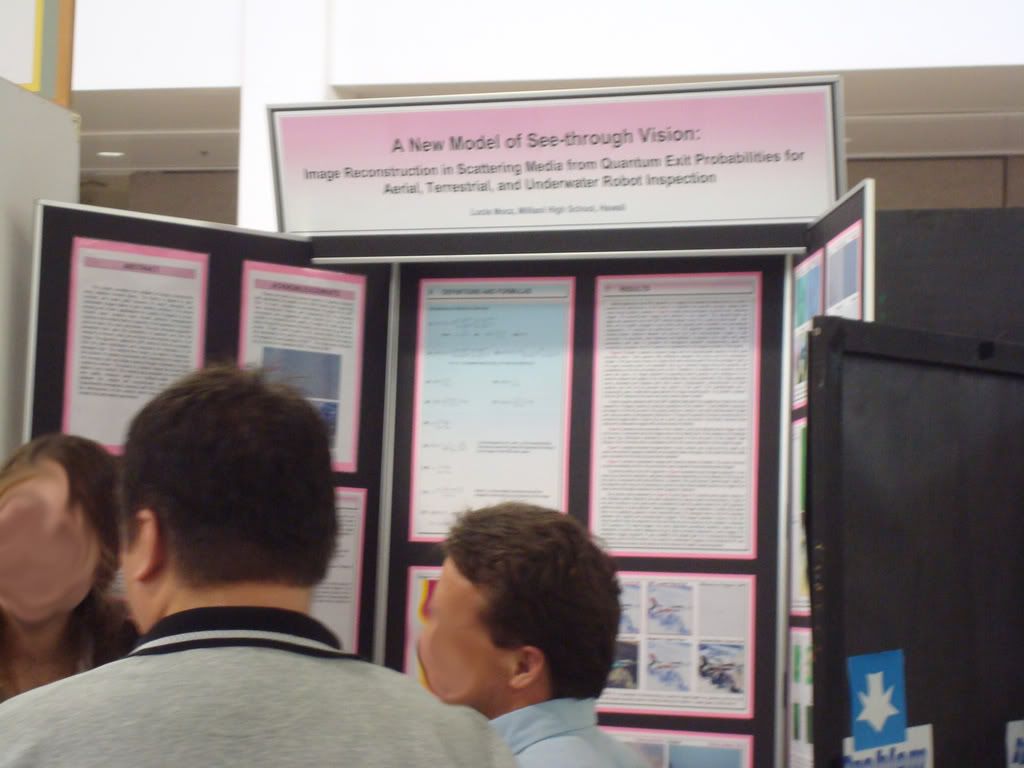
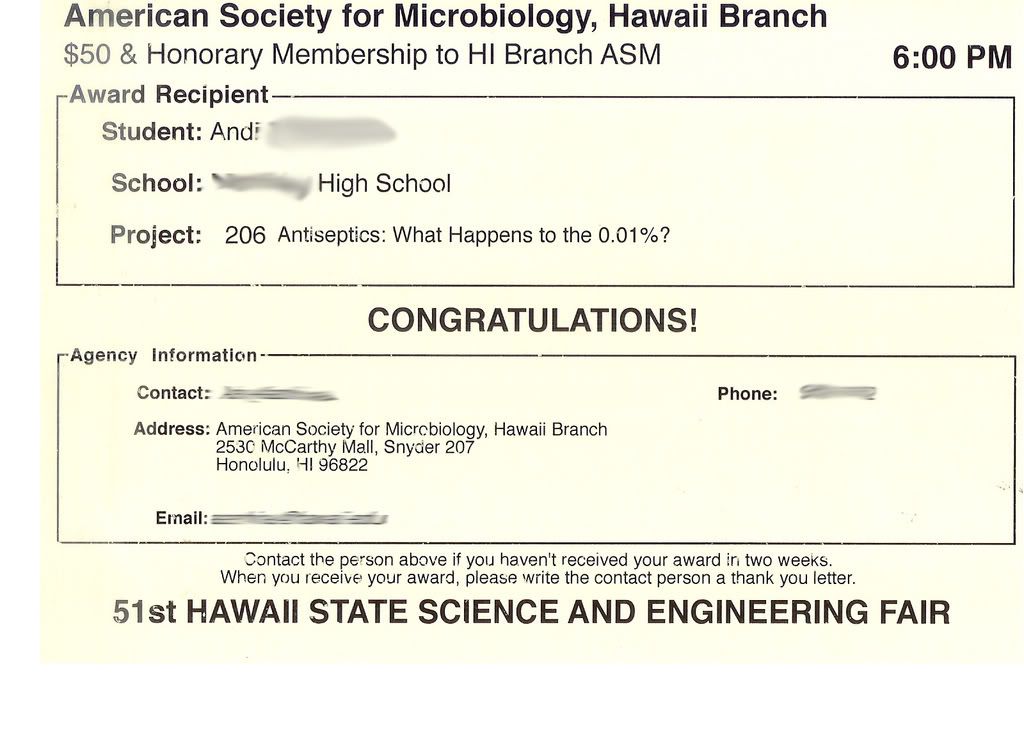
Well, I didn't make it to the semi-finals so I knew I wasn't going to states. During the first round of judging there were some critical judges (I had 5regular judges and a lot of agency judges) that criticized my experiment (weren't really mean). The first person was what I think a German lady in her 60s. I couldn't really understand her so there were a lot of awkward silences. She said something about bacteria can't build a "resistance" to antiseptics only antibiotics. So, I can't say that my bacteria are resistant to these antiseptics. The second critical judge was a lot nicer. He said something about resistance in bacteria occurs spontaneously so it isn't induced by exposing them to the agent repeatedly. I'm not sure if it's the same guy but I'm pretty sure he's the guy that suggested that I next time do a K-B test (Kirby-Bauer) and test the antiseptics and record the "zones" or something of that sort. Also another guy (or it may be the same guy; he had a lot of suggestions) asked me if I knew which numbers I can't use when counting colonies. I said numbers greater than 300. He said good, but also numbers less than 30. So that meant I couldn't use some of my results. Oh well I wasn't expecting to make it to nationals, anyways. The rest of the judges were nice too, just not as critical. The agency judges were especially nice. Suprisingly at the award cermony one of the agencies, American Society for Microbiology, Hawaii Branch, awarded me $50 and honorary membership to HI Branch ASM (don't know what that means). So I'm happy. I would still have been happy if I got nothing since it was sort of interesting. The winner of the state fair was either this girl who found some new way to reconstruct images and make them look a lot more clearer, or this boy who wrote a program that helps predict pandemics or epidemics or something. Both were in computer science categories. A senior at my school did a really good project on dark matter and its relation to galaxies or something (the girl that got 1st place at the school's fair). She didn't make it to the semi-finals but she got what seems like the most awards from agencies.
DISCLAIMER: If anyone from HI's State Science and Engineering Fair see a picture of them or their board and they want it remove then I'll try to remove it. I blurred the faces of the people just in case (more like smudged).
Pictures:
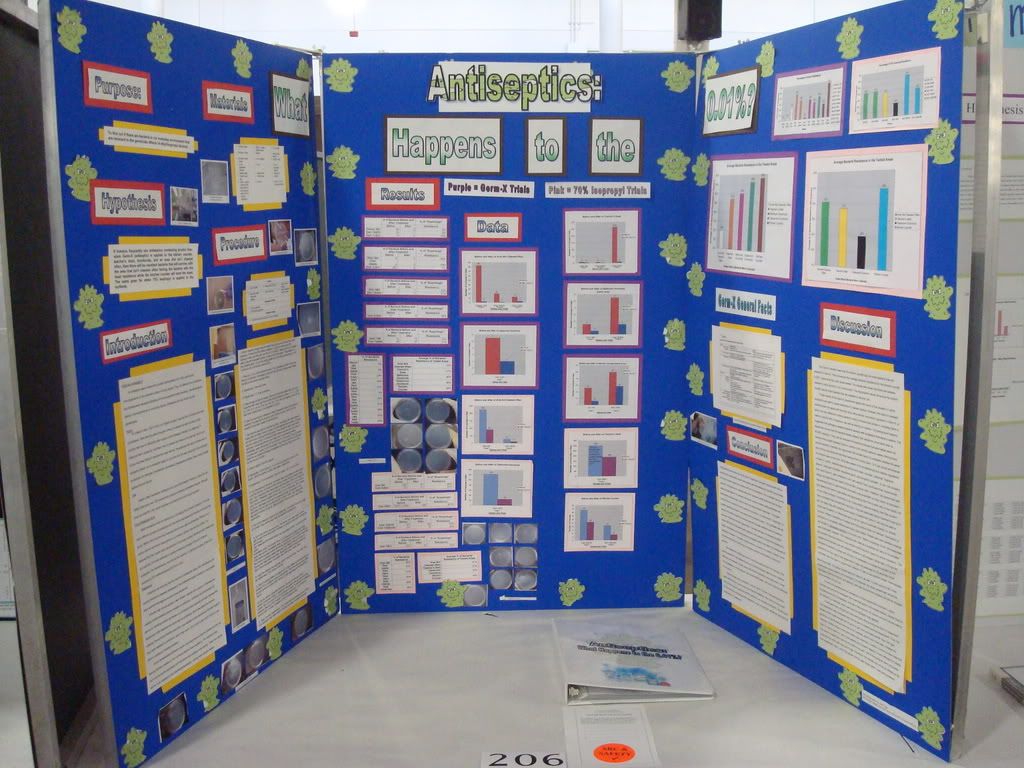
My crappy board (my last one, although not that appealing, was much better than this). This looks much bigger (and is much heavier x_x;) in real life.
Blurry picture of one of the many parts of the science fair
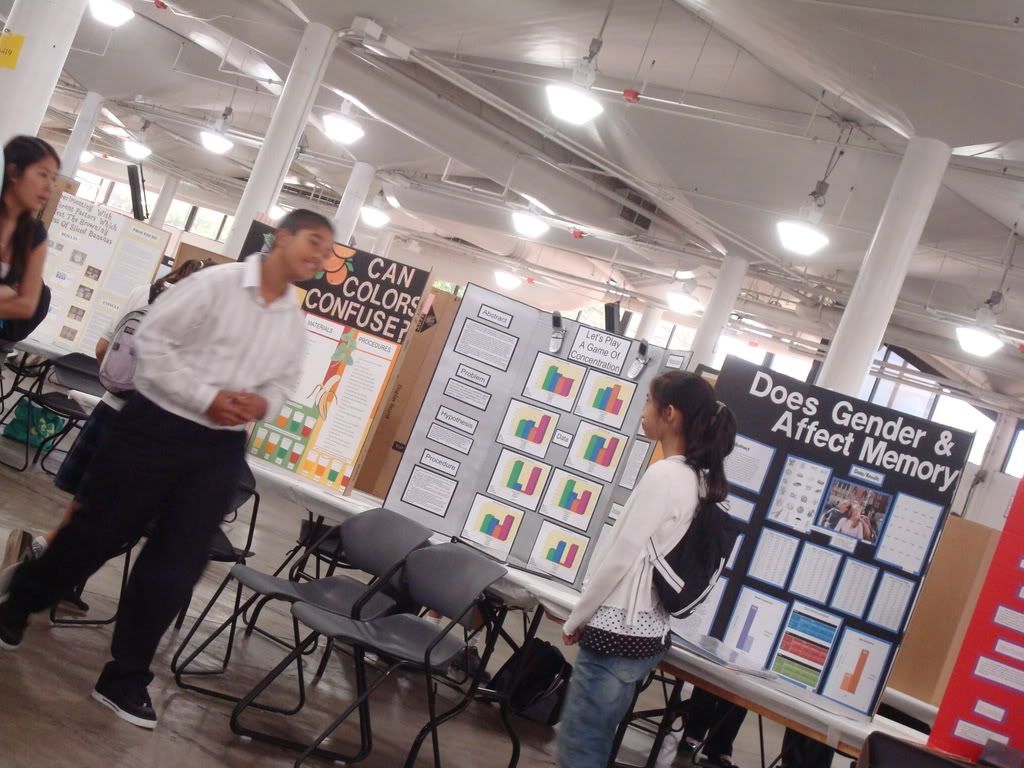
I think this is the junior division.
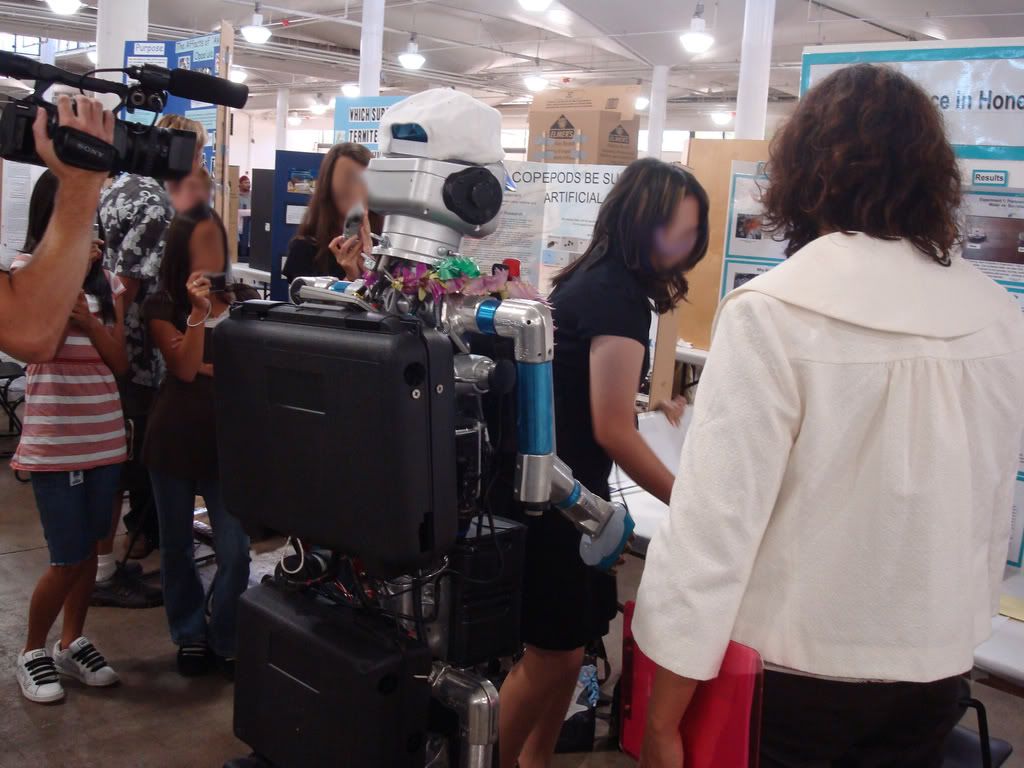
robot judge judging people
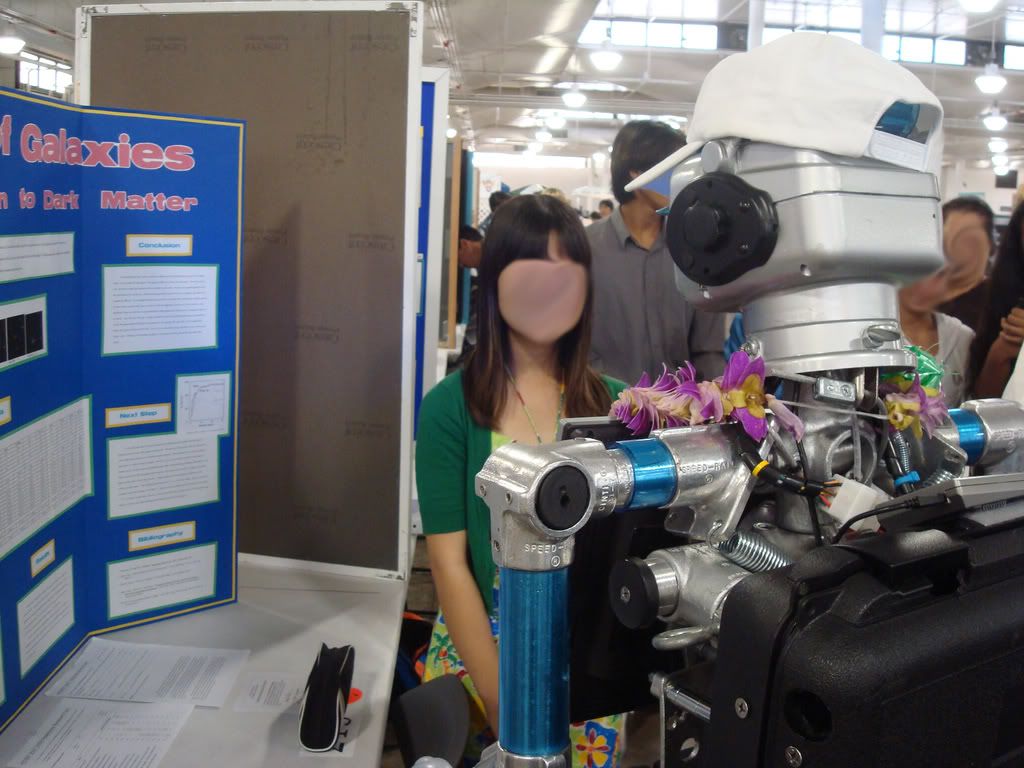
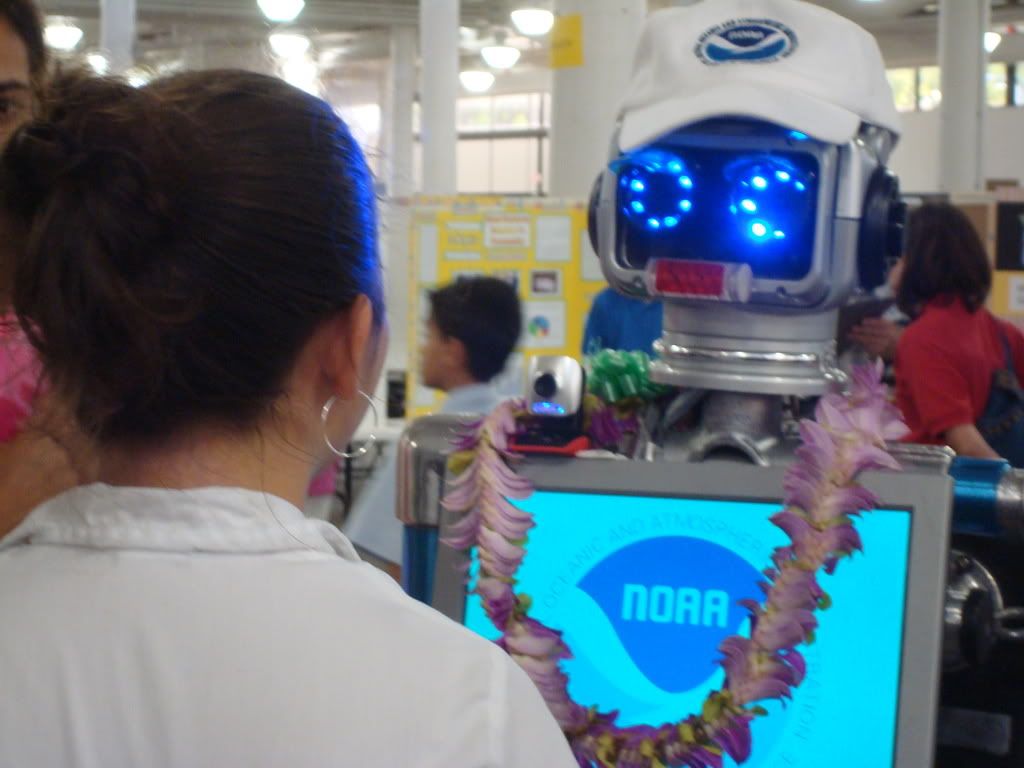
That girl that I was talking about (really cool tests)

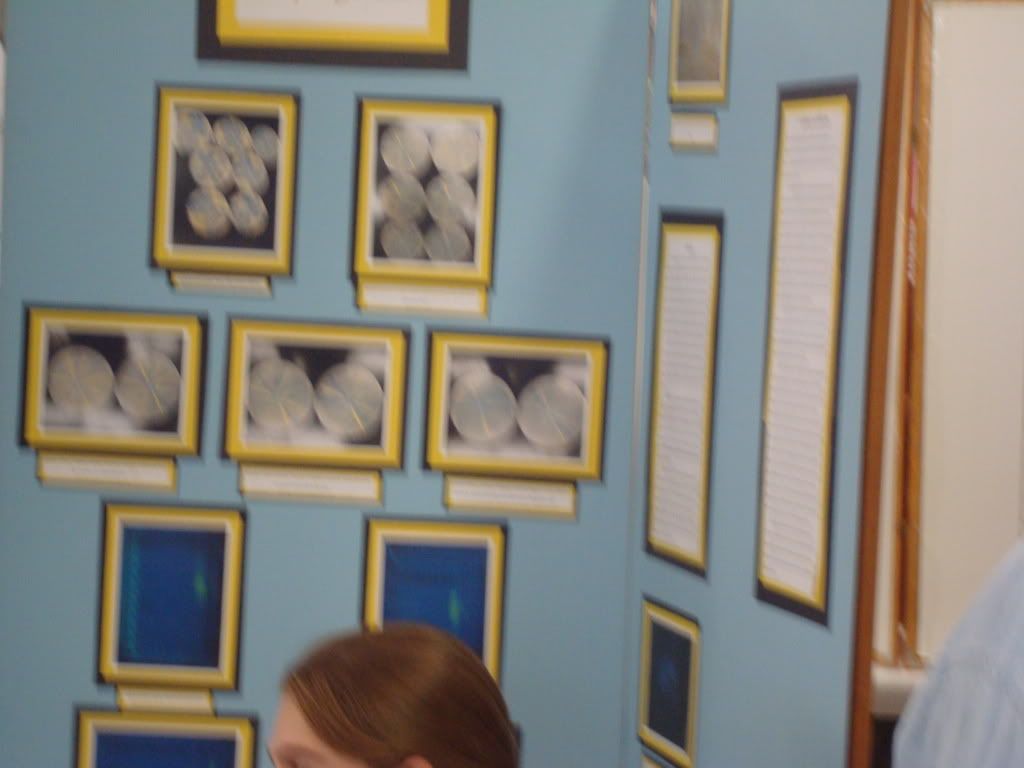
part of one of the many boards that did bacteria
A board that made it to nationals I think
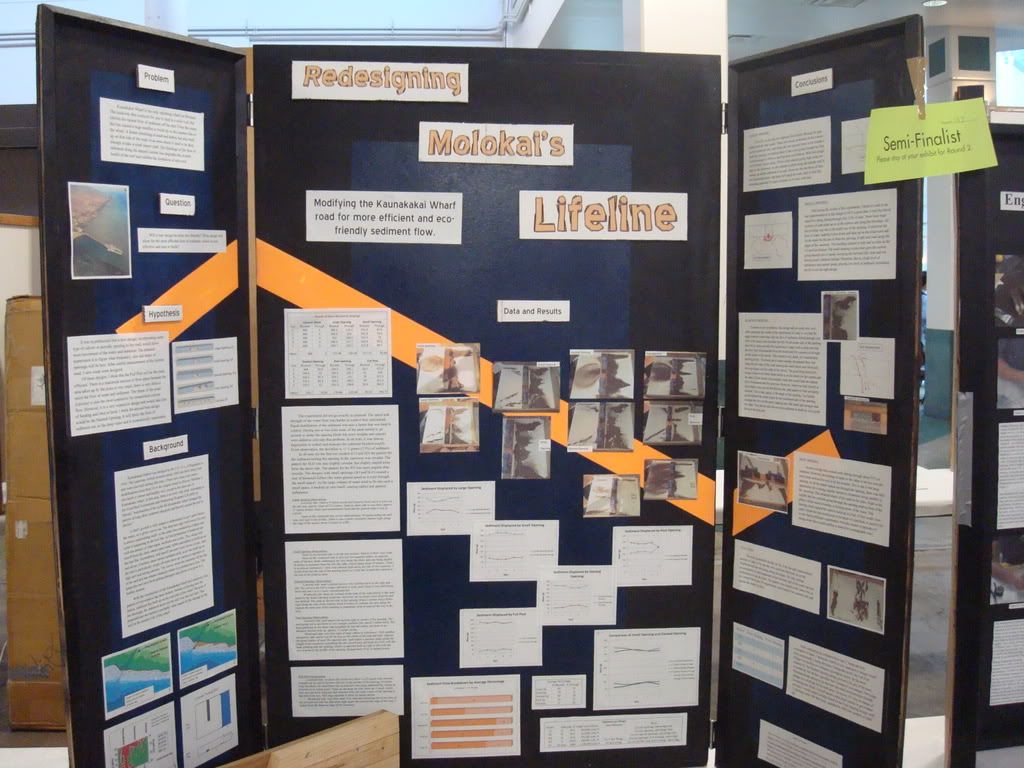
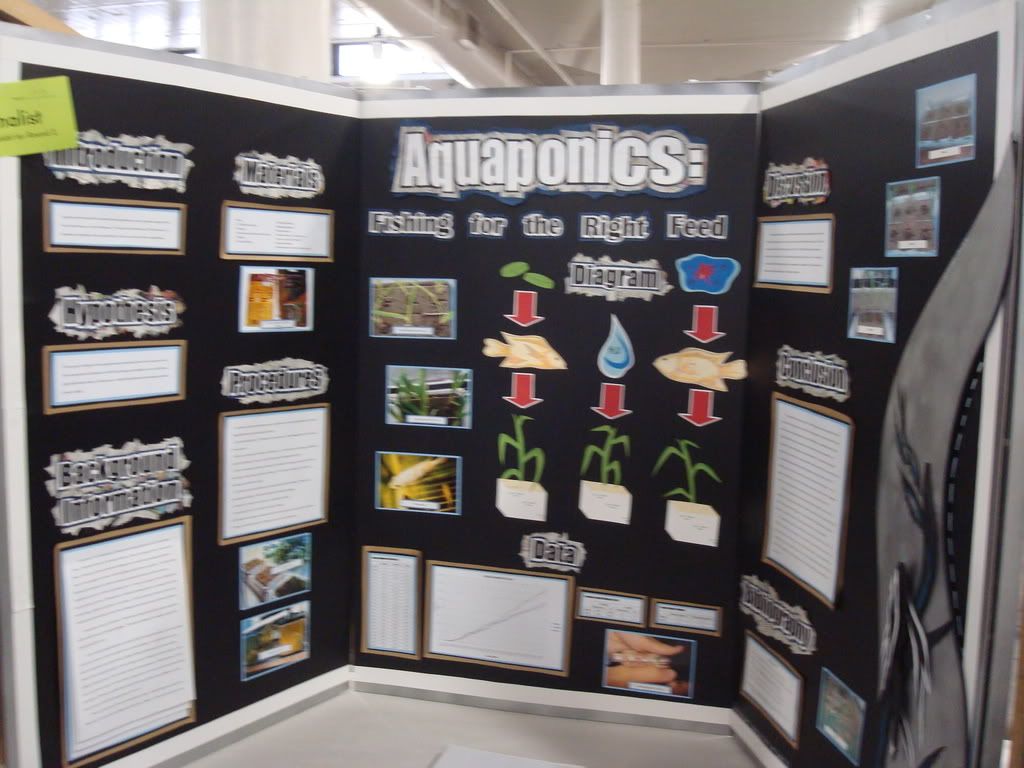
One of my classmates' (and the only one in our school) board (their goint to nationals).
The thing suprisingly I received.
Sorry for taking bad pictures.
EDIT: It seems science buddies cuts of part of the right side of the pictures.
I don't know how much I can thank you for all your help you have given me. I know that it seems that I abuse the words "thank you" too much, but I really don't know how else to express my gratitude to you. You've helped me through so much. I'm not sure if I am in basic physics or regular physics next year (before my post I already asked to take basic and then now it's too late to change, but my chemistry teacher says she's putting me in regular but I'm not sure how that's going to work out). Kids in basic physics don't do science fair and I think kids in regular physics, when they do their science fair, it relates to physics. Still, I think I may return here in the future.
It's been great working with you. Really, without you I probably wouldn't have gotten second place in school and would have gotten a B- for my project.
Thank you for everything,
Andi
Re: Bacteria cultures in petri dishes
Posted: Sun Apr 06, 2008 8:45 am
by donnahardy2
Hi Andi,
I’m sure it’s been a busy week, so thanks for taking the time to send a report. I am always interested in what the judges have to say about a project. And your pictures were absolutely wonderful; I really appreciate the extra effort you went to take them and post them.
The problem with judging a fair like this is that the judges are told they can only give so many awards, and there are so many good projects. Sometimes there is just a minute difference between the project that wins and the one that doesn’t. The experience of going to this fair should definitely help you if you do decide to do a project next year. It sounds like your judges were very well qualified, and all of their comments were good ones. It’s always easy to find something wrong after a project is done. The German judge was correct; bacteria cannot develop resistance to antiseptics like ethanol; but repeatedly exposing bacteria to antibiotics well select for bacteria that have developed a mutation that makes them resistant to the antibiotics. The judge that said you shouldn’t count less than 30 was correct if you were following a standard method. However, you had a limited number of plates, and you really had to use all of the data you collected. It wasn’t really wrong to include numbers less than 30, since you weren’t claiming to be following the standard method. Except for the omission of a negative control, you did have a valid experiment, and you were following the scientific method to find your answer, so you accomplished the goal of doing a science fair project.
One group of the judges you talk to, probably the group that suggested you do the Kirby-Bauer method, were from the American Society of Microbiology, and even though it seemed like they had some critical comments, they decided that you had the best microbiology project in the fair, and so you received the special ASM award with the check. So congratulations on winning the special award! Since you are an honorary member for a year, you might consider contacting the local society and attend one of their meetings. You will meet some really great people, and maybe you will decide to become a microbiologist. If you decide to continue this project for next year, it would be great to have a local expert to contact for advice, and maybe a donation of Petri dishes.
Here’s my suggestion for next year: You really learned a lot from doing this project and you demonstrated your ability to solve problems. Since you obviously are willing to work very hard, I think you have the potential to do a prize winning project. In my local science fair, I’ve noticed that sometimes there will be a good project one year that the student redoes the next year as a prize-winning project. So you could apply everything you’ve learned and redo this project. One problem you had this year is that you didn’t really understand the problem you were trying to solve, and so your experiments didn’t really accomplish your original goal. If you do more background reading and make sure you understand the science, your experiments will be better and, more likely to win a top prize. And, if you make contact with a local microbiologist, perhaps you could get access to a microbiology lab. It’s much better to do this type of work in a laboratory rather than at home, because you never know which microorganism you may be growing.
You can also consider switching to a different topic. Since you have a good ability in math, consider selecting a project in math and computer science. There are fewer entries in this category, so this alone will increase your chances of winning. Or, pick a project in a unique topic. I am starting to work with an 8-year old on a project for next year’s science fair on beetles. We don’t know what the experiment will be because there are so many possibilities. I don’t recall seeing many beetle projects in the local science fair, so the subject matter will be unique. And, the project will be done over the summer, and will be completed except for the final preparation of the board before school starts in the fall. Another possibility is to select a project on physics, since you will be taking physics next year. Even if you take regular physics and a science fair project is not required, you can still do a project and enter it. I’m sure any teacher would support an additional effort, but you’d have to do the project completely on your own.
I also think it might be a good idea for you to take regular physics, even though you could probably do well in the advanced class. You have been reporting too many late nights, so you need some time to sleep and do other things. All work and no play is definitely not good for you for the long-term.
And, you are more than welcome for all the help. I’ve really enjoyed helping you on this project. It’s always rewarding with students are actually interested in doing a science fair project, and you were definitely serious about doing the best possible job on this project. Good luck to you in the future!
Donna