Summary
Source: O*Net |
|
Astronomers conduct research to understand the nature of the universe and everything in it. These researchers observe, measure, interpret, and develop theories to explain celestial and physical phenomena, using mathematics. From the vastness of space to the infinitesimal scale of subatomic particles, they study the fundamental properties of the natural world and apply the knowledge gained to design new technologies.
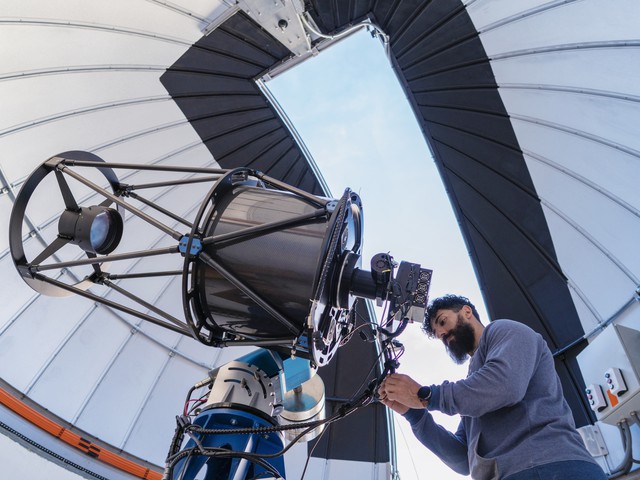
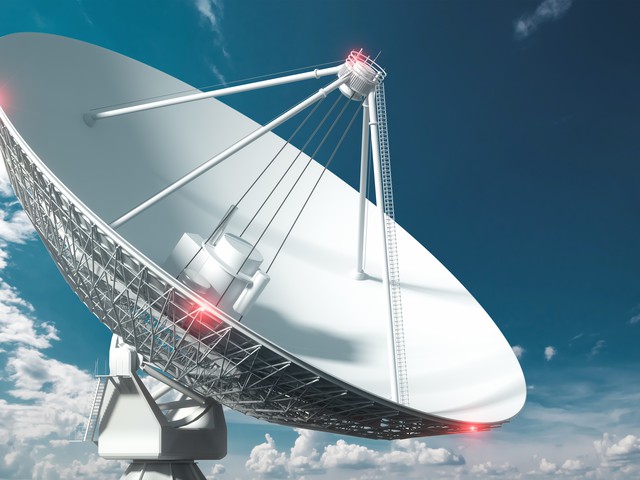
Almost all astronomers do research. Some are theoreticians, working on the laws governing the structure and evolution of astronomical objects. Others analyze large quantities of data gathered by observatories and satellites and write scientific papers or reports on their findings. Some astronomers actually operate large space-based or ground-based telescopes, usually as part of a team. However, astronomers may spend only a few weeks each year making observations with optical telescopes, radio telescopes, and other instruments.
![]() Watch this DragonflyTV video interview with a real astronomer, Marianne Takamiya, who works at a telescope atop a 14,000-ft. mountain in Hawaii. |
For many years, satellites and other space-based instruments, such as the Hubble space telescope, have provided prodigious amounts of astronomical data. New technology has led to improvements in analytical techniques and instruments, such as computers and optical telescopes and mounts, and is creating a resurgence in ground-based research.
A small number of astronomers work in museums that house planetariums. These astronomers develop and revise programs presented to the public and may direct planetarium operations.
Return to top of page...Most astronomers do not encounter unusual hazards in their work. Astronomers who make observations with ground-based telescopes may spend many hours working in observatories; this work usually involves travel to remote locations and may require working at night. Astronomers whose work depends on grant money often are under pressure to write grant proposals to keep their work funded.
Astronomers may need to work at odd hours to observe celestial phenomena, particularly those working with ground-based telescopes.
Because most jobs are in basic research and development, a doctoral degree is the usual educational requirement for astronomers. Master’s degree holders qualify for some jobs in applied research and development, whereas bachelor’s degree holders often qualify as research assistants or for other occupations related to astronomers.
A PhD degree in physics or closely related fields is typically required for basic research positions, independent research in industry, faculty positions, and advancement to managerial positions. This prepares students for a career in research through rigorous training in theory, methodology, and mathematics.
Additional experience and training in a postdoctoral research appointment, although not required, is important for astronomers aspiring to permanent positions in basic research in universities and government laboratories. Many astronomy PhD holders ultimately teach at the college or university level.
Holders of a bachelor’s or a master’s degree in astronomy often enter an unrelated field. However, they are also qualified to work in planetariums running science shows, to assist astronomers doing research, and to operate space-based and ground-based telescopes and other astronomical instrumentation.
Return to top of page...Mathematical ability, problem-solving and analytical skills, an inquisitive mind, imagination, and initiative are important traits for anyone planning a career in astronomy.
Return to top of page...Source: BLS
Do you have a specific question about a career in Astronomy that isn't answered on this page? Post your question on Science Buddies Ask an Expert Forum.
We'd like to acknowledge the additional support of:
If this website has helped you, won't you consider a small gift so we may continue developing resources to help teachers and students?