/-/https/www.sciencebuddies.org/Files/21464/5/sb-logo.png)
/-/https/www.sciencebuddies.org/Files/21464/5/sb-logo.png)
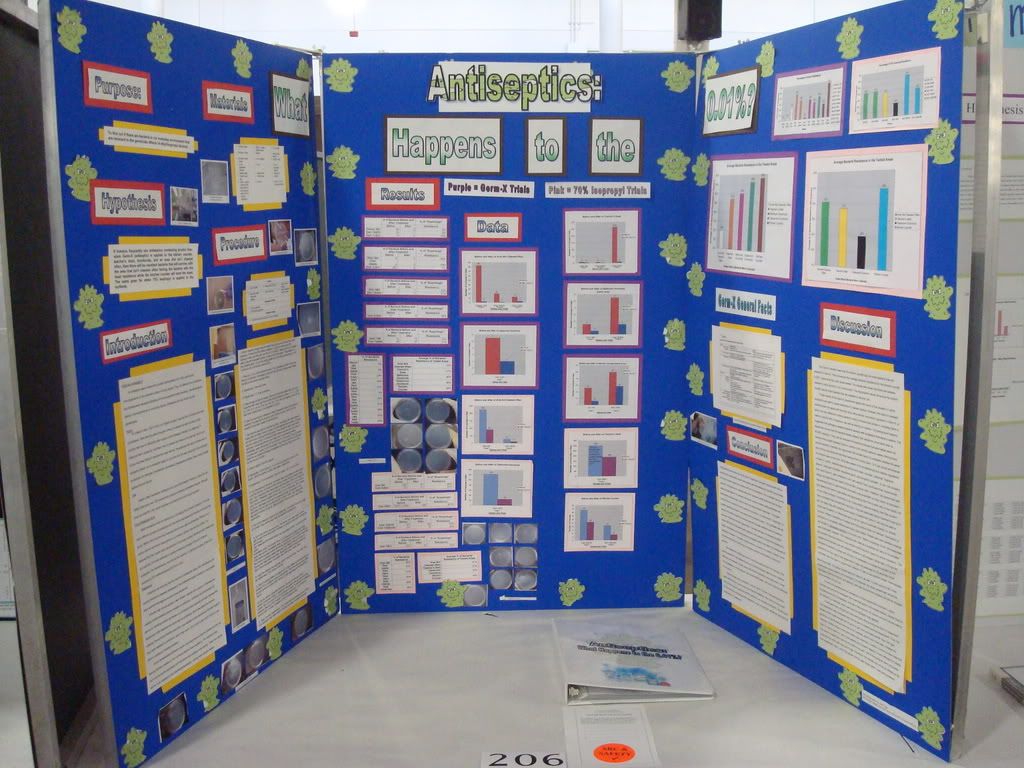
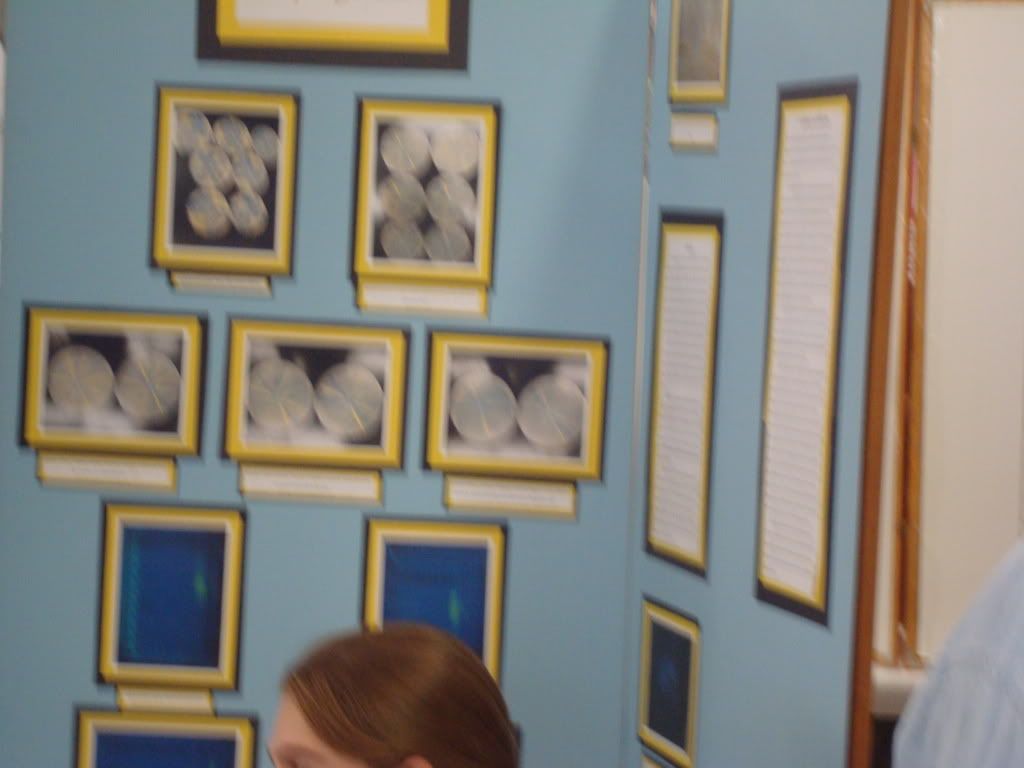
1a is from a 10x10cm square in a dusty area; 1b is from an adjacent 10x10cm square in a dusty area; 1c is from another adjacent 10x10cm square. 2b is from the 1a' square after I applied Germ-x; 2b's is from 1b after treated; 2c is from 1c's square after being treated. The order of collecting the bacteria is 1a, apply Germ-X, collect bacteria for 2a; draw an adjacent square for 1b, collect the bacteria, apply Germ-X, collect bacteria for 2b, and so on. The same is for 3a,b,c and 4a,b,c except they're from the teacher's desk. For 5a&b and 6a&b, I collected the bacteria from the bathroom doorknob for 5a, applied Germ-X, collected bacteria for 6a, waited 1 day, collected bacteria for 5b from the same doorknob, applied Germ-X, collected bacteria for 6b. For 5c and 6c I collected bacteria from the classroom's doorknob for 5c, applied the antiseptic, collected bacteria for 6c. To apply the antiseptic I did 5 pumps (10ml) then used a sterile, latex glove to spread evenly. Then, I waited 30 seconds and removed the antiseptic with a napkin by letting it soak, then wiped it away.
Should I rename 5c and 6c, 7c and 8c? Also how would I put it on the chart? Should I put the kitchen counter and the classroom doorknob on a separate graph since they are both only 2 trials and they are collected from the same area?
Would I calculate resistance the same way as I did before and make a new chart for it?
Since there is no proof if they contain the marA gene should I take it out of the background info?
Here's what I'm planning:
Purpose: To find if the frequent use of antiseptics/disinfectants containing ethyl alcohol will cause bacterial resistance.
Hypothesis: If an antiseptic which active ingredient is ethyl alcohol is applied to an area that is not cleaned often, then there will be less resistant bacteria compared to an area that is cleaned often.
I'd post my procedures, data, discussion and conclusion but I'd probably change it after the bacteria grow. But since my discussion and conclusions might be the same I'll just post it anyway to see if I'm on the right track.
Discussion
ConclusionThese results mean that resistance had been developed because Trial 1’s dishes had a reduction of 77% while Trial’s 2 dishes had a reduction of just 33%. This means that the bacteria that survived and reproduced on the kitchen counter, during the 4 exposures to the antiseptics, had developed a resistance to it.
These results agree with the research in which antiseptics are said to cause resistance if it leaves residue. Where it disagrees is the fact that the antiseptic agent used in this experiment left no residue. Ethyl alcohol, the active ingredient in Germ-X, is said to be very effective in killing bacteria—many products that contain it, including Germ-X, claims it kills 99.99% of bacteria. However, the experiment’s results show that the first time the bacteria were treated with Germ-X, there was a 77% reduction; that’s not 99%. This may be because the 12 colonies in dishes 2 and 4 were not bacteria that caused disease (Germ-X claims to kill harmful bacteria; states nothing about neutral bacteria). Or maybe, the Germ-X bottle that was purchased did not contain the correct amount of ethanol. Perhaps the experiment did not test Germ-X’s antiseptic abilities the same way that the manufactures did when testing their product claim. Or it can simply be because the product claim is not true. To find out the truth, more experiments would need to be conducted. What also needs to be considered are the inactive ingredients in Germ-X, which, besides isopropyl alcohol and water, includes: carbomer, fragrance, glycerin, isopropyl myristate, propylene glycol, and tocopheryl acetate.
This experiment may not have accurately tested the development of resistance. This is because the experiment just measured resistance at one point in time. A future experiment could be to select colonies that survive the antiseptic (the ones that grow in the treated dishes), expose them to increasing amount of antiseptics, and see if they survive. Of course, survivors would need to be cultured in a new dish every new time the antiseptic was applied.
There were many things that went wrong during this experiment. This experiment originally had four trials. However, the agar plates prepared for the original trial 2 and trial 3 were prepared in a microwave instead of being boiled, which caused a control to change as well as the unexpected result of no bacteria growing in the agar plate. What was a minor problem was that Petri dish 3 (originally 7) had a crack on the bottom, but this was sealed and it did not seem to affect the results. Trial 2’s dishes only had one day to grow due to the limited time left until the project deadline.
My bibliography is here (although I still have to make a reference page and endnote my background info):“Superbugs,” or bacteria displaying resistance, are causing many scientists to worry. Some blame it on today’s unnecessary use of disinfectants and antiseptics which may hasten the development of resistance in bacteria. This experiment tested antiseptics and its relationship with bacterial resistance. The hypothesis, “If Germ-X (antiseptic) is applied to bacteria cultures repeatedly, then the bacteria will develop resistance to it,” can be interpreted as correct. However, due to the limited trials and the small amount of bacteria colonies in trial 2, it may not be accurate.
The independent variable, the amount of times Germ-X was applied to the kitchen counter square, had a inverse relationship with the dependent variable, the percentage of bacterial reduction. The more times Germ-X was applied, the lesser the reduction percentage would be. However, the experimental procedure is flawed due to the fact that there were only 2 trials. More trials would be beneficial to this experiment. To see more suggestions on improvements in the experimental design, refer back to the third paragraph of “Discussion.”
Based on these results, antiseptics, such as Germ-X, should include warning/caution labels stating that their product may cause bacterial resistance. Also, Germ-X should re-test their product to see if it really kills 99.99% of harmful bacteria. The same goes for other products containing similar ingredients in them. By doing so, people can slow down the development of “superbugs.”
I still have to include my bibliography for my board background pictures though. EDIT: Err, on my document, if the bibliography source goes over 1 line then the line after the first line is tabbed (doesn't show here)."Brief History of Antiseptics." F. C. Sturtevant Company. 20 Dec.-Jan. 2007 <http://www.columbiapowder.com/history/history.html>.
Gutin, Joann. "Germ Warfare." Princton. 23 Mar. 1998. 27 Dec. 2008 <http://www.princeton.edu/pr/pwb/98/0323/0323-1a.html>.
"How Does Antiseptic Work?" ByeDr.Com. 2006. 3 Jan. 2008 <http://www.byedr.com/medicine/1793-byedr.html>.
"Iodine-Based Antiseptic Cleanser Composition." FreePatentsOnline. 20 Dec. 2008 <http://www.freepatentsonline.com/4808328.html>.
"Law of Conservation of Matter and Energy." CHEMystery. 14 Jan. 2008 <http://library.thinkquest.org/3659/ener ... atter.html>.
Levy, Stuart B. "Antibacterial Household Products: Cause for Concern." CDC. 8 Aug. 2001. Tufts University School of Medicine. 20 Dec. 2007 <http://www.cdc.gov/ncidod/eid/vol7no3_supp/levy.htm>.
McDonnell, Gerald, and A. Denver Russel. "Antiseptics and Disinfectants: Activity, Action, and Resistance." Clinical Microbiology Reviews. 2001. 14 Dec. 2007 <http://www.pubmedcentral.nih.gov/articl ... id=9880479>.
Ngan, Vanessa. "Antiseptics." DermNet NZ. 2007. 14 Dec. 2007 <http://dermnetnz.org/treatments/antiseptics.html>.
"Sir Joseph Lister: Developer of Antiseptic Surgery." ESSORTMENT. 2002. 19 Dec.-Jan. 2007 <http://www.il.essortment.com/sirjosephliste_rcod.htm>.
"Veridien Corporation Announces Quest to Fight "Superbugs" with Revolutionary Product." BNet. 8 Apr. 1999. 27 Nov.-Dec. 2008 <http://findarticles.com/p/articles/mi_m ... i_54319124>.
I didn't make an acknowledgements paragraph, yet (wasn't required for the board). How should I include you?
Something like "Donna Hardy (donnahardy2) of sciencebuddies.org provided much assistance throughout this project. With her suggestions, advice, and her help in designing the experiment, this project was able to be done. Thank you, Donna Hardy."??
I'll try very hard to finish up my new write-up but for now I need to concentrate on my math (I got a B last quarter) since I have a test tomorrow.
 Is that okay? I need it for my write-up due Wednesday (acknowledgments). (I wish I could include pronouns like "my, mine, me, I."
  )
) ). Another big change is that last year, only 10 people were chosen to go to states, but this year about 20-30 people were chosen and they only named the who were in the top 3. There was this really good one that I though would at least beat mines. It was about combating bacteria resistance with fruit flies or something relating to that. She had helped from the university and it was really complex.


 ). There's a high probability I'll answer tomorrow, since my world history group partners haven't said anything about meeting tomorrow, yet. However, I just opened my email today and my water pollution partner emailed me on the 16th asking for who's doing what in our project. I don't think that'll take long. I'm not sure if there's any speech practice this week (I only went to one last week since I ditched the others to work with my world history group) so if there is I might have to go [this is practice for state's so if i don't show up I might get kicked out, since it's also my first year in the speech club (just in case you're wondering I qualified before the last tournament, the last tournament, the advisor/teacher just put me in so more people could qualify for state's (more people=more qualifications)) Just in case you're wondering, I'm also not in one of those fancy categories such as debate, oratory, original oratory, impromptu, and the like. I'm in something probably considered more like drama than speech; I'm in humourous interpretation (suprisingly)].
 I'm really relieved that you're not mad.