/-/https/www.sciencebuddies.org/Files/21464/5/sb-logo.png)
/-/https/www.sciencebuddies.org/Files/21464/5/sb-logo.png)
Crystal Radio
-
travisf
- Posts: 2
- Joined: Sun Jan 29, 2006 8:54 pm
Crystal Radio
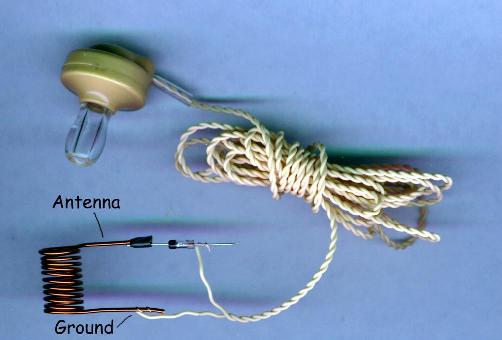
I NEED HELP WHERE DO I CONECT THE ANTENNA ON A CRYSTAL RADIO TEH INFO DOESNT SAY WHERE
-
Jim Lewandowski
- Posts: 64
- Joined: Tue Nov 25, 2003 12:55 pm
Check here...
http://sci-toys.com/scitoys/scitoys/rad ... radio.html
It has a picture of a basic crystal radio using a germanium diode.
Jim
http://sci-toys.com/scitoys/scitoys/rad ... radio.html
It has a picture of a basic crystal radio using a germanium diode.
Jim
Jim Lewandowski
Engineering Physicist
Stanford Linear Accelerator Center
Engineering Physicist
Stanford Linear Accelerator Center
-
travisf
- Posts: 2
- Joined: Sun Jan 29, 2006 8:54 pm
crystal radio
i know i knwo but the picture is like half of the radio and it doesnt say which jumper or whick wire is for the antenna
-
Jim Lewandowski
- Posts: 64
- Joined: Tue Nov 25, 2003 12:55 pm
Try scrolling down the page a bit
Jim Lewandowski
Engineering Physicist
Stanford Linear Accelerator Center
Engineering Physicist
Stanford Linear Accelerator Center
-
deleted-71360
- Former Expert
- Posts: 89
- Joined: Wed Aug 31, 2005 6:58 pm
Long ago and far away, when I was in junior high school (45 years ago), the radio shop teacher had an interesting statement about radio. "It works in spite of you, not because of you."
More precisely, the basic AM radio has four parts: antenna, tuner, detector, and reproducer. In the crude radio described in the reference, the antenna length acts as a tuner, the diode is the detector, and the earphone is the reproducer. With those parts, how they are connected almost does not matter, you only have two choices, diode and earphone in series or in parallel, with the antenna and ground connected to the combination.
This particular radio works and will receive every AM signal there is, everything. The loudest station will be faint and probably the only one. A nearby TV station will sound like a 60 Hertz buzz caused by the video signal. Nearby airport and airplane radar will sound like a buzz of some other (higher) frequency. FM stations will not be heard at all.
The tuning coil and capacitor will help a lot. Look at http://www.hobbytron.com/8893.html
and note that the 470pf capacitor is nearer to the coil. This will work well. When you wind the wire on the paper tube, glue it in place and then sandpaper the insulation off the wire so the slider can make contact at various points along the coil, this is the tuner portion. This is the approximate size coild and capacitor for the AM broadcast band.
Good luck.
Robert Reavis
More precisely, the basic AM radio has four parts: antenna, tuner, detector, and reproducer. In the crude radio described in the reference, the antenna length acts as a tuner, the diode is the detector, and the earphone is the reproducer. With those parts, how they are connected almost does not matter, you only have two choices, diode and earphone in series or in parallel, with the antenna and ground connected to the combination.
This particular radio works and will receive every AM signal there is, everything. The loudest station will be faint and probably the only one. A nearby TV station will sound like a 60 Hertz buzz caused by the video signal. Nearby airport and airplane radar will sound like a buzz of some other (higher) frequency. FM stations will not be heard at all.
The tuning coil and capacitor will help a lot. Look at http://www.hobbytron.com/8893.html
and note that the 470pf capacitor is nearer to the coil. This will work well. When you wind the wire on the paper tube, glue it in place and then sandpaper the insulation off the wire so the slider can make contact at various points along the coil, this is the tuner portion. This is the approximate size coild and capacitor for the AM broadcast band.
Good luck.
Robert Reavis