/-/https/www.sciencebuddies.org/Files/21464/5/sb-logo.png)
/-/https/www.sciencebuddies.org/Files/21464/5/sb-logo.png)
Protect Coastal Communities from Storm Surge Waves
Summary
/-/https/i.ytimg.com/vi/pFSAMkEDBQA/maxresdefault.jpg)
/-/https/www.sciencebuddies.org/Files/20511/4/google-classroom.png)
/-/https/www.sciencebuddies.org/Files/20512/4/ms-teams.png)
/-/https/www.sciencebuddies.org/Files/20469/4/Canvas_Bug_Color_RGB.png)
/-/https/www.sciencebuddies.org/Files/20470/5/Schoology-Logo.png)
/-/https/www.sciencebuddies.org/Files/20471/4/lms.png)
/-/https/www.sciencebuddies.org/Files/20469/4/Canvas_Bug_Color_RGB.png)
/-/https/www.sciencebuddies.org/Files/20470/5/Schoology-Logo.png)
/-/https/www.sciencebuddies.org/Files/20471/4/lms.png)
Overview
Sea level rise and more-intense storms, both driven by climate change, threaten coastal communities around the globe. In this engineering project, your students will build a model coastline and design a seawall to protect houses from waves as the sea level rises.
Remote learning adaptation: This lesson plan can be conducted remotely. Materials can be distributed for each student to work independently at home on the challenge and report back. Alternatively, students can design a barrier (draw or build from toothpicks) and the teacher can choose a few different designs to replicate and test on video in front of the class.
Learning Objectives
- Define the criteria and constraints of an engineering design problem.
- Understand the potential impacts of climate change and sea level rise on coastal communities.
NGSS Alignment
This lesson helps students prepare for these Next Generation Science Standards Performance Expectations:- MS-ESS3-2. Analyze and interpret data on natural hazards to forecast future catastrophic events and inform the development of technologies to mitigate their effects.
- MS-ETS1-1. Define the criteria and constraints of a design problem with sufficient precision to ensure a successful solution, taking into account relevant scientific principles and potential impacts on people and the natural environment that may limit possible solutions.
|
Science & Engineering Practices
Asking Questions and Defining Problems.
Define a design problem that can be solved through the development of an object, tool, process or system and includes multiple criteria and constraints, including scientific knowledge that may limit possible solutions.
|
Disciplinary Core Ideas
ETS1.A: Defining and Delimiting Engineering Problems.
The more precisely a design task's criteria and constraints can be defined, the more likely it is that the designed solution will be successful. Specification of constraints includes consideration of scientific principles and other relevant knowledge that are likely to limit possible solutions.
|
Crosscutting Concepts
Influence of Science, Engineering, and Technology on Society and the Natural World.
The uses of technologies and limitations on their use are driven by individual or societal needs, desires, and values; by the findings of scientific research; and by differences in such factors as climate, natural resources, and economic conditions.
|
Materials
/-/https/www.sciencebuddies.org/Files/15914/6/storm-surge-lesson-plan-materials.jpg)
Each group will need:
- Large aluminum baking pan or plastic container, with side walls at least 5 cm high
- 1 lb (450 g) of non-hardening modeling clay. Note that white modeling clay can be purchased in bulk and is cheaper than colored clay.
- Water
- Empty plastic bottle that fits inside the pan width-wise
- Construction paper
- Clear tape
- Scissors
- Box of toothpicks
- Note: Other craft/office supplies can be substituted for, or supplement, the toothpicks: paper clips, pipe cleaners, wooden craft sticks, etc.
- Container to transport and pour water (cup/bottle/pitcher etc.)
Background Information for Teachers
This section contains a quick review for teachers of the science and concepts covered in this lesson.About 40% of the world's population lives within 100 km of the coast, and about 10% live in coastal areas that are less than 10 m above sea level. This presents a challenge for coastal communities, as climate change contributes to global sea level rise and more-intense or more-frequent storms, such as hurricanes. Many of these communities are already vulnerable to erosion from waves, flooding from storm surges, or natural disasters like tsunamis. Rising sea levels and more-intense storms can exacerbate this problem.
A variety of natural and human-made barriers, ranging from sand dunes to concrete seawalls, can help protect coastal communities. Seawalls can range from simple vertical walls, to curved walls that are designed to redirect waves' energy back towards the ocean, to walls made from loose piles of rocks that are designed to break up waves and dissipate their energy. When designing these barriers, engineers must consider a variety of factors, including cost, durability, and even aesthetics and impact on wildlife. Will the ocean waves erode the base of the wall and cause it to collapse? Would a barrier prevent sea turtles from laying their eggs on the beach? Will local residents complain if their view of the ocean is blocked by a wall? In this lesson plan, your students will consider these factors by defining the criteria and constraints of the engineering design problem.
Additional Background Links
- Rising hazard of storm-surge flooding, Proceedings of the National Academy of Sciences
- Storm Surge Overview, National Oceanic and Atmospheric Administration
- Introduction to Storm Surge, National Weather Service
- Seawall, Wikipedia
- Coastal Management, Wikipedia
- The Engineering Design Process, Science Buddies
Prep Work (15 minutes)
- Set up the materials for each group of students.
Teacher Tool Box
Engage (10 minutes)
- Start class by showing your students a video of waves breaking on a seawall, like this one. Note that there are many videos like this available online, but you should be careful if you let your students search for their own videos. Videos of natural disasters, like tsunamis, can be upsetting.
 Are there any natural barriers in the video? What happens to them?
 Yes, there is a wide stretch of grassy, flat land in the video, but it floods due to the combination of high tide and winds.What about human-made barriers? What happens to them?There are several seawalls in the video, and you can see some waves splashing against them and being redirected back toward the ocean. However, eventually the water gets so high that it floods over the tops of the walls.
 - Explain that 10% of the world's population lives in coastal areas that are less than 10 m above sea level. Climate change, including rising sea levels and more-intense or more-frequent storms like hurricanes, threatens these coastal communities. That means it is becoming more important for engineers to design structures that can protect coastal communities from waves resulting from storm surges. In this lesson plan, your students will build a model shoreline, complete with buildings, and design a structure to protect them from waves as the sea level rises.
- Optional: Your students can use the online Sea Level Rise Viewer from the National Oceanic and Atmospheric Administration to view how rising sea levels would affect coastal communities around the globe.
/-/https/i.ytimg.com/vi/L_yNKFHMeIA/maxresdefault.jpg)
/-/https/www.sciencebuddies.org/Files/14174/23/note-question-mark-30.png)
/-/https/www.sciencebuddies.org/Files/14175/24/conversation-bubbles-30.png)
Explore (60 minutes)
- Use the block of modeling clay to form a sloped "beach" on one end of their pan. This can take some effort, and students may need to spend some time kneading their modeling clay to soften it.
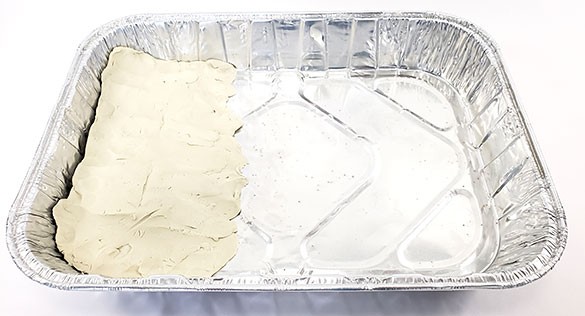
- Fill the tray with water until the water level reaches halfway up the beach.
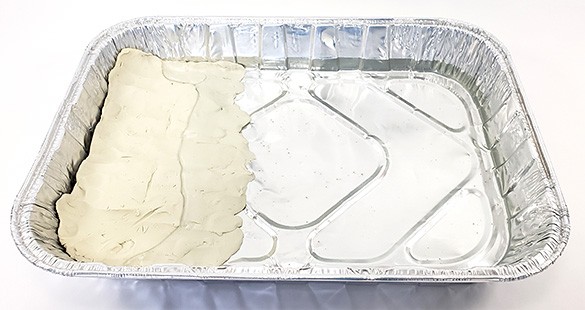
- Practice making waves using the plastic bottle. Place the plastic bottle in the water, width-wise, at the far end of the pan (opposite the beach). Create waves by either bobbing the bottle up and down or pushing it back and forth. Try to calibrate this process so the waves reach all the way to the top of the beach, but do not slosh out of the pan.
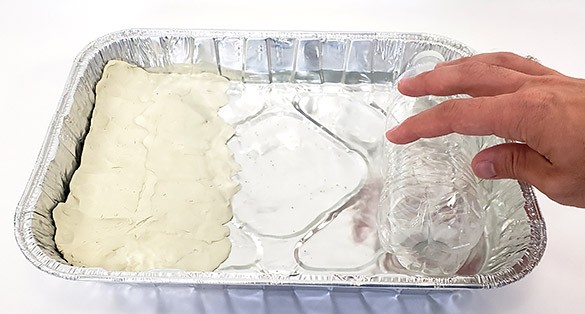
- Use construction paper and clear tape to make small houses and buildings. For a controlled contest, you may want to standardize the size and shape of the houses. Otherwise, you can let students design their own.
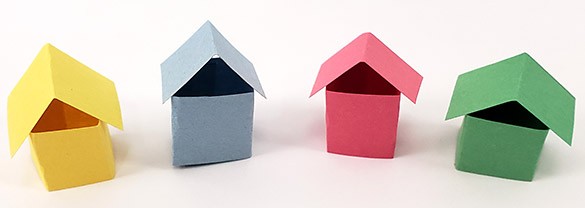
- Arrange the buildings on the beach, toward the back wall of the container (not right along the water line).
- Use the bottle to make several waves, as practiced in step 3. Observe what happens to the houses, and record observations on the worksheet.
- Discuss observations as a class, and ways that students could use the materials available to them to protect the houses.
What are some factors we should consider when building a seawall or flood barrier to protect the houses? For example, would you want to build a giant, solid wall the entire way across the beach?Building a single, tall, solid wall the entire way across the beach might be the best way to protect the houses, but in reality, that might not be a good option. For example, nearby residents might want to maintain their view of the ocean. The wall could prevent people and wildlife from accessing the beach. It might also be very expensive and impractical to build.
- Based on your class discussion, each group should define a list of criteria and constraints for the engineering problem of building a wall to protect the houses. Students may be confused about the differences between criteria and constraints. You can help explain them like this:
- Think of criteria as the goals or objectives that the project must meet. For example, the wall must break the waves up sufficiently to prevent any of the houses from getting wet.
- Think of constraints as the limitations on the design or available time/materials. For example, retaining a view or walking path to the ocean would be a constraint on the design. Only having one box of toothpicks to work with is a constraint on the available materials. One class period may be a constraint on the amount of time they have to build their wall.
- Assuming your houses got wet in step 6, build several new ones and replace them.
- Taking into consideration the criteria and constraints defined by your group, build a wall to protect the houses.
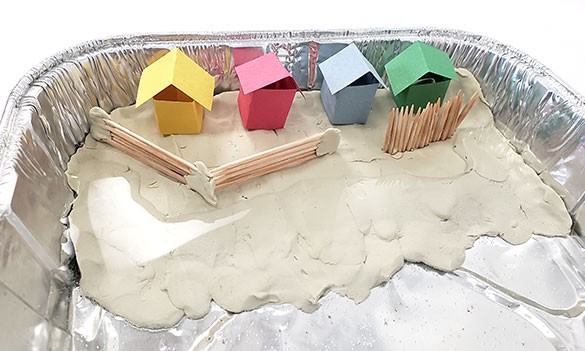
- Use the bottle to make waves again. Do your best to make waves the same size as you did previously. Observe what happens. Do the houses still get wet?
- Model sea level rise by adding more water to the container until it is 3/4 full. Are any of your houses or parts of your wall now underwater, even without any waves? What happens when you make waves? Can you design a new barrier (or move your existing one) to protect the houses?
/-/https/www.sciencebuddies.org/Files/15915/6/tray-modeling-clay.jpg)
/-/https/www.sciencebuddies.org/Files/15916/8/tray-water.jpg)
/-/https/www.sciencebuddies.org/Files/15917/6/plastic-bottle-waves.jpg)
/-/https/www.sciencebuddies.org/Files/15918/7/paper-houses.jpg)
/-/https/www.sciencebuddies.org/Files/15913/7/toothpick-wall.jpg)
Reflect (20 minutes)
- Discuss your results as a class.
Did any groups prevent their houses from getting wet with their initial design?If multiple groups succeeded, did their designs have anything in common, or were they different?What challenges did groups face when building and testing their designs?What changed when the sea level was higher? Do your answers to the above questions change?
- Discuss the real-world implications of climate change and sea level rise.
What problems could coastal communities face as sea levels rise globally?As sea levels rise, coastal communities may need to build new or bigger barriers. Many existing barriers (like the ones in the videos at the beginning of the lesson) are already very close to sea level. If sea levels rise too much, waves might start coming over the tops of these barriers.
Assess
- Collect your students' worksheets as an assessment for this activity.
- Optionally, have each group prepare a poster or brief presentation about their design, and present it to the rest of the class.
Make Career Connections
Discussing or reading about these careers can help students make important connections between the in-class lesson and STEM job opportunities in the real world.
/-/https/careerdiscovery.sciencebuddies.org/Files/1141/17/iStock-1170687091.jpg)

/-/https/careerdiscovery.sciencebuddies.org/Files/1133/17/pexels-photo-3862135.jpg)
Lesson Plan Variations
- To make more-consistent waves, you can use a rectangular metal plate (available at hardware stores) that fits inside the pan. Stand the plate vertically at one end of the pan, and let it fall toward the "beach." It will create a wave as it falls and displaces water. This method is more repeatable than bobbing a plastic bottle up and down by hand.
- To hold a contest for groups to compare their wall designs, you can assign a "cost" to the materials (for example, $1 per toothpick). You can then evaluate walls based not only on their performance (e.g. the number of houses they protect) but their cost. Who can build the lowest-cost wall that protects all the houses? Alternatively, you can put a limit on the quantities for different materials (e.g. 25 toothpicks) and see who can build the most effective wall using a limited amount of materials.
- You can use sand instead of modeling clay for the beach. However, if you do this, you will need to use other materials for "houses," such as plastic building bricks, or a waterproof material like aluminum foil. The sand will soak up water even with no waves, so the paper houses will get wet.
- Let students use clay to form "natural" barriers, similar to dunes on a beach.
- This lesson plan can also be used with the other NGSS Engineering Design Performance Expectations. For example:
- MS-ETS1-2: Use a systematic method to compare results between groups, i.e. use identical houses and wave-generation methods for all tests.
- MS-ETS1-3: After initial testing, have groups work together to see if they can develop a better design that uses ideas from both groups.
- MS-ETS1-4: Have each group go through multiple rounds of iteratively building, testing, and re-designing their wall to improve it.
/-/https/img.youtube.com/vi/uPSAk27B-Xs/0.jpg)
/-/https/img.youtube.com/vi/Xcdld35SMHY/0.jpg)
/-/https/img.youtube.com/vi/sjHCztFSxTw/0.jpg)