/-/https/www.sciencebuddies.org/Files/21464/5/sb-logo.png)
/-/https/www.sciencebuddies.org/Files/21464/5/sb-logo.png)
Kit Club Brings Coding and Electronics to More Classrooms
Thanks to the Science Buddies Kit Club program, more students in K-12 classrooms had the chance to explore coding and circuits with STEM kits provided by local sponsors.
/-/https/www.sciencebuddies.org/Files/22034/4/2026-success-story-kitclub-microbit.png)
Supporting Cutting-Edge STEM in Local Classrooms
The Science Buddies Kit Club program matches local classrooms with sponsor organizations to provide STEM kits for hands-on learning. These kits are supported by step-by-step projects, lessons, videos, and tutorials at Science Buddies, making it easy for teachers to use them in the classroom.
A Kit Club sponsored by ON Semiconductor Foundation, a program of Giving Now efforts at onsemi, in the 2025-26 school year provided electronics kits to six classrooms in NY, PA, AZ, and OR. Focused on expanding access to learning opportunities in electronics, robotics, and mechatronics, this Kit Club supplied micro:bit and Arduino kits to participating classrooms. Educators chosen for the program received up to thirty kits selected to fit their students, grade level, and classroom needs.
micro:bit Learning in Elementary School
Arlette Johnson, a K-6 STEM teacher and Mathematics, Engineering, Science Achievement (MESA) club sponsor at Holiday Park School in Phoenix, AZ, was excited to receive a classroom set of micro:bit kits to use with more than 150 4th- and 5th-grade students.
Arlette shared how the kits she received from Kit Club made a difference in STEM learning in her classroom:
What impact did these kits have on your STEM classroom this year?
"What an amazing impact the micro:bit kits from onsemi had on my class. The kits gave my students hands-on opportunities to explore coding, engineering, problem-solving, and computational thinking in engaging and meaningful ways. Many of my students had never used programmable technology before, so the kits helped make STEM concepts accessible and exciting."
How did you use the kits with your students?
"We used the kits in a variety of STEM lessons and challenges. Students explored introductory coding concepts using the micro:bit block-based coding platform and learned how inputs and outputs work through activities involving LEDs, buttons, and simple animations.
As an extension activity, students applied their knowledge of animations to create a 'feelings game.' In this activity, one student would describe their feelings in a certain situation, and their partner coded an animation to match those feelings. This lesson also incorporated the engineering design process, as students tested, redesigned, and improved their projects based on feedback from their partners."
Without these kits, would your students have been able to explore circuit building, robotics, or coding?
"Without these kits, many of my students would not have had the opportunity to explore circuit building, coding, or robotics in a hands-on way. Our school has limited STEM resources, and the donated kits provided access to technology experiences that otherwise would have been difficult for my students to have. The kits allowed students to move beyond simply learning about technology and instead become creators, problem-solvers, and engineers, while also encouraging collaboration, creativity, and perseverance."
How did these kits help support students who participate in your afterschool club?
"With these resources, I integrated foundational programming lessons into my regular classroom instruction, giving students the opportunity to build their skills before applying them in our MESA competitions. This added exposure strengthened their understanding of coding and engineering concepts, empowering them to create more sophisticated and successful robotic designs."
What feedback do you have about the experience using the kit and activities?
"Students enjoyed the interactive nature of the micro:bit activities and were excited to see their code produce immediate results. The kits were approachable for beginners while still allowing opportunities for creativity and extension activities. I especially found the ready-to-use [resources at] Science Buddies extremely helpful. The lessons followed a natural progression, and the videos and lesson plans helped me feel even more confident implementing the kits with my 4th- and 5th-grade students.
Kit Club provided my students with valuable opportunities to explore coding, engineering, and technology in meaningful, hands-on ways. Experiences like these inspire curiosity, creativity, and future career interests in STEM fields."
micro:bit and Arduino Resources for K-12 Students
To get started with micro:bit or Arduino, we recommend students work through the first several videos in the tutorial series:
/-/https/i.ytimg.com/vi/ItcTxWW3c5Q/maxresdefault.jpg)
/-/https/i.ytimg.com/vi/cd04o5yqSAU/maxresdefault.jpg)
To view some of the projects that can be done with the micro:bit and Arduino kits, see these resource collections:
"The kits allowed students to move beyond simply learning about technology and instead become creators, problem-solvers, and engineers."
Arlette, Teacher
Thank you to the ON Semiconductor Foundation, an onsemi Giving Now program, for supporting classrooms in local communities through Kit Club.
Categories:
You Might Also Enjoy These Related Posts:
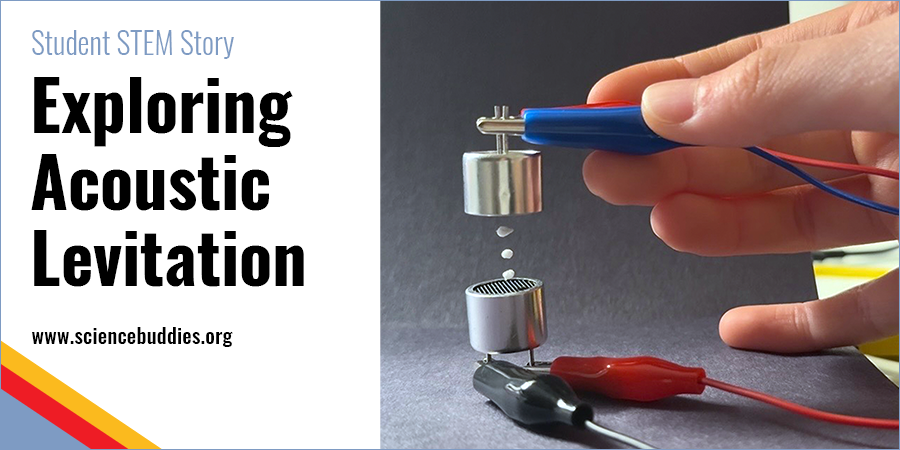
- Student Explores Acoustic Levitation to Address Healthcare Problem
- How One Texas Teacher Uses Science Buddies Throughout the Year -- Success Story from Science Buddies Educator Ambassador Program
- Middle School Student Creates Renewable Energy from Organic Waste
- Kit Club Brings Coding and Electronics to More Classrooms
- Spacecraft Motion Simulator: STEM Project Success Story
- Testing the Power of Wind – Sustainability Science for the STEM Fair
- Engineering Challenge People's Choice Award Winner - STEM Success Story
- Cabbage Chemistry: Students Explore Fermentation with Kimchi - STEM Project Success Story

/-/https/img.youtube.com/vi/q8udWLU2HQk/0.jpg)
/-/https/img.youtube.com/vi/L_ISHsPX5pk/0.jpg)
/-/https/img.youtube.com/vi/6nEH2XlcJt8/0.jpg)