/-/https/www.sciencebuddies.org/Files/21464/5/sb-logo.png)
/-/https/www.sciencebuddies.org/Files/21464/5/sb-logo.png)
Engineering Challenge People's Choice Award Winner
Middle school team at Tree of Life International Charter wins $1,000 People's Choice Award for the school in the Rocket Catcher Challenge.
/-/https/www.sciencebuddies.org/Files/21342/4/2025-successstory-peopleschoice-engineering-challenge-tree-of-life.png)
Community Support for STEM Learning
When students at Tree of Life International Charter School in Anderson, CA, entered the 2025 Rocket Catcher Challenge, they didn't just get hands-on with engineering and space science. They rallied support from their school and community and won the $1,000 People's Choice Award in the Science Buddies Engineering Challenge.
A bilingual TK-8 charter school with a dual immersion program in Spanish, Tree of Life offers a middle school STEAM elective and a Girls Who Code club.
"As a science teacher, I believe that equipping our students in STEAM prepares them for the future," says middle school teacher Sonsoles Abbott, noting the school's inclusion of the "A" for "art." "We aim to spark curiosity and problem-solving skills in the next generation."
The Rocket Catcher Challenge was the school's first time participating in the Science Buddies Engineering Challenge. When the Engineering Challenge Showcase was shared and open for voting, Sonsoles spread the word, and the school community showed up in support of their students, helping the school win the prize money.
We followed up with Sonsoles about the Engineering Challenge and the importance of hands-on STEM education in shaping how students think about their futures in STEM.
The Rocket Catcher Challenge in Middle School
Was this your first year doing the Engineering Challenge?
This was our first year participating, though not our first time exploring similar activities. I often find amazing projects on Science Buddies and always encourage students and parents to check out your resources.
What made the Engineering Challenge a good choice for you and your students?
For me, it's the combination of problem-solving, communication, collaboration, and creativity. Activities like the Rocket Catcher Challenge generate high engagement and motivate students to think outside the box.
As an educator, what did you most enjoy about the challenge?
What I enjoyed most was watching all my students engage fully, without exception. I let them form their own groups, and the solutions they came up with were truly incredible.
The Engineering Challenge uses simple, low-cost materials to make it easier for educators to do in the classroom. Was this important for you in deciding to do the challenge?
Yes, definitely. You made it accessible for everyone, and we could include as many groups as we wanted. The only thing I might reconsider is the unlimited use of tape (because it is often plastic-based).
Your school got a winning number of votes during the final days of the People's Choice Award voting. Was there a community effort underway?
Yes! I posted the showcase through our school communication channels so everyone knew we were participating. I also encouraged families to share it with others.
How did everyone react to winning the People's Choice Award and prize money for the school? Were students from The Goopers, the winning team, excited?
Oh, yes!!! We announced it during a school assembly to thank everyone who voted and helped make it possible. The students are already thinking about how to invest the prize money into future science projects.
How will winning this award make a difference for you and your students?
It shows the value of perseverance and commitment. Things that may seem impossible can happen. The prize is more than a reward. It sends the message that our ideas matter and that our solutions have value. I've noticed students are even more eager to engage in STEM now.
Why is it important for middle school students to have opportunities for hands-on and team-building STEM projects?
Before becoming a teacher, I was a chemical engineer. My passion for science came from one of my teachers, and now I try to pass that on. I want students to know their ideas are valuable and that solving problems is an exciting way to improve the world. Hands-on projects develop communication, collaboration, and creativity and help students overcome their fear of failure. We didn't fail; we just found ways that didn't work, and that's still learning.
Do you use other resources from Science Buddies?
Absolutely! Your resources are part of our classroom library. I let students choose their own projects, but then they have to make a modification or extension and present it to the class. It's a great way to deepen learning and ownership.
Overall, do you think your students are excited about STEM and the possibility of a future in STEM?
Yes! They're always asking for more challenges and more projects. Honestly, I wish I could teach STEM all day long. It's where they thrive.
What has been the value of Science Buddies for you and your students this year?
Serving a low-income community, having access to free resources is a game-changer. Thanks to Science Buddies, our students can explore projects they wouldn't otherwise be exposed to. Most materials are affordable or recyclable, which makes everything accessible. Everyone can contribute, and if not, I provide what's needed. You truly make science accessible for all, and that's powerful.
"I want students to know their ideas are valuable and that solving problems is an exciting way to improve the world."
Sonsoles Abbott, teacher
Thank you to Sonsales for sharing this STEM story with Science Buddies. If you have a story about doing a Science Buddies project or how Science Buddies makes a difference in your classroom or program, reach out to us at [email protected].
Categories:
You Might Also Enjoy These Related Posts:
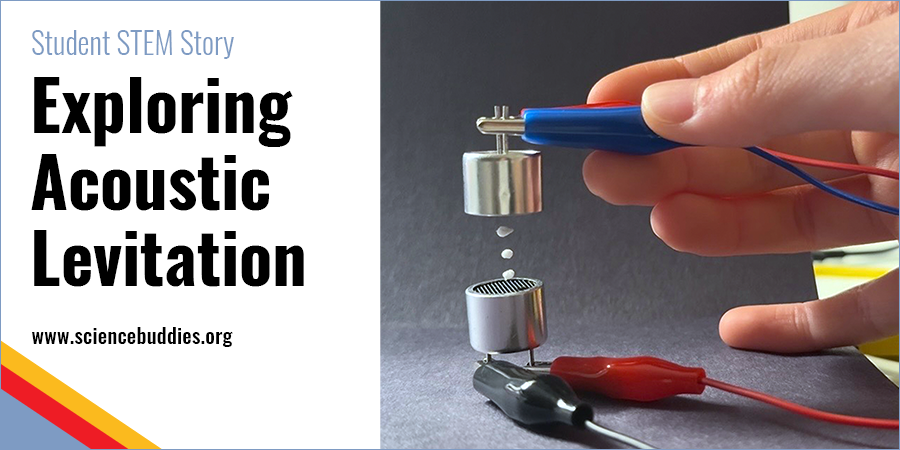
- Student Explores Acoustic Levitation to Address Healthcare Problem
- How One Texas Teacher Uses Science Buddies Throughout the Year -- Success Story from Science Buddies Educator Ambassador Program
- Middle School Student Creates Renewable Energy from Organic Waste
- Kit Club Brings Coding and Electronics to More Classrooms
- Spacecraft Motion Simulator: STEM Project Success Story
- Testing the Power of Wind – Sustainability Science for the STEM Fair
- Engineering Challenge People's Choice Award Winner - STEM Success Story
- Cabbage Chemistry: Students Explore Fermentation with Kimchi - STEM Project Success Story

/-/https/img.youtube.com/vi/ONoWZ1rzYJA/0.jpg)
/-/https/img.youtube.com/vi/vw-iTxNdnrw/0.jpg)
/-/https/img.youtube.com/vi/MG22NaWqkU4/0.jpg)