/-/https/www.sciencebuddies.org/cdn/Files/21464/5/sb-logo.png)
/-/https/www.sciencebuddies.org/cdn/Files/21464/5/sb-logo.png)
How are Biological Medicines Made?
Summary
/-/https/www.sciencebuddies.org/cdn/Files/21119/9/search-image-biologic-manufacturing-lo-phd.jpg)
/-/https/i.ytimg.com/vi/iUwzIhfmV_E/maxresdefault.jpg)
Introduction
Biologic manufacturing is a multi-step process for creating a biological product that can help reduce symptoms or treat a disease. Below is an image of an overview of the drug development process you will be modeling.
/-/https/www.sciencebuddies.org/cdn/Files/21118/8/Figure1-Biologic-Development-Overview-LO-PhD.jpg)
Materials
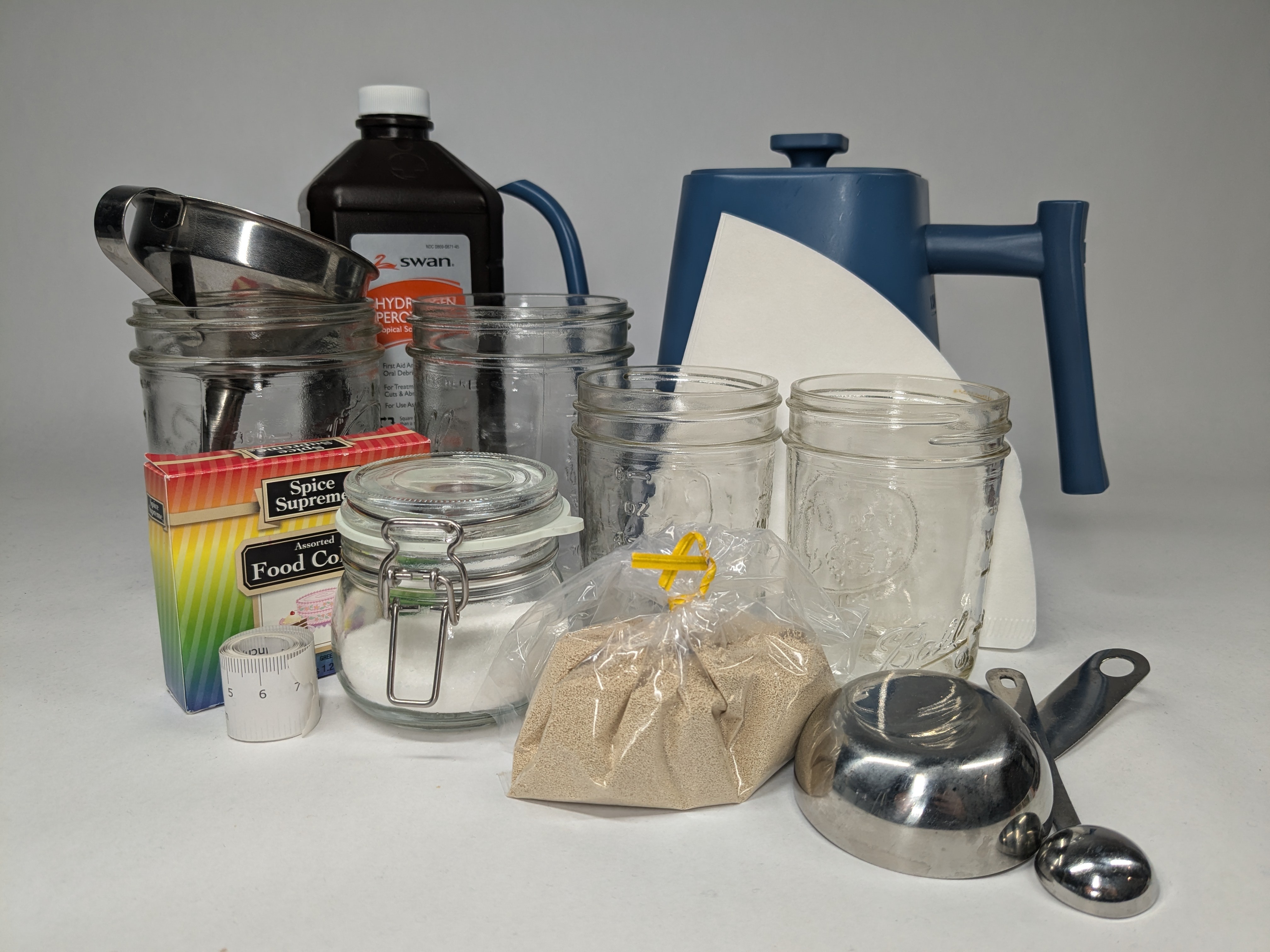
- 4 clear cups or containers (heat-resistant)
- 1 funnel
- 1 coffee filter
- 1/4 cup warm water (105-110 °F)
- 2 packets of active yeast
- 1 Tablespoon sugar
- 1 Tablespoon hydrogen peroxide (standard 3%)
- Food dye
- Ruler
- Paper towel or tissues (optional)
/-/https/www.sciencebuddies.org/cdn/Files/21120/5/Figure2_Materials-Modeling-Biologic-Manufacturing_LO-PhD.jpg)
Prep Work
- Pre-warm water to 105-110°F before starting the activity.
Instructions
- Label two cups:
- Yeast without (-) sugar
- Yeast with (+) sugar
- Add 1/4 cup of warm water, preheated to 105-110°F, to both cups.
- Add 2 teaspoons of active yeast to both cups.
- Add 1 teaspoon of sugar to the yeast with(+) sugar cup.
- Mix the solution and wait 5-10 minutes for the yeast to activate and expand. This step models cellular expansion in bioreactors during the biologics manufacturing process.
- Mix both solutions in the cups with the teaspoon every 3-5 minutes up to 10 minutes, wiping off the teaspoon between cups with a paper towel or tissue to prevent cross-contamination.
 What color are the solutions? Does either cup have a scent after 5 or 10 minutes?
 - Measure the height of the foam from the outside bottom of each cup after 5 and 10 minutes after the initial mixing of the solution.How much does each solution expand? Is sugar required for the cell expansion or “growth” process? Use your results to inform your answer.
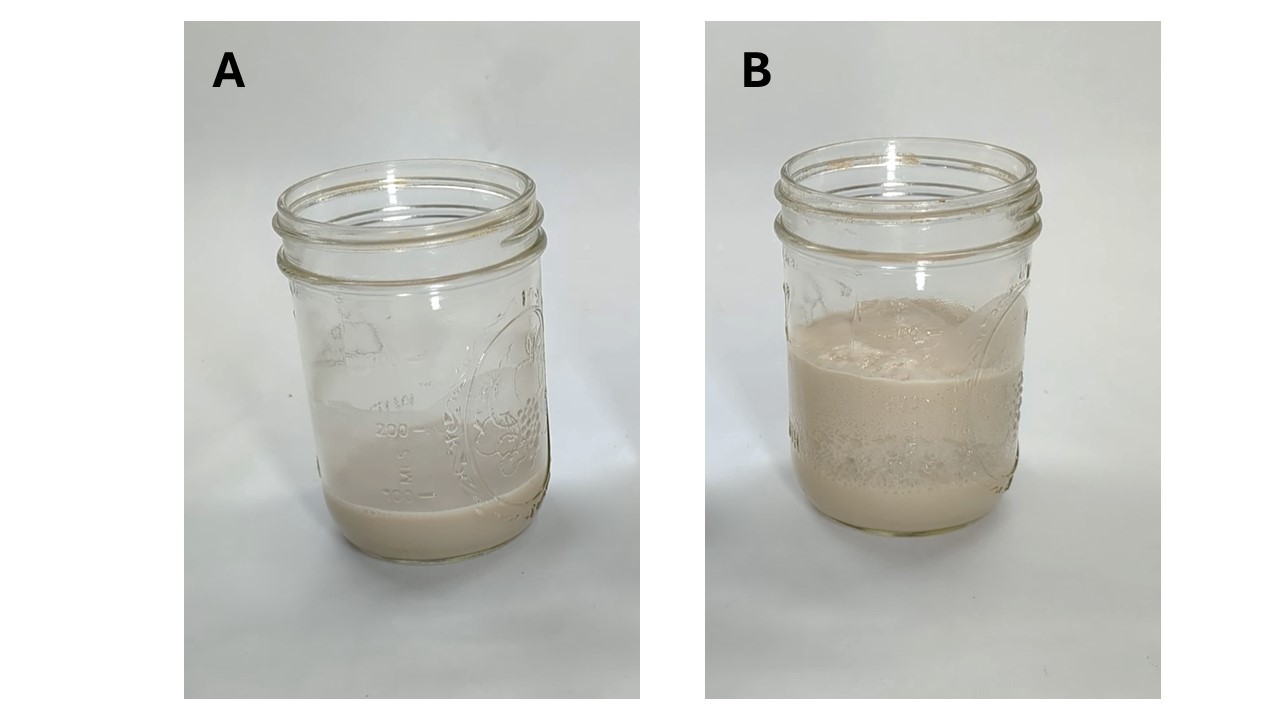
Figure 2. Image of yeast expansion with and without sugar. Which container looks like your with and without sugar results?
- Lyse, or break open, the yeast by adding 1 tablespoon of hydrogen peroxide with one drop of dye to each cup.
- Stir the solution with the tablespoon. Wipe off the spoon to avoid cross-contamination between conditions. This will simulate lysis, or breaking open, of the cells to isolate your protein product from the dyed "cell debris."
- Measure the height of the foam after 5 and 10 minutes.What happens when you add the hydrogen peroxide to the expanded yeast? Does it foam more or less, or both, but at different times?
- Set up two new, clean cups to filter the dyed "cell debris" from the protein product. Add a funnel over one cup (negative control) and a coffee filter over the other cup.
- Measure one tablespoon of the activated yeast solution containing sugar and pour it into the funnel. This will simulate a no-filtering condition.
- Measure one tablespoon of the activated yeast solution containing sugar and pour it into the filter. This will simulate the complex filtering process of protein isolation.
- Wait for gravity filtration of the protein product for about 5-10 minutes.
- Answer the following questions while you wait to filtrate off the dyed "cell debris."How much of the solution remains after filtration compared to the unfiltered product and the amount of "cell debris" caught by the filter? Why is filtration needed for the purification of proteins?
/-/https/www.sciencebuddies.org/cdn/Files/14176/8/icon-learn-green-33x54.png)
/-/https/www.sciencebuddies.org/cdn/Files/21146/4/Figure2_Yeast-Expansion_LO-PhD.jpg)
Cleanup
Pour out all the liquid down the drain with excess water. Dispose of any used filters in the trash. Wash all reusable materials with soap and water.
What Happened?
During this experiment you saw how yeast activates in the presence of sugar, simulating the expansion of cells typically in a bioreactor. You then saw how the cells' expansion has to be halted with hydrogen peroxide while the dye simulates the "cell debris" extracted from the cells. You then modeled the filtration process to purify their protein product from the "cell debris." This activity also demonstrates the scale needed for large bioreactors to create a small amount of protein product and illustrates to you the need for tons of cells to make a therapy with these small protein products.
Digging Deeper
In this activity, you modeled what happens during the complex biological manufacturing process. You saw how yeast activates in the presence of sugar, simulating the expansion of cells in a bioreactor. They then saw how the cells' expansion has to be halted through harvesting at a specific time of their growth, and how the products within the cells can be extracted through the inactivation and lysis of yeast cells with hydrogen peroxide. The dye simulated the "cell debris" that has to be separated from the protein products. You then modeled the filtration process to purify protein products and learned how this process removes the waste materials of the yeast cells and reduces the overall amount of protein product produced. This project models the major concepts of the biologics manufacturing process. Biological medicines are more specific and mimic biological proteins our bodies make. One famous example of when patient's need biological medicines is when patients develop or inherit diabetes. In diabetes the body's immune system destroys cells that make the protein insulin, which is essential to process or break down glucose in our bodies. Insulin is a biological protein that is hard to synthesize through chemical processing. Therefore, making the protein using cells in bioreactors is much easier and effective to create the quantities needed for this patient population. This is why creating biological medicines is so important, they are able to create more biologically similar medicines so that our body is able to create and use with fewer adverse side affects as pharmaceutical medicines. This is because these biological proteins are recognized by our body and cells, so they know how to metabolize, degrade, and use them.

Ask an Expert
For Further Exploration
- Do other chemicals (isopropanol, rubbing alcohol, salt, excess sugar), volumes, or concentrations reduce or stop the amount of yeast expansion?
- Does the filter's pore size allow more or less dyed "cell debris" through the filter? For example, you could test loose-weave fabric or other filtration methods. Do some work better than others at separating out the "cell debris"?
Related Resources
Project Ideas
/-/https/www.sciencebuddies.org/cdn/Files/20483/6/icon-flask.png)
/-/https/www.sciencebuddies.org/cdn/Files/12113/7/protein-NCP1-thumbnail.jpg)

/-/https/www.sciencebuddies.org/cdn/Files/12156/4/drug-solubility-thumbnail.jpg)
/-/https/www.sciencebuddies.org/cdn/Files/12155/9/prescription-success-thumbnail.jpg)
/-/https/www.sciencebuddies.org/cdn/Files/5021/9/mixtures_separate_sand_iron_filings_img.jpg)
/-/https/www.sciencebuddies.org/cdn/Files/4359/5/BioChem_img063.jpg)
/-/https/www.sciencebuddies.org/cdn/Files/7021/5/salad-spinner-snow-globe.jpg)
Lesson Plans
/-/https/www.sciencebuddies.org/cdn/Files/19273/6/immunotherapy-antibody-infusion.png)
/-/https/www.sciencebuddies.org/cdn/Files/14218/6/delayed-disolving-pill-thumbnail.jpg)
- MS-PS1-2.
Analyze and interpret data on the properties of substances before and after the substances interact to determine if a chemical reaction has occurred.
- MS-ETS1-3. Analyze data from tests to determine similarities and differences among several design solutions to identify the best characteristics of each that can be combined into a new solution to better meet the criteria for success.
/-/https/img.youtube.com/vi/u3LdI00902o/0.jpg)
/-/https/img.youtube.com/vi/6Xvqd8hRC6U/0.jpg)
/-/https/img.youtube.com/vi/o-afrQfaRy0/0.jpg)