/-/https/www.sciencebuddies.org/cdn/Files/21464/5/sb-logo.png)
/-/https/www.sciencebuddies.org/cdn/Files/21464/5/sb-logo.png)
Projects Give Students a Chance to See What It's Like to Be a Scientist
Teachers say using projects from Science Buddies helps fourth- and fifth-grade students at this school in Hawaii focus on using the scientific method and doing their experiments for the annual science fair.
/-/https/www.sciencebuddies.org/cdn/Files/21156/5/2025-successstory-displayboard-barrick.png)
Exploring the Scientific Method in Elementary School
When it's time for students to choose a science project for the school science fair, Kelly Barrick, an associate teacher at Waimea Country School in Kamuela, Hawaii, turns to Science Buddies. Along with Laurel Matsuda (previously the Grade 4/5 lead teacher and now the Head of School), Kelly has guided fourth- and fifth-grade students in choosing and doing projects for many years.
A Focus on Independent Science Projects
Waimea Country School is a small, independent elementary school with multi-grade classes for kindergarten/first grade, second/third grade, and fourth/fifth grade. All students participate in the science fair, but only the fourth- and fifth-grade students do independent science projects. The school holds a combined science fair for grades 2-5 in the Fall and a separate science fair in the Spring for grades K-1.
We caught up with Kelly and Laurel to get more insight into how Science Buddies helps support science education at Waimea Country School.
Many of your students use projects from Science Buddies. What makes Science Buddies' projects a good choice for your students?
Kelly: Occasionally, a student will want to design their own project, but we actually encourage them to use a project from Science Buddies because they are so carefully crafted and thoroughly laid out, allowing the student to focus on doing the science rather than designing the project.Science Buddies has such fantastically thorough written sections. We especially appreciate the complete step-by-step procedures and pre-made data tables. Having data tables that they can simply fill out allows the students to access the scientific process sooner and more easily with much less intimidation than 'back in the day' when they had to create their own data tables. This also leads to serious time savings for me as the teacher. Conferencing with each student is focused on running their experiment and making sure they know how to complete their data table rather than having to make it from scratch.
Do students use the Topic Selection Wizard to find projects of interest?
Kelly: We use the Topic Selection Wizard with Grade 4/5 students. We have a lot of experience with the most popular projects and will often guide students towards certain ones based on their interests, home support, and academic level. We tend to steer them towards experimental projects, rather than engineering projects, because we want them to have experience using the scientific method.
What is the biggest challenge for educators managing science projects?
Laurel: Grade 4/5 students are excited to learn and conduct science experiments, but they do not yet have the knowledge and skills to design an effective experiment from scratch. Guiding students to choose a good project, manage their time, and stay on track to complete a multi-step, multi-week project all require a great deal of individual attention from us as teachers. Science Buddies makes all of this easier by providing fully detailed, well-thought-out experiments that allow students to focus on the science and teachers to focus on helping students.
What is most inspiring about seeing students do science fair projects?
Kelly: I think the best parts of science fair are the fact that students can choose projects that are of interest to them and then the maturity and mastery of their topic when they get to their presentations.Laurel: I love giving students the opportunity to do what 'real scientists' do and to explore something that is interesting to them. I love watching them run with it and seeing them excited and engaged and surprised and/or amazed by their results.
/-/https/www.sciencebuddies.org/cdn/Files/21157/5/successstory-barrick-student-with-display-boards.png)
Why are science fairs important in the elementary school setting?
Kelly: There is nothing better or more important for learning about science and scientific concepts than actually doing science. As Ms. Frizzle from The Magic School Bus always says, "Take chances, make mistakes, get messy!" Science requires your senses at the elementary school level, not just reading terms and definitions.Laurel: Elementary students are naturally curious, and science is all about curiosity. Exposing them to science fairs at this early age engages their curiosity and encourages them to ask questions and explore their world, gets them interested in and excited about science and learning, helps them develop skills to approach science in the future, and lets them know that science is both important and cool.
How do science projects affect how your students think about science?
Kelly: The coolest thing for me is to watch very fashionable girls get excited about bath bombs, lip balms, facial masks, candy making, cupcake baking, and similar types of projects. I love that [by the end of the project] they will have a really tangible and clear-cut understanding of how changing a variable affects the end product and a deeper understanding of the science behind beauty and food products that they buy off the store shelves. Doing a science fair project opens their eyes to the potential of a career in chemistry, not just as a social media consumer/influencer.
Do you see signs that elementary school science projects spark interest in STEM that continues?
Kelly: I believe most of our students do science fair in 6th grade when they move on to the various middle schools in our area. Several of our graduates have done well at local and state levels in competitive science fairs in middle and high school.I can't say that our students become more interested in science, but all of our students have a much better idea of what a scientist does and at least a taste of what it takes to run an experiment.
Laurel: I think the opportunity to engage in scientific exploration at an early age helps students see that science is much more than they may think it is. Conducting their own experiments gives them a framework for investigating questions and solving problems and shows them that following their own curiosity can be rewarding, educational, and fun!
What is the value of Science Buddies for you and your students?
Kelly: Science Buddies is absolutely, totally invaluable. The aggregation of so much top-quality material with complete procedural instructions is inexplicably valuable.Laurel: Science Buddies as a free resource is absolutely invaluable. Science Buddies provides the guidance that young students need to create a good project and provides [a] framework (materials, procedure, etc.) that allows students to focus on the 'fun' parts of doing the science and exploring what it means to be a young scientist.
"Elementary students are naturally curious, and science is all about curiosity. Exposing them to science fairs at this early age engages their curiosity and encourages them to ask questions and explore their world, gets them interested in and excited about science and learning, helps them develop skills to approach science in the future, and lets them know that science is both important and cool."
Laurel Matsuda, Head of School, Waimea Country School
Share Your Story!
Thank you to Kelly and Laurel for sharing this story with Science Buddies. If you have a story to share about how you and your students use Science Buddies, please reach out to us at [email protected].
Categories:
You Might Also Enjoy These Related Posts:
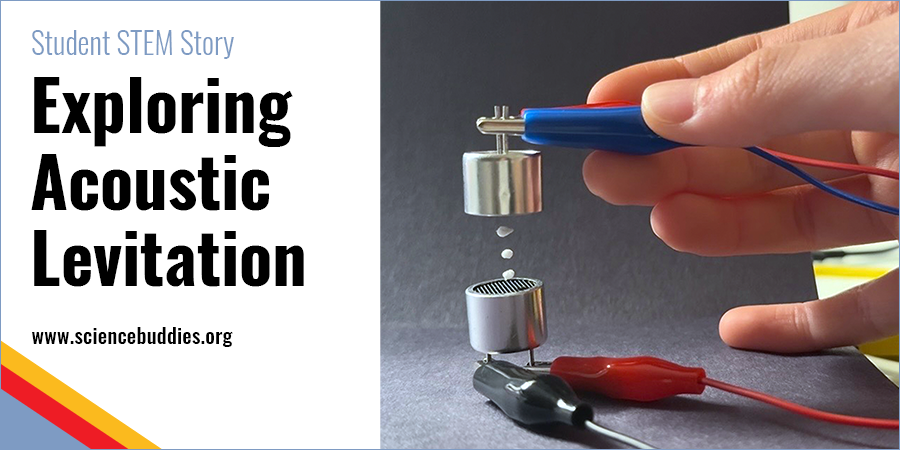
- Student Explores Acoustic Levitation to Address Healthcare Problem
- How One Texas Teacher Uses Science Buddies Throughout the Year -- Success Story from Science Buddies Educator Ambassador Program
- Middle School Student Creates Renewable Energy from Organic Waste
- Kit Club Brings Coding and Electronics to More Classrooms
- Spacecraft Motion Simulator: STEM Project Success Story
- Testing the Power of Wind – Sustainability Science for the STEM Fair
- Engineering Challenge People's Choice Award Winner - STEM Success Story
- Cabbage Chemistry: Students Explore Fermentation with Kimchi - STEM Project Success Story
/-/https/img.youtube.com/vi/JKCYcYp3ebQ/0.jpg)
/-/https/img.youtube.com/vi/k_1-fmQCjWo/0.jpg)
/-/https/img.youtube.com/vi/gHxCw7GkAYI/0.jpg)