/-/https/www.sciencebuddies.org/Files/21464/5/sb-logo.png)
/-/https/www.sciencebuddies.org/Files/21464/5/sb-logo.png)
Sun and Solar Science Projects
Soak up the power of the Sun with science and engineering projects that explore all things solar, including the solar system, solar power and sustainable energy, solar options for cleaning water, the greenhouse effect, and more.
/-/https/www.sciencebuddies.org/Files/19696/6/sun-and-solar-stem-collections-.png)
Sun and Solar Science Projects and Experiments
As the biggest star and largest object in our solar system, there are many astronomy projects students can explore related to the Sun, but there are lots of other sun and solar angles students can investigate with independent science projects. Even the Northern Lights are caused by the Sun! From alternative and renewable energy to the "heat" of the Sun, the dangers of ultraviolet (UV) rays, and the effectiveness of sunscreens, there are a range of Sun-centered projects and experiments students can do.
The science and engineering projects below have been grouped into the following categories:
- Solar Astronomy
- Heating Up with the Sun
- Using the Sun to Clean Water
- Sunscreen and UV
- Energy and Solar Power
At the bottom of this resource, you will find a list of additional independent student science and science fair projects, related lesson plans and STEM careers, and a list of key vocabulary words to review when studying the Sun and solar power.
Solar Astronomy Science Projects
1. Sunspot Cycles
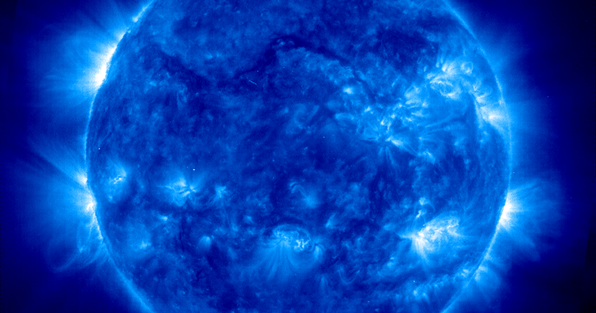
In the Sunspot Cycles project, students use historical data to look for patterns in the 11-year sunspot cycle. Question: Why do sunspots have a faster rise time?
2. Coronal Mass Ejections
In the Correlation of Coronal Mass Ejections with the Solar Sunspot Cycle project, students investigate periodic blasts of electrified gases from the Sun. We observe these coronal mass ejections (CMEs) as auroras, the Northern or Southern Lights. Question: Are CMEs related to the solar sunspot cycle? For a related project, see Using the Solar & Heliospheric Observatory Satellite (SOHO) to Measure the Motion of a Coronal Mass Ejection.
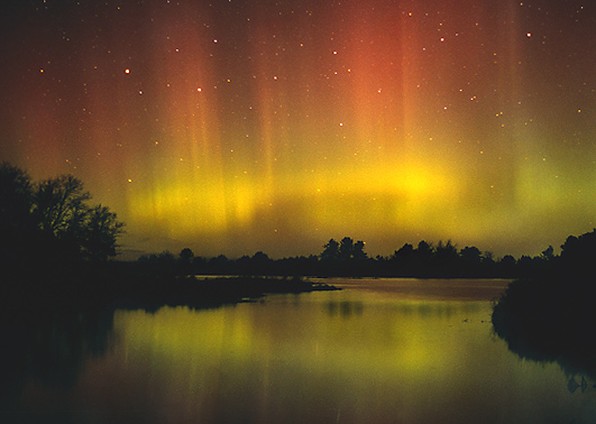
Copyright Chris VenHaus, 2001, used with permission3. How Far Away is the Sun?
In the Model the Distances between Planets in our Solar System activity, students make a model of the solar system to visualize the overall size of the solar system and the distances between planets. Question: How long did it take the Voyager 2 spacecraft to travel from Earth to Neptune? To explore the relative size of planets in our solar system, see the How Big Are the Planets in Our Solar System? activity.
For free educator lesson plans about the solar system, see:
4. Understanding Seasons
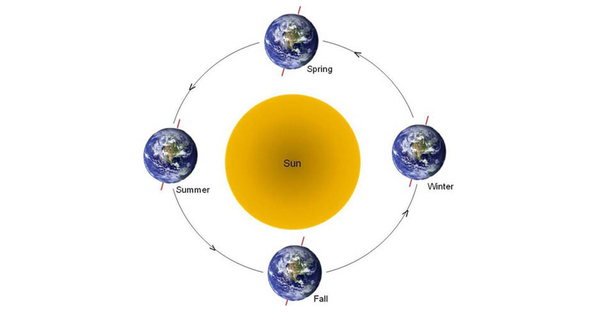
In the The Reasons for the Seasons project, students explore how the movement of the Earth relative to the Sun creates what we refer to as seasons. Question: What does the tilt of the Earth on its axis have to do with seasons?
5. Tell Time with a Sundial
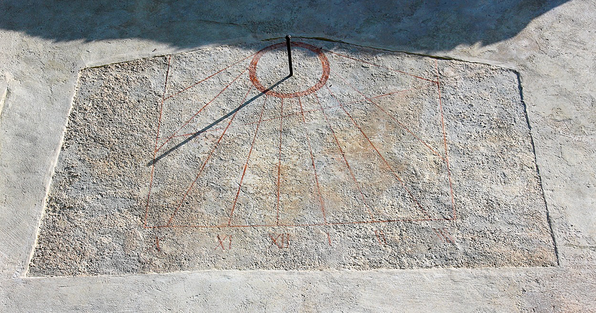
In the It’s About Time….To Make A Sundial! activity, students make their own sundial, a time-telling device that enables people to use the position of the Sun to determine the time of day. Question: What are the limitations of a sundial?
/-/https/www.sciencebuddies.org/Files/19674/4/solar-sunspots.png)
/-/https/www.sciencebuddies.org/Files/2802/5/Astro_img086.jpg)
/-/https/i.ytimg.com/vi/flk0PX3WJe0/maxresdefault.jpg)
/-/https/i.ytimg.com/vi/JSEhXB07024/maxresdefault.jpg)
/-/https/www.sciencebuddies.org/Files/19675/5/solar-seasons-diagram.png)
/-/https/www.sciencebuddies.org/Files/19676/4/solar-sundial.png)
Heating Up with the Sun
6. Warming Power of the Sun
In the Warm in the Sun activity, students explore the way different materials heat up as they absorb warmth from the Sun. Question: Do natural materials heat up the same as synthetic materials?
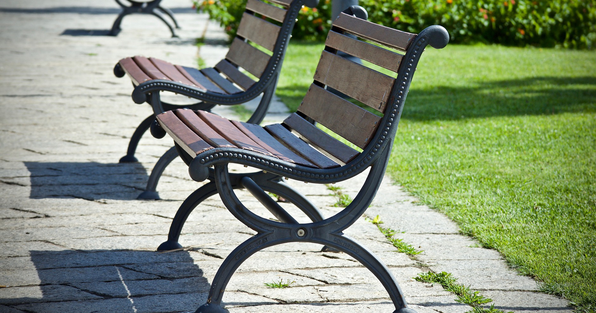
7. The Greenhouse Effect
In the Heating with the Greenhouse Effect activity, students learn about the greenhouse effect and monitor temperatures in a model greenhouse. Question: How much higher are temperatures in a greenhouse compared to outside?
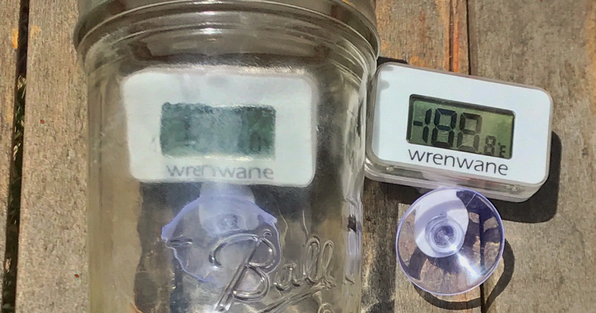
8. Solar Heater
In the Cold Room? Heat It Up with A Homemade Solar Air Heater project, students build a simple solar heater to explore how the Sun can be used for heating. Question: What determines how hot you can heat air using a solar air heater?
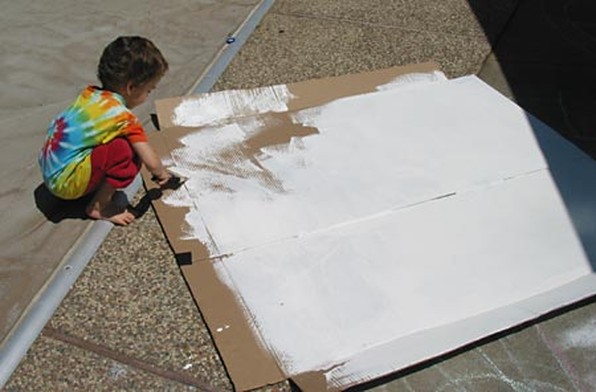
9. Build a Solar Oven
In the Now You're Cooking! Building a Simple Solar Oven project, students use a cardboard box to build a solar oven that can be used for cooking. For another approach to building a solar oven, see the Build a Pizza Box Solar Oven activity (shown in the video below). Question: How does a solar oven compare to a standard kitchen oven?
/-/https/www.sciencebuddies.org/Files/19678/5/solar-warminsun-bench.png)
/-/https/www.sciencebuddies.org/Files/19677/5/solar-greenhouse-effect.png)
/-/https/www.sciencebuddies.org/Files/3469/5/EnvEng_img064.jpg)
/-/https/i.ytimg.com/vi/nhgNh3BdMsc/maxresdefault.jpg)
Using the Sun to Clean Water
10. Drinking Water
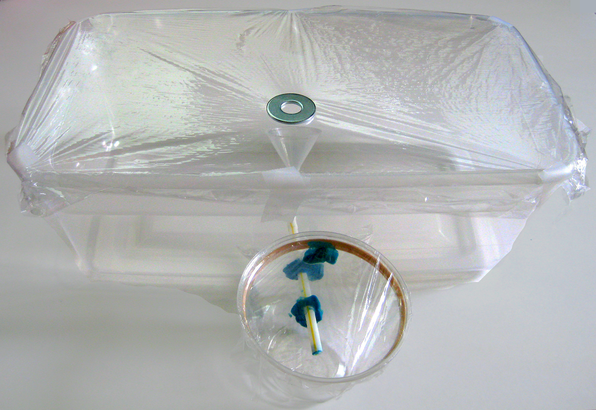
There are multiple ways to take advantage of the Sun's power to help provide safer drinking water. Use the projects below to explore using the Sun to desalinate and disinfect water:
- Solar-Powered Water Desalination: Build and test a solar-powered device for desalinating water and experiment to see how the color used in the design setup affects how the device works. (A convenient kit is available.)
- Solar-Powered Salt Removal: Use solar power and the water cycle to desalinate water and experiment to see how the process changes with varying levels of salinity.
- Learn How to Disinfect Contaminated Water: Explore the process of solar disinfection (SODIS) using plastic polyethylene terephthalate (PET) bottles. (A convenient kit is available.)
/-/https/www.sciencebuddies.org/Files/19688/4/solar-water-desalination.png)
Sunscreen and UV
11. Make Sunprints
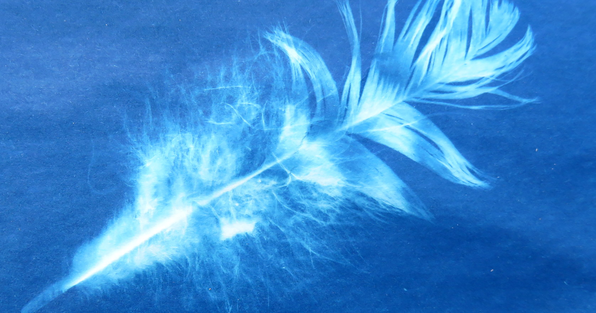
In the Colorful Chemistry Creations: Make Your Own Sun Print with Color and Sunlight! project, project, students experiment to find out which colors of light make the best sun print images. Question: What kind of chemical reaction causes a sunprint image to appear? For a related activity, see Make a Sunprint Using Objects from Nature!.
13. Measure the UV Index
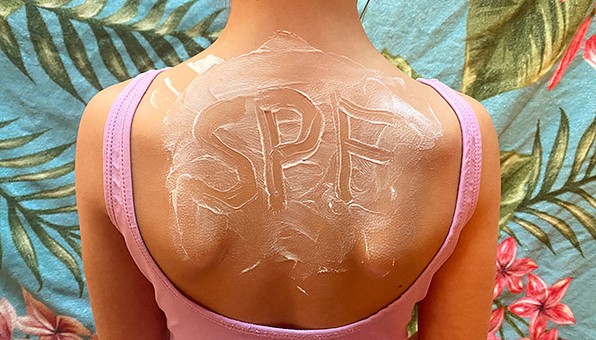
In the Don't Get Burned! Measure the UV Index at Different Times of the Day project, students investigate how levels of ultraviolet (UV) light change throughout the day. Question: At what time of day do you most need UV protection?
14. Testing Sunscreen
In the Testing Sunscreen Effectiveness and Water Solubility project, students measure the effectiveness of different sunscreens for blocking ultraviolet (UV) light and investigate water solubility of different types of sunscreen. Question: What is the difference between physical sunscreen and chemical sunscreen? For a related science project, see How Eco-Friendly is Your Sunscreen?.
/-/https/www.sciencebuddies.org/Files/19689/4/solar-sunprint.png)
/-/https/www.sciencebuddies.org/Files/19354/8/sunscreen-effectiveness-thumbnail.jpg)
Energy and Solar Power
15. Solar Updraft Tower
In the Build a Solar Updraft Tower activity, students learn about solar thermal collector technology and explore how a solar updraft tower works by building a model and seeing if it can make a propeller spin. Question: What happens when hot air inside the tower rises?
16. Solar Cell Power Output
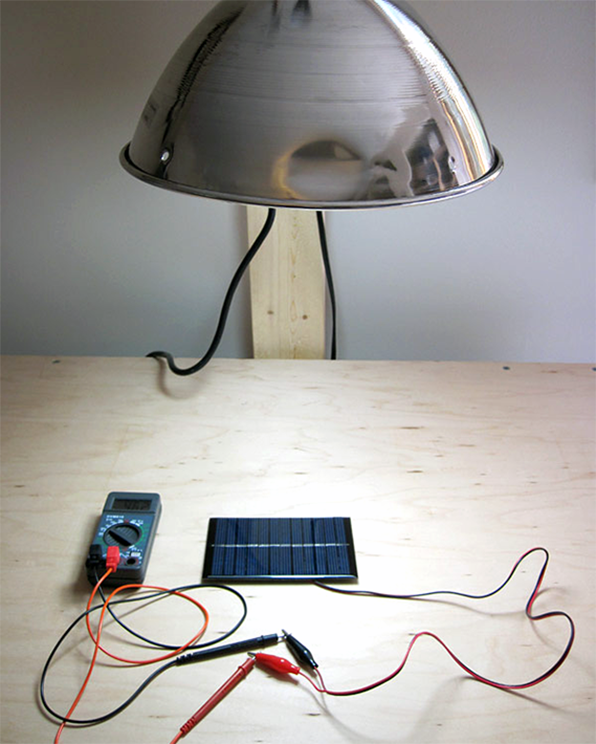
In the A Cool Way to Make Electricity: Solar Cell Power Output vs. Temperature project, students investigate to see how the power generated by a solar cell changes with the temperature. Question: What happens to the voltage and current output of a solar cell when the temperature increases?
17. Solar-Powered Bristlebot
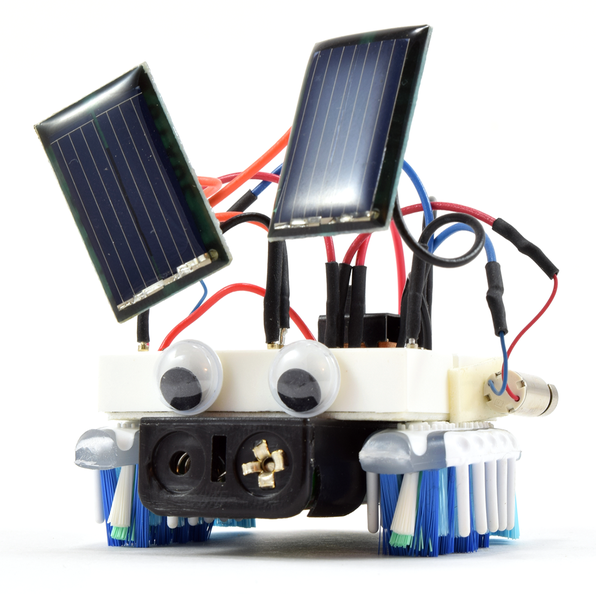
In the Build a Solar-Powered Bristlebot project, students compare the performance of solar and battery power for a bristlebot in different weather conditions. Question: What are some of the immediate differences in how the solar powered robot works? (A convenient science kit is available.)
18. Solar-Tracking Robot
In the Build a Solar-Tracking Robot project, students build and program a robot that can autonomously orient itself towards a light source. Question: What might be a benefit of a robot being able to track the Sun? (This project uses the BlueBot Robotics Kit plus an Arduino and additional parts.)
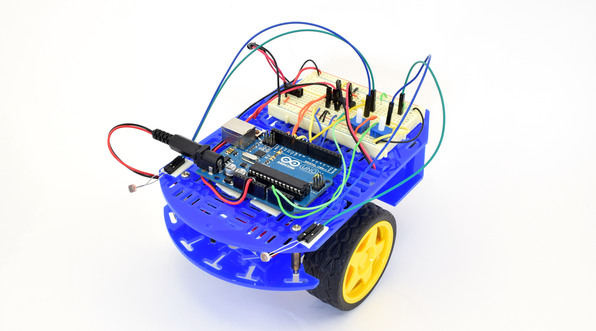
To learn more about projects with Arduino or the BlueBot Kit, see:
For free educator lesson plans using the BlueBot Kit, see:
19. A Miniature Solar Tracking System
In the Design a Mini Solar Tracker System project, students make a miniature solar tracking system that scans the sky throughout the day to find the brightest light or highest voltage. The project uses the micro:bit's built-in ability to measure light levels and voltage. By scanning and sampling the brightness of different angles, the solar tracker continuously orients to the Sun. Question: Why would keeping a solar panel pointed directly at the Sun throughout the day maximize the amount of power it produces?
20. A Solar Panel that Follows the Sun
In the Build and Test a Sun-Tracking Solar Panel project, students make a solar panel system that uses photoresistors to track the movement of the Sun through the day. The system compares the readings of both systems, aiming to keep them equal, which indicates they are both pointed at the Sun. If they are not equal, the system adjusts the angle of the panel. Question: How much more power does a solar-tracking system produce?
21. Determine the Best Location for a Solar Panel
In the Find the Best Place to Put a Solar Panel project, students experiment with finding the best placement for a solar panel. It might seem obvious that a solar panel should be placed and tilted so that it will get the most total sunlight exposure during the day, but this location is sometimes difficult to guess because of surrounding trees or buildings. With a micro:bit, students can sample light exposure over time at different locations and then compare the area under the curve on a graph of light level vs time at the various locations to determine the best placement. Question: What can reduce a solar panel's power output?
22. Dust and Solar Panels
In the How Does Dust Affect Solar Panel Power Output? project, students investigate what happens when dust accumulates on a solar panel, a problem that can affect performance on Earth but can also create problems on the Moon or on another planet, like Mars. Question: Does dust impact a solar panel's power output enough to make mitigation efforts worthwhile?
/-/https/i.ytimg.com/vi/rbhzoCb0xWM/maxresdefault.jpg)
/-/https/www.sciencebuddies.org/Files/19690/4/solar-cell-temperature.png)
/-/https/www.sciencebuddies.org/Files/19691/5/solar-bristlebot.png)
/-/https/www.sciencebuddies.org/Files/19692/4/solar-bluebot.png)
/-/https/i.ytimg.com/vi/oPuld-ki4lw/maxresdefault.jpg)
/-/https/i.ytimg.com/vi/nkPoRdrsRHE/maxresdefault.jpg)
/-/https/i.ytimg.com/vi/LF3VpEwa4mk/maxresdefault.jpg)
/-/https/i.ytimg.com/vi/YhGD72-4q94/maxresdefault.jpg)
Additional Sun & Solar Science Projects for Students Doing Independent Science Projects or Science Fair
- Use the Sun's Energy to Heat Your Own Water
- Build a Solar-Powered Car
- Build Your Own Helio Tracker—a Self-powered Mechanical Sunflower that Turns with the Sun
- Free Power from the Sun!
- Investigate the Greenhouse Effect
- Solar Speedway
- The Speed of Light: Explore Solar Energy with a Supercapacitor Car Motor!
- Using the Solar & Heliospheric Observatory Satellite (SOHO) to Determine the Rotation of the Sun
Related STEM Careers
As students get hands-on with Sun & Solar science, they can learn more about related STEM career paths like:
Additional Resources
For related educator resources, see:
Vocabulary
The following word bank contains words that may be covered when researching or teaching about Sun & Solar science.
- Aurora
- Condensation
- Conductivity
- Coronal mass ejection (CME)
- Desalination
- Electricity
- Energy
- Evaporation
- Green chemistry
- Greenhouse
- Heat exchange
- Heat transfer
- Insulation
- Ions
- Orbit
- Orbital distance
- Photovoltaic cells
- Power
- Radiant energy
- Renewable energy
- Scale factor
- Season
- Solar cell
- Solar disinfection (SODIS)
- Solar energy
- Solar system
- Solar thermal collector technology
- Sun Protection Factor (SPF)
- Sunspots
- Sustainability
- Thermal energy transfer
- Ultraviolet (UV) light
- UV Index
- UV radiation
- Water cycle
Thematic Collections
Collections like this help educators find themed activities in a specific subject area or discover activities and lessons that meet a curriculum need. We hope these collections make it convenient for teachers to browse related lessons and activities. For other collections, see the Teaching Science Units and Thematic Collections lists. We encourage you to browse the complete STEM Activities for Kids and Lesson Plans areas, too. Filters are available to help you narrow your search.
Understanding Science Buddies' STEM Resources
Lesson Plans contain materials to support educators leading hands-on STEM learning with students. Lesson Plans offer NGSS alignment, contain background materials to boost teacher confidence, even in areas that may be new to them, and include supplemental resources like worksheets, videos, discussion questions, and assessment materials.
Video Lessons include NGSS alignment and offer a plug-and-play option for teaching a STEM lesson. Each Video Lesson asks a science question, teaches students about the relevant science, and guides students in a hands-on experiment that will help them answer the question. Video Lessons are NGSS-aligned and bring core science concepts to life with storytelling, animation, and photos using a self-paced engage, explore, and reflect format.
Activities are simplified explorations that can be used in the classroom or in informal learning environments.
Projects are written to support students doing independent science projects or science fair projects. Projects can be adapted for classroom use.
Categories:
You Might Also Enjoy These Related Posts:
- Teach Chemical Reactions - 20+ Chemistry Lessons and Activities
- Teach About Biodiversity with Free STEM Lessons & Activities - Biodiversity Month
- Teach Newton's Laws of Motion - STEM Resources for Teachers
- Sun and Solar Science Projects - Solar Energy STEM
- Beaches and Sand Science Projects
- July 4th STEM! Summer Science Picks for Independence Day!
- Ocean Science Projects, Lessons, and Experiments
- Boredom Busters: STEM Activities for End-of-Year and Summer Fun
/-/https/img.youtube.com/vi/PenQ1zuphJU/0.jpg)
/-/https/img.youtube.com/vi/sya89Et3Go0/0.jpg)
/-/https/img.youtube.com/vi/2awrEVrPpdI/0.jpg)