/-/https/www.sciencebuddies.org/Files/21464/5/sb-logo.png)
/-/https/www.sciencebuddies.org/Files/21464/5/sb-logo.png)
Experiment with AI Image Recognition and Computer Vision
Explore AI and machine learning for image-based identification and classification systems that make use of computer vision and AI's strength in pattern detection.
/-/https/www.sciencebuddies.org/Files/22061/5/2026-summer-stem-ai-images-computer-vision.png)
Flexible STEM in Summer
Summer break offers flexible time for STEM, including family activities and student-led deep dives. The out-of-school months invite students to experiment in STEM areas of personal interest, either pursuing topics that may not come up in the typical school year or exploring more deeply than the school schedule allows. This post is the third in a series about experimenting with AI and machine learning over the summer.
AI and Image Recognition
AI systems can compare a single image against vast datasets to power facial recognition and identify or classify everything from plants and trees to tick species and types of litter.
You may have used apps that let you upload an image and identify the object or species, helping you determine the tree, insect, bird, or plant you saw. Google Lens works similarly, allowing you to search for a match to an image of anything. Depending on the AI model, chatbots can provide similar image-identification support. Students can use these capabilities to create real-world solutions, from facial recognition systems to tools that identify ticks and other disease-carrying insects. Younger students can use AI's image-matching skills to supplement their summer image-based collection projects.
Explore the Use of Computer Vision in Machine Learning and AI
For middle and high school students, the image recognition projects highlighted below use Google Colab or Teachable Machine to train AI models for image recognition while learning about machine learning and computer vision.
Step-by-step directions and starter code for these projects are provided. No coding experience is required.
1. Interpret Facial Expressions
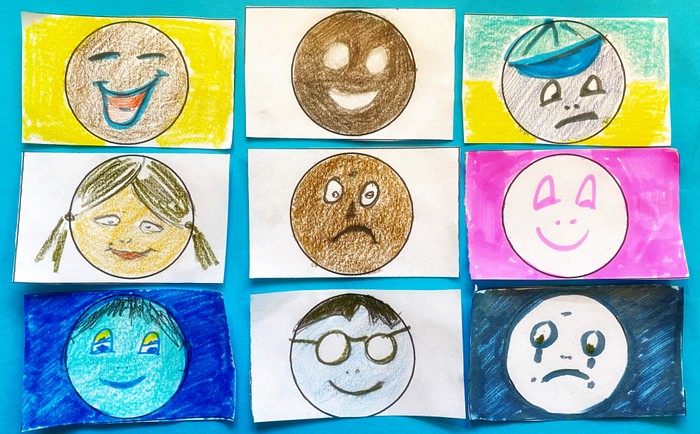
Using AI to classify images requires the ability to make subtle distinctions, often between images that may not perfectly match the clear reference images for a category. In this project, students experiment with Teachable Machine to train an AI classification model to determine whether a face is happy or sad. Students will create hand-drawn training images, import them into Teachable Machine, and then train and test the model's performance while also looking for signs of bias that may cause the model to consistently misclassify certain drawings. Questions to consider: What helps you decide if a drawing of a face looks happy or sad? What happens when a face is somewhere in between? How does the range and number of training materials affect the system's accuracy? What is a confusion matrix?
2. Recognize Faces
Many systems, including smartphones, use facial recognition as an identifier and key. What is involved in this kind of identification? In this project, students create and modify a facial recognition model using a Siamese neural network. Students gather anchor and positive images and test the system's threshold values. They then train and test the system to see if it effectively differentiates and matches faces to the anchors, even when factors like hair and lighting change. Questions to consider: Why are Siamese neural networks effective for facial recognition tasks? What role do negative images play in training a facial recognition model? What is the difference between detection and verification thresholds? How easy is it to generate a false positive? What are the risks of a facial recognition system making mistakes?
3. Identify Ticks
Some ticks can transmit Lyme disease, but not all ticks carry the disease. Being able to accurately identify the species and determine whether it is a species known to transmit Lyme disease is important when you find a tick. In this project, students explore how AI can be trained to identify ticks in photos. In this project, students collect image data of three different tick species and use a convolutional neural network (CNN) to train an AI model to classify images of ticks. Questions to consider: Why is it so difficult for people to identify tick species? How does the model account for different stages of tick development in making an identification? What is image augmentation, and what role does it play in improving the dataset?
4. Read Road Signs
Self-driving technologies rely heavily on computer vision. Autonomous vehicles being able to follow the rules of the road, interpret what other cars are doing, and understand road and highway signs requires extensive training. To get a sense of how this process works, students can use Teachable Machine to train an AI to interpret road signs. This project involves gathering photos of real-world road signs that are then used to train and test the system. Questions to consider: Is this task harder or easier for AI than humans? What are the challenges of training a system to read road signs? What kinds of differences did you notice about the signs in the photos you took? How do these differences complicate the task?
5. Identify Litter
Litter comes in all shapes, sizes, and materials, and often needs to be sorted for proper recycling. Can AI help with this process? In this project, students experiment with computer vision to train a system to identify types of litter. Questions to consider: Can AI be trained to recognize patterns and make decisions based on what they "see"? How does training with computer vision differ from other approaches to AI?
6. Detect Space Debris
There are all kinds of potential hazards in space, from meteoroids to other satellites. Detecting and identifying space debris is critical to prevent collisions between spacecraft. In this project, students use Teachable Machine to train a model to recognize objects and then import the model into Scratch to build a program that responds to objects commonly found in space. Questions to consider: What limitations are there to reliably identifying space debris? Why is better detection and evaluation of space debris important? What role does distance play in accurately detecting space debris?
/-/https/www.sciencebuddies.org/Files/22060/4/facesforextendedtestofmachinelearning.jpeg)
/-/https/i.ytimg.com/vi/3N4-6QKaXhU/maxresdefault.jpg)
/-/https/i.ytimg.com/vi/dk4Bg0dV5-w/maxresdefault.jpg)
/-/https/i.ytimg.com/vi/XOQ12R4ClEk/maxresdefault.jpg)
/-/https/i.ytimg.com/vi/W-5Z6S6Csjg/maxresdefault.jpg)
/-/https/i.ytimg.com/vi/kRuUbweGsjk/maxresdefault.jpg)
Image Collections, AI, and Younger Students
While the projects above teach students how image-recognition models are trained, younger learners can explore many of the same ideas simply by using AI-powered image identification tools during outdoor investigations.
Summer is a great time for students to conduct "collection" projects that encourage them to look closely at the world around them. Whether they collect rocks and sea glass, observe birds, or inventory insects, students can practice observational and data-collection skills, create beautiful posters, photo books, or boards to track their work, and conduct data analysis of their findings.
Field guides are a classic way to identify findings, and there are guides available for a wide range of topics, from birds to rocks. But even with a field guide, successful identification can be difficult. Students do not have to start with code to begin exploring AI-powered image recognition. Working together with a parent or guardian, and following the age requirements of the AI tool being used, younger learners and families can use Google Lens or chat-based AI tools like ChatGPT, Claude, or Gemini to help with identification and classification tasks for image-based projects. Using AI to help with identification improves the success of interest-based summer documentation projects and helps students gather scientific data to round out meaningful collections.
Scavenger Hunt STEM
For families that would like to do a summer collection project, AI can be used to brainstorm a list of objects to search for within a specific category or natural environment, turning the process into something like a scavenger hunt. Kids can search for an object that matches each category and, optionally, upload photos with the help of their families for further verification. Visiting a beach, a national park, a tidepool, or just heading to the park for the day? AI can help generate a list of natural objects to search for, and families can scale difficulty by requiring a certain number of each object, making some objects worth more points, or even adding value for identification. Pair the activity with a single-use or small digital camera and students have the makings for a memorable and unique quest.
Backyard and Outdoor STEM
The projects and activities below could be paired with a summer collection project.
- Making Species Maps: Make maps of a local habitat and spend time observing and recording the species seen. Questions to ask: What does it mean for a species to be cosmopolitan, endemic, invasive, or native? What is biogeography?
- Explore Biodiversity Using a Homemade Bug Vacuum!: Make a homemade bug vacuum to find out how many different kinds of bugs and other small invertebrates are in a local habitat. Questions to ask: How does the number of types of bugs collected or seen relate to the biodiversity of an area?
- Finding Phyla: See how many different species you can find in the backyard or at a local park. Then try to figure out which phylum most of the animals belong to. Questions to ask: What types of animals were most common? What does the habitat have to do with the animals you saw?
- Can You Predict a Bird's Lifestyle Based on Its Feet?: Pay special attention to the feet of birds in the area or at a pond or lake. Take photos to compare and consider what you can guess about a bird's lifestyle by its feet. Questions to ask: How are a bird's feet related to habitat and lifestyle? Why are an animal's adaptations often related to lifestyle?
For even more ideas for exploring local biodiversity, see:
- Backyard Science: Summer of STEM (Week 10)
- Bug and Insect STEM Roundup
- Creative Summer Science: A Science Collection
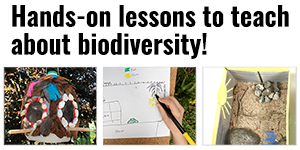
- Teach About Biodiversity with Free STEM Lessons & Activities
Summer Science and AI Exploration
Also in this series:
If your students try AI and machine learning projects this summer, we would love to hear about it! You can reach us at [email protected] to share your story.
Related Resources
For additional resources to explore coding, physical computing, and AI with independent student projects, see the following:
Categories:
You Might Also Enjoy These Related Posts:
- AI Image Recognition and Computer Vision - Explore AI and Machine Learning
- Everyday AI: Recipes, Flashcards, and More - Student AI Projects
- Make a Game of It! Explore AI and Machine Learning with Games
- Boredom Busters: STEM Activities for End-of-Year and Summer Fun
- Deep Dive into STEM—Do a Summer Science Project!
- 12 Science Kits for Summer Science Experiments and Discovery
- Ready, Set, Go! (Awesome Summer Science Experiments)
- Awesome Summer Science Experiments
/-/https/img.youtube.com/vi/jzdC6PnuFKU/0.jpg)
/-/https/img.youtube.com/vi/fuwGvZ-eOrc/0.jpg)
/-/https/img.youtube.com/vi/aJhYQsL0-kI/0.jpg)