/-/https/www.sciencebuddies.org/Files/21464/5/sb-logo.png)
/-/https/www.sciencebuddies.org/Files/21464/5/sb-logo.png)
Chemical Reactions and Photochemistry Projects for National Chemistry Week
Chemistry projects and resources for National Chemistry Week 2024!
/-/https/www.sciencebuddies.org/Files/20815/4/chemistry-week-2024-photochemistry.png)
National Chemistry Week is October 20-26, 2024. The theme of this year's chemistry awareness week, hosted by the American Chemical Society (ACS), is "Picture Perfect Chemistry."
Photochemistry and Chemical Reactions
In learning about the processes involved in developing photographs, students will discover that in addition to photochemistry, photosensitivity, and reactions with light, developing photographs also relies on chemical reactions.
The projects highlighted below guide student exploration of chemical reactions and other topics related to the chemistry of photo-processing, including chemiluminescence, chemical kinetics, phosphorescence, photochromism, and the use of light-sensitive chemicals.
Science Projects with Photo Chemistry Connections
- Crime Scene Chemistry—The Cool Blue Light of Luminol: In this forensic science chemistry project, students investigate the role of temperature in making unknown samples treated with Luminol "glow" if there is blood. Luminol emits light when it reacts with certain chemicals. This is an example of chemiluminescence.
- Make Your Own pH Paper: Making pH indicator paper using a pH-sensitive dye extracted from red cabbage and using the paper to explore acids and bases is an interesting kitchen science project and a great way to learn more about the pH scale and the acidity of household substances. This project can also be used to talk about photo processing as the pH of a solution can affect the speed and effectiveness of chemical reactions involved in the process. (For younger students, see the Cabbage Chemistry project.) Tip! The DIY pH indicator paper made in this project is similar to litmus paper.
- Investigate the Kinetics of the Color Changing Iodine Clock Reaction: This chemistry project guides an exploration of chemical kinetics with an updated version of the classic iodine clock reaction. In this reaction, two clear solutions are mixed, which creates a clear solution that then changes to a colored solution. An example of green chemistry, this project is designed to use safer chemicals and materials, including iodine tincture or povidone-iodine solution, vitamin C (ascorbic acid), hydrogen peroxide, purified or distilled water, and starch.
- Minds of Their Own: A Chemical Reaction that Changes, then Changes Back!: In this chemistry project, students explore a chemical reaction that causes a solution to change color from blue to yellow to clear and then back, again and again. Most chemical reactions move in one direction, from reactants to products, but this reaction is an oscillating reaction and repeats for a number of cycles.
- How Bright Is Your Glow Stick? Measure It!: Build a simple device to measure the intensity of light produced by glow sticks and other glow-in-the-dark materials and investigate to see how temperature affects the intensity of the luminescence. Chemiluminescent objects, such as glow sticks, use chemical energy to produce light.
- The Effect of Temperature on Chemical Reaction Time: With a fizzing chemical reaction, it is easy to see that a reaction is happening. When an Alka-Seltzer tablet is dropped into water, it immediately starts releasing carbon dioxide gas—and fizzing. In this science project, students experiment to see what difference temperature makes on the rate of the bicarbonate reaction. For a related STEM activity, see Make an Alka-Seltzer Powered Lava Lamp.
- Solar-powered Chemistry: Study Chemical Reaction Rates in Ultraviolet Beads: Ultraviolet (UV) beads change color when exposed to UV radiation from the Sun. In this chemistry project, students experiment to see how temperature affects the rate at which UV beads lose color.
- Colorful Chemistry Creations: Make Your Own Sun Print with Color and Sunlight!: Sun print paper is made with Berlin green, a chemical that turns into Prussian view as a result of a light-activated chemical reaction when the paper is exposed to sunlight. Objects placed on the paper that block the light will leave white "images" after the paper is placed in the sun. In this project, students experiment to see what difference the color of light makes in the resulting sun print image.
- What's the Best Exposure Time for Sun Print Paper?: The process of making sun prints is similar to photolithography, an important step in making integrated circuits from semiconductors. In this chemistry project, students make sun prints and experiment to see how long the paper should be left in the sun for the best print.
Chemistry Projects for Students
Students choosing independent science projects (or science fair projects) may also be interested in chemistry projects like these:
Elementary School
- Bath Bomb Science
- Explore the Mixing Behavior of Liquids
- Keep Your Candy Cool With the Power of Evaporation!
Middle School
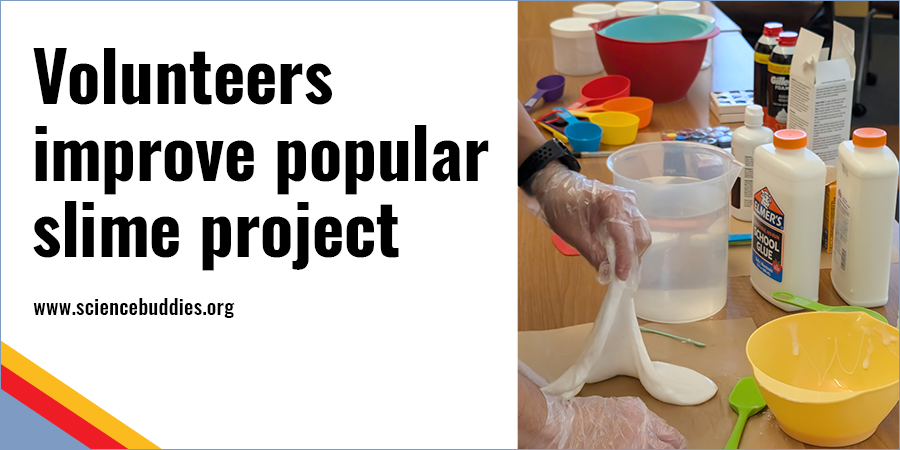
- Design Your Own Slime
- Big Pieces or Small Pieces: Which React Faster?
- Cold Pack Chemistry: Where Does the Heat Go?
- Crime Scene Chemistry: Determine the Identity of an Unknown Chemical Substance
- Which Filtration Material Leads to the Best Drinking Water?
- How to Make a Battery with Metal, Air, and Saltwater
High School
- Solar-powered Chemistry: Study Chemical Reaction Rates in Ultraviolet Beads
- Crime Scene Chemistry—The Cool Blue Light of Luminol
- Crime Scene Chemistry: The Kastle-Meyer Test for Blood
- Electrolyte Challenge: Orange Juice Vs. Sports Drink
- What Sugar And Tea Does a Kombucha Biofilm Prefer?
- Measuring the Amount of Acid in Vinegar by Titration with an Indicator Solution
- How Bright Is Your Glow Stick? Measure It!
- Excess Volume: Investigate the "Shrinking Liquids" Effect
- How Blue is Your Sports Drink?
- Which Orange Juice Has the Most Vitamin C?
Videos
/-/https/i.ytimg.com/vi/jTE2IV8vJ48/maxresdefault.jpg)
/-/https/i.ytimg.com/vi/EKTjxxL0kjo/hqdefault.jpg)
/-/https/i.ytimg.com/vi/nhOyKdeRPXA/maxresdefault.jpg)
/-/https/i.ytimg.com/vi/0QQAU5gB0fI/maxresdefault.jpg)
Green Chemistry Lessons & Resources
Use the resources below to learn more about how green chemistry reimagines chemical processes in ways that are environmentally aware, produce less hazardous waste, reduce pollution, and result in cleaner air and water and safer foods and products for everyone.
- E-factor: Environmental Impact Factor for Chemical Reactions: In this lesson, students do a simple exercise with M&Ms to understand what environmental impact factor (E-factor) is, how it applies to chemical processes, and how waste from chemical reactions can be reduced by applying the principles of green chemistry.
- Using Green Chemistry to Understand Types of Chemical Reactions: In this lesson, students learn to identify composition, decomposition, single-displacement, and double-displacement reactions. After learning about the chemicals commonly used in traditional reactions, they explore safer alternatives based on the Principles of Green Chemistry.
- Reaction Rates: Speed It Up with Temperature!: Using bleach and food color, students experiment to see how temperature affects the rate of the chemical reaction.
- Green Chemistry and the School Science Lab - Safer Chemistry for Today and Tomorrow: Use these lessons to explore the 12 principles of green chemistry with students.
- New Green Chemistry Science Projects—Sustainable Science for Students: Try green chemistry with student science projects, including fabric made from seaweed or kombucha and experiments related to sunscreen and detergent.
- Browse all Green Chemistry student projects
- Browse all Green Chemistry lesson plans
Support for the development of resources to enable exploration of green chemistry by K-12 students and teachers has been generously provided by Millipore Sigma.
Additional K-12 Chemistry Resources
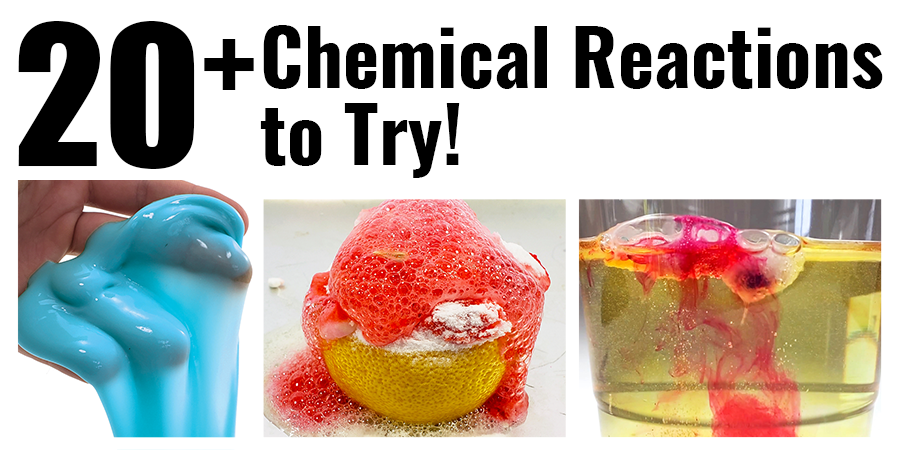
- Teach Chemical Reactions: More than 20 video lessons, lesson plans, activities, and experiments for exploring what happens when you combine reactants.
- 13 Lessons to Teach About the Chemistry of Mixtures and Solutions: Not all substances form a chemical reaction when combined. Some form a mixture. Resources in this collection help students learn about homogeneous and heterogeneous mixtures.
- How to Make Solutions for Chemistry and Biology Experiments
- How to Make Dilutions and Serial Dilutions
- Titration Tutorial: Tips & Tricks for Titrating
/-/https/i.ytimg.com/vi/vJmIJ951p1o/maxresdefault.jpg)
/-/https/i.ytimg.com/vi/AzFERPJeeTM/maxresdefault.jpg)
/-/https/i.ytimg.com/vi/gmeCY7ANrog/maxresdefault.jpg)
Categories:
You Might Also Enjoy These Related Posts:
- Model and Track Virus Outbreaks - Student STEM
- Sun and Solar Science Projects - Solar Energy STEM
- 10 STEM Projects to Get Started Building Circuits on a Breadboard!
- Ocean Science Projects, Lessons, and Experiments
- Women in STEM! More than 60 Scientists and Engineers for Women's History Month
- Black History Month STEM - Learn More About These 40 Scientists for Black History Month!
- 10 Reasons to Do the Ball Run Engineering Challenge
- 40 New and Cutting-Edge Science and Engineering Projects in 2025
/-/https/img.youtube.com/vi/s13ESfc4KYg/0.jpg)
/-/https/img.youtube.com/vi/_Ofev8WsEkM/0.jpg)
/-/https/img.youtube.com/vi/YDrcVgKGp_0/0.jpg)