/-/https/www.sciencebuddies.org/cdn/Files/21464/5/sb-logo.png)
/-/https/www.sciencebuddies.org/cdn/Files/21464/5/sb-logo.png)
New Environmental Science and Sustainability Projects for Student STEM
New, cutting-edge student projects support student exploration of real-world environmental science, ecology, and sustainability challenges and solutions.
/-/https/www.sciencebuddies.org/cdn/Files/21424/5/millipore-environmental-science-blog.png)
Environmental Science and Sustainability projects
From Microplastics and Nutrient Pollution in Waterways to Agricultural Technology and Local Air Quality
Five new sustainability-focused projects in areas of environmental science, agricultural technology, health and human biology, and green chemistry have been added to the project library to support middle and high school students doing meaningful experiments that address real-world problems.
New Projects for Student STEM
1. Passive Irrigation
Is passive irrigation as effective as other types of irrigation? In the Comparing Different Types of Irrigation Systems agricultural technology project, students explore irrigation and learn about the advantages and disadvantages of different types of active and passive irrigation. In terms of sustainability, passive irrigation does not require pressurized water or electricity. Students experiment to compare drip irrigation, an olla watering system, and surface irrigation.
2. Macroinvertebrates and Pollution
In the Macroinvertebrates as Indicators of Pollution environmental science project, students collect macroinvertebrate samples from a local creek and experiment to see how pollution impacts a body of water's biodiversity and the health of the waterway as an ecosystem.
3. Ferrofluids and Microplastics
Where do microplastics come from, and what makes them such a problem? What's the best way to clear them from waterways? In the Removing Microplastics from Water with Ferrofluids environmental science and green chemistry project, explore how the magnetic properties of ferrofluids can be used to remove microplastics from a model waterway.
4. Improve Your Air Quality
How is the air in your immediate environment? In the Test and Change the Air Quality of Your Environment environmental science and health and human biology project, students use an air quality monitor to assess air quality in their local microenvironment, investigate what variables improve or worsen air quality, and explore ways to improve or change air quality in a microenvironment.
5. Watersheds and Nutrient Pollution
How does a watershed contribute to nutrient pollution in local waterways? In the Modeling Your Local Watershed and Nutrient Pollution environmental science project, students learn more about the relationship between a watershed and the bodies of water they feed into, including rivers, lakes, and oceans. Using online modeling tools, students investigate the nutrient pollution of various watershed boundaries to identify the causes of nutrient pollution and how it varies based on land use.
/-/https/i.ytimg.com/vi/RgT1dzIwpWY/maxresdefault.jpg)
/-/https/i.ytimg.com/vi/tUaA7Q7GSII/maxresdefault.jpg)
/-/https/i.ytimg.com/vi/YFReFIetr14/maxresdefault.jpg)
/-/https/i.ytimg.com/vi/nGo3A980PtE/maxresdefault.jpg)
/-/https/i.ytimg.com/vi/oWlPOl1oYMY/maxresdefault.jpg)
Other Green Chemistry Projects and Sustainability STEM Resources
- Advanced Materials and "Lab to Table" Sustainability Science Projects
- Green Chemistry and the School Science Lab - Safer Chemistry for Today and Tomorrow
- New Green Chemistry Science Projects—Sustainable Science for Students
Categories:
You Might Also Enjoy These Related Posts:
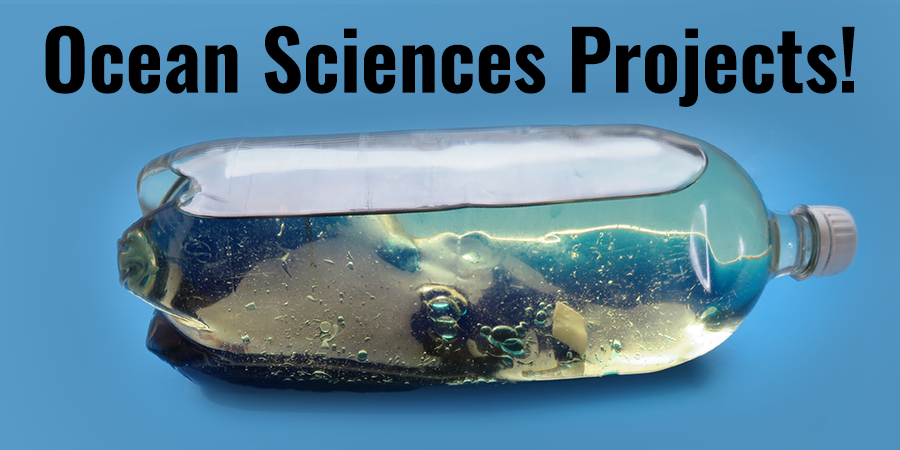
- Ocean Science Projects, Lessons, and Experiments
- Women in STEM! More than 60 Scientists and Engineers for Women's History Month
- Black History Month STEM - Learn More About These 40 Scientists for Black History Month!
- 10 Reasons to Do the Ball Run Engineering Challenge
- 40 New and Cutting-Edge Science and Engineering Projects in 2025
- 25+ Coding Projects for Beginners and Beyond - CSEdWeek Resources
- 2025 Nobel Science Connections and Projects for K-12 Students
- Chemical Reactions and Spice - STEM Projects for National Chemistry Week 2025

/-/https/img.youtube.com/vi/Bcwvwxesbmw/0.jpg)
/-/https/img.youtube.com/vi/sjHCztFSxTw/0.jpg)
/-/https/img.youtube.com/vi/b1pvMBIhYjE/0.jpg)