/-/https/www.sciencebuddies.org/cdn/Files/21464/5/sb-logo.png)
/-/https/www.sciencebuddies.org/cdn/Files/21464/5/sb-logo.png)
Personal Health Science Projects
Monitor and improve personal health with innovative science projects and experiments.
/-/https/www.sciencebuddies.org/cdn/Files/20553/5/personal-health-collection.png)
Personalized Science Projects
From monitoring biometrics and environmental data (like air quality) to designing and building customized assistive tools, students can move beyond basic human biology and health science projects with science and engineering projects that let them explore, investigate, and build personalized solutions to monitor and improve their own health.
Personal Health Projects
/-/https/www.sciencebuddies.org/cdn/Files/21619/4/personal-health-taylor-swift-challenge.png)
/-/https/www.sciencebuddies.org/cdn/Files/20531/5/personal-health-heart-monitor.png)
/-/https/www.sciencebuddies.org/cdn/Files/20956/4/personal-health-sleep-tracking.png)
/-/https/www.sciencebuddies.org/cdn/Files/20631/6/personal-health-calorimeter.png)
/-/https/www.sciencebuddies.org/cdn/Files/20538/5/personal-health-carbondioxide.png)
/-/https/www.sciencebuddies.org/cdn/Files/20539/7/personal-health-peppermint.png)
/-/https/www.sciencebuddies.org/cdn/Files/20540/7/personal-health-medicine-apps.png)
/-/https/www.sciencebuddies.org/cdn/Files/20541/7/personal-health-hydrogel-masks.png)
/-/https/www.sciencebuddies.org/cdn/Files/20534/5/personal-health-airquality.png)
/-/https/www.sciencebuddies.org/cdn/Files/20633/5/personal-health-proteinmilk.png)
/-/https/www.sciencebuddies.org/cdn/Files/20532/5/personal-health-belly-breathing.png)
/-/https/www.sciencebuddies.org/cdn/Files/20533/6/personal-health-artificialpancreas.png)
/-/https/www.sciencebuddies.org/cdn/Files/20535/5/personal-health-pomodorotimer.png)
/-/https/www.sciencebuddies.org/cdn/Files/20536/5/personal-health-activitytimer.png)
/-/https/www.sciencebuddies.org/cdn/Files/20552/5/personal-health-heartrate-exercise.png)
/-/https/www.sciencebuddies.org/cdn/Files/20537/7/personal-health-pill-dispenser.png)
/-/https/www.sciencebuddies.org/cdn/Files/20632/6/personal-health-fatinfood.png)
/-/https/www.sciencebuddies.org/cdn/Files/20955/4/personal-health-stressors.png)
/-/https/www.sciencebuddies.org/cdn/Files/21302/5/personal-health-airquality2.png)
/-/https/www.sciencebuddies.org/cdn/Files/21303/4/personal-health-mood-tracker-microbit.png)
Featured Personalized Health Science Projects
- Taylor Swift Challenge: Taylor Swift reportedly got in shape for her three-hour-long Eras Tour concerts by singing while running on a treadmill. Put this health and fitness challenge to the test!
- Design a heart monitor: design, build, and program a custom heart rate monitor that fits individual needs. Students will use the engineering design process to determine the best approach to making this device based on the intended use and design criteria. (For other wearable electronics projects, see 7 Wearable Circuits Science Projects.)
- Sleep Tracking: The Brain and Circadian Rhythm's Role in Sleep: Use a sleep tracking device and explore factors that positively or negatively influence an individual's nighttime sleep schedule.
- Use a homemade calorimeter: set up a calorimeter to measure and compare the chemical energy (Calories) in different kinds of food.
- Measure carbon dioxide after exercise: set up a simple device with a color changing reaction to see how carbon dioxide levels in exhaled air compare before and after physical exercise.
- Improve concentration: are there simple steps you can take to improve concentration and performance? Put peppermint to the test with this project. The project includes interactive code for students who want to also experiment with coding.
- Design a medicine reminder app: explore the design of a customizable medicine reminder app and then build your own using MIT App Inventor.
- DIY hydrogel face masks: make a hydrogel face mask that meets your specific criteria for moisturizing your face.
- Make a wearable air quality monitor: use sewn circuits, a TinyLily mini processor board, and Ardunio programming to design a wearable air quality sensor to monitor and alert when particle pollution in the air is dangerously high. (For a guided activity, see Make a wearable air quality sensor.)
- Protein in milk: explore different types of plant-based milks and see how much protein they have compared to each other and to cow's milk.
- : build a breathing monitor that can help train people to engage in healthy belly (diaphragmatic) breathing.
- Create a model artificial pancreas: set up a model artificial pancreas to explore what is involved in the feedback loop required to keep blood glucose within a healthy range in people with insulin-dependent diabetes.
- Improve focus with a study timer: make and program a Pomodoro study timer using an Arduino, LEDs, and an LCD screen. The study timer can be customized for different intervals of focus and rest. (For a related project to turn a stuffed animal into a light-up activity timer, see Build a Light-Up Activity Timer.)
- Heart rate and exercise: record your heart rate during different types of physical activities to investigate the relationship between exercise and heart rate.
- Make an automated pill dispenser: make an automated medication dispenser that can follow a programmed schedule to dispense pills at varying times of the day. (For a similar project, see Build an Automatic Dog (or Cat) Treat Dispenser.)
- Fats in food: use solvent extraction to determine the types and amounts of fats in foods.
- Do Stress Management Techniques Work for Different Types of Stressors?: design an experiment to see which breathing techniques, like mindfulness meditation, cyclic sighing, box breathing, and cyclic hyperventilation with retention, are effective for dealing with different types of physical and psychological stressors.
- Test and Change the Air Quality of Your Environment: use a personal air quality monitor to evaluate air quality in locations around you and experiment with ways to change or impact air quality.
- Make a Mood Tracker: use micro:bit to program a small device to track your mood throughout the day and upload the data so you can analyze it later.
- Astronaut Stress Management Training for Space Flight: can relaxation and breathing techniques like cyclic sighing be helpful when training for train for events or jobs with high physiological and cognitive stressors?
- Motor Imagery Visualization's Impact on Fine Motor Skills for Space Flight: use the small muscles in the hand to model and test how visualization of a task can improve performance.
- Can Visualization Improve Your Sports Performance?: can visualization before the big game or event make a difference in performance in sports?
Add Arduino
Some of the projects highlighted above use Arduino to combine circuits, sensors, and coding. Students ready to advance their circuit building or coding projects, can get started with Arduino by following videos in this tutorial.
The full series of more than 40 videos covers the fundamentals of working with Arduino, starting with the basic "setup" and progressing step-by-step through additional things to connect, try, and troubleshoot.
Kit! The Electronics Kit for Arduino is available for students working on electronics, coding, and physical computing projects using Arduino. (Note: See the "Materials" section for each project for a complete list of required materials.)
Personal Health Science Projects in Action
The following STEM videos demonstrate some of the projects highlighted above:
/-/https/i.ytimg.com/vi/tz_9OInLRIU/maxresdefault.jpg)
/-/https/i.ytimg.com/vi/lgMg3W0jG2o/maxresdefault.jpg)
/-/https/i.ytimg.com/vi/D0-yi5dm2qw/maxresdefault.jpg)
/-/https/i.ytimg.com/vi/WDRokF_ZW9A/maxresdefault.jpg)
/-/https/i.ytimg.com/vi/MG22NaWqkU4/maxresdefault.jpg)
/-/https/i.ytimg.com/vi/aRBPa3N70fk/maxresdefault.jpg)
/-/https/i.ytimg.com/vi/xf4Bnm8edAg/maxresdefault.jpg)
/-/https/i.ytimg.com/vi/M8e6T-Hc9wE/maxresdefault.jpg)
/-/https/i.ytimg.com/vi/00VXq03n_y0/maxresdefault.jpg)
/-/https/i.ytimg.com/vi/dsvqypHoegI/maxresdefault.jpg)
/-/https/i.ytimg.com/vi/nGo3A980PtE/maxresdefault.jpg)
Related Resources
For additional resources to explore computer science, electronics, and maker projects, see the following:
- Arduino Projects for Students
- 7 Wearable Circuits Science Projects
- 25+ Coding Projects for Beginners and Beyond
- Student AI and Machine Learning Projects
- 18 Science Lessons to Teach Circuits
- 20+ Next-Level Makerspace STEM Projects
Categories:
You Might Also Enjoy These Related Posts:
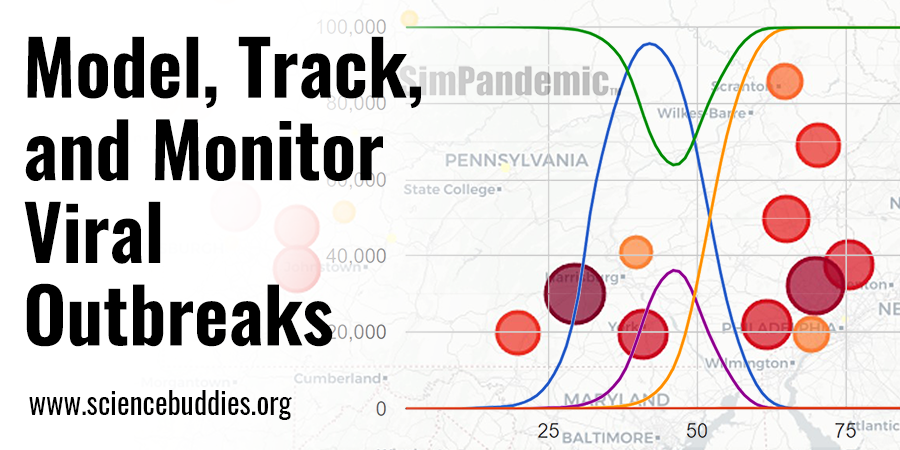
- Model and Track Virus Outbreaks - Student STEM
- Sun and Solar Science Projects - Solar Energy STEM
- 10 STEM Projects to Get Started Building Circuits on a Breadboard!
- Ocean Science Projects, Lessons, and Experiments
- Women in STEM! More than 60 Scientists and Engineers for Women's History Month
- Black History Month STEM - Learn More About These 40 Scientists for Black History Month!
- 10 Reasons to Do the Ball Run Engineering Challenge
- 40 New and Cutting-Edge Science and Engineering Projects in 2025
/-/https/img.youtube.com/vi/SAce4dOaGgk/0.jpg)
/-/https/img.youtube.com/vi/m_K0zZHPrBs/0.jpg)
/-/https/img.youtube.com/vi/LF3VpEwa4mk/0.jpg)