/-/https/www.sciencebuddies.org/cdn/Files/21464/5/sb-logo.png)
/-/https/www.sciencebuddies.org/cdn/Files/21464/5/sb-logo.png)
Aerodynamics Science Projects: Planes, Rockets, Kites, Drones & More
Explore aerodynamics with science projects related to planes, helicopters, drones, rockets, and more!
/-/https/www.sciencebuddies.org/cdn/Files/19891/4/aerodynamics-science-collection.png)
Aerodynamics Sciences Projects and Experiments
Students interested in the science of flight or the design of things like planes, rockets, and helicopters, can experiment with science projects like the ones highlighted below. These experiments cover important principles of aerodynamics, aeronautics, and physics, including the four forces that act upon an object in flight (lift, thrust, drag, and weight), Newton's third law of motion, air pressure, Bernoulli's principle, and more.
Students can investigate physics and engineering related to flight with projects focused on a variety of different flying objects and vehicles:
- Airplanes
- Kites
- Helicopters
- Drones
- Rockets
- Frisbees, Hovercraft, Parachutes, and More
- Bernoulli's Principle and Other Air Flow Science Projects
At the bottom of this resource, you will find related STEM careers, a list of key vocabulary words, educator lesson plans, and other resources.
Airplane Science Projects
1. The Importance of Drag
In the How Far Will It Fly? Build & Test Paper Planes with Different Drag project, students experiment with the design of a paper airplane to increase the drag force acting on the plane and see how drag relates to how far the plane flies. Question: What design changes increase the drag on a paper airplane? For a related activity, see Paper Airplanes: Why Flaps and Folds Matter.
2. Why Winglets?
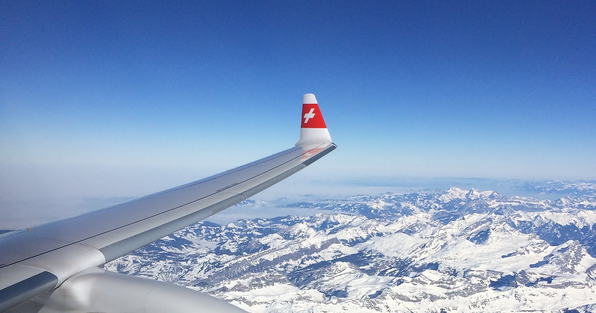
Wings generate lift by creating areas of low and high pressure above and below the wing. Where these areas meet, wing tip vortices (miniature tornadoes) are formed. In the Why Winglets? project, students experiment to see how winglets can help minimize the negative effects of wing tip air vortices. Questions: What are some of the negative effects of these vortices? What is the purpose of vertical stabilizers? For a related experiment, see the Winglets in Wind Tunnels project.
3. A Catapult Assist
In the The Science of Launching an Airplane by Catapult project, students explore how a plane takes off and use a model plane and launcher to investigate how catapult-assisted takeoff is used when a long runway isn't available (on a ship, for example). Question: Why does a plane typically need a long runway for takeoff? For a related experiment, see the Build a Paper Airplane Launcher STEM activity and the Design a Paper Airplane Launcher lesson plan for classroom exploration. Both of these resources use paper airplanes and DIY plane launchers that students build using the engineering design process.
/-/https/i.ytimg.com/vi/6fLh8eswOn0/maxresdefault.jpg)
/-/https/www.sciencebuddies.org/cdn/Files/19865/4/aerodynamics-winglets.png)
/-/https/i.ytimg.com/vi/9Fv0-501msc/maxresdefault.jpg)
Kite Science Projects
4. Kite Design
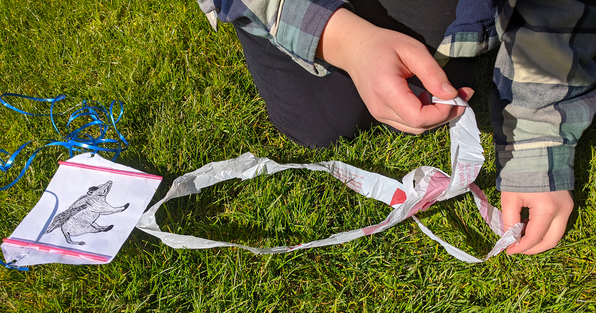
In the How Far Will It Fly? Build & Test Paper Planes with Different Drag project, students explore the forces that act upon a kite in flight. With a homemade sled kite, students run a series of experiments to see how different variables, like line length and tail length, affect a kite's performance. Question: Which forces play the biggest role in flying a kite? For another kite project students can use to experiment with kites in person or using a NASA simulation tool, see The Wright Stuff: Using Kites to Study Aerodynamics. See also the How Tails Help a Kite to Fly activity.
5. Flying Kites in Low Wind
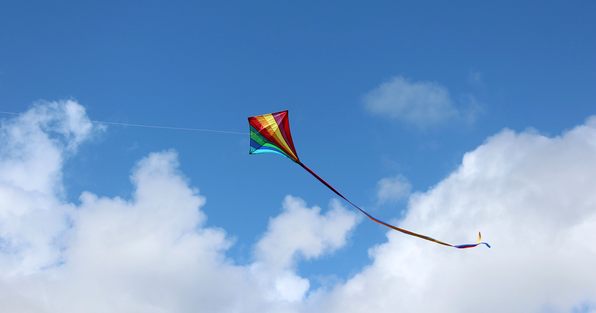
In the How Low Can It Go? Design a Kite that Flies Best in Low Winds project, students build different types of kites and experiment to see how well they fly in low wind, using a fan to generate wind and an anemometer to measure wind speed. Question: What features on a kite relate to how well it flies in low wind?
/-/https/www.sciencebuddies.org/cdn/Files/19866/4/aerodynamics-sled-kite.png)
/-/https/www.sciencebuddies.org/cdn/Files/19867/4/aerodynamics-kite.png)
Helicopter Science Projects
6. Paper Whirlybird
In the Make a "Whirlybird" from Paper project, students make a miniature paper helicopter (a whirlybird) to explore helicopter flight and investigate the relationship between the weight of the whirlybird and how fast it falls. Questions: How do the spinning rotor blades on a helicopter help it fly? What forces are involved? See also the Make a Whirlybird from Paper STEM activity.
7. How Do Helicopters Lift Off?
In the Helicopter Liftoff: How Does the Speed of the Rotor Affect the Amount of Lift? project, students experiment with a remote-controlled helicopter and use a digital tachometer to see how the speed of the rotor's rotation changes as the helicopter hovers and flies up or down. Questions: How do the spinning rotor blades help a helicopter take off? What is unique about how a helicopter takes off? What happens when the speed of the rotor's rotation is increased or decreased?
8. Helicopter Propeller Design
In the Efficient Propeller Design project, students investigate the role of propellers in generating lift and explore the relationship between the chord length of the propeller and the efficiency of the propeller. Question: What other design variables are involved in a working propeller?
/-/https/i.ytimg.com/vi/0KjnJYoIqPA/maxresdefault.jpg)
Drone Science Projects
9. How Much Can a Mini Drone Lift?
In the Build a Simple Drone and Test How Much It Can Lift project, students build a popsicle stick mini drone and experiment to see weight relates to a drone's flight and speed. Questions: How does a drone's total weight (including payload) relate to the lift required for the drone to fly? How does total weight affect the speed of the drone's flight? This project is part of a series of drone science experiments you can do with the popsicle stick mini drone. A science kit is available.
/-/https/i.ytimg.com/vi/JG9gvci1TZk/maxresdefault.jpg)
Rocket Science Projects
10. Rocket Payload
In the Rocket Science: How High Can You Send a Payload? project, students use a water bottle to build a rocket with two compartments, one for fuel and one for a payload. The rocket is then used to investigate how the maximum height of the rocket changes in relation to the payload. Question: How does Newton's third law of motion relate to how a rocket flies?

11. Rocket Stability
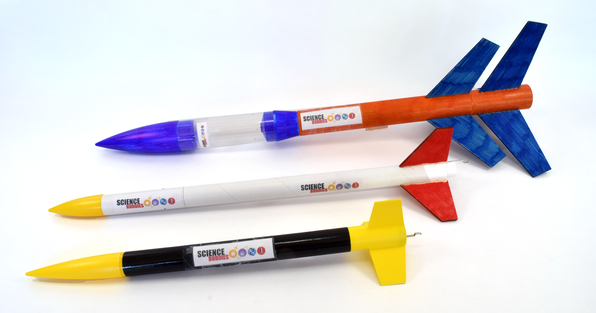
In the Model Rocket Aerodynamics: Stability project, students explore the role of fins in a rocket’s design and investigate the importance of the center of mass and the center of pressure on a rocket's stability. Questions: How can a rocket's stability be tested before it is launched? What are the basic elements of a rocket’s body?
/-/https/www.sciencebuddies.org/cdn/Files/19883/4/aerodynamics-rocketpayload.png)
/-/https/www.sciencebuddies.org/cdn/Files/19886/5/aerodynamics-rockets.png)
Frisbees, Hovercraft, and More
12. Hot Air Balloons
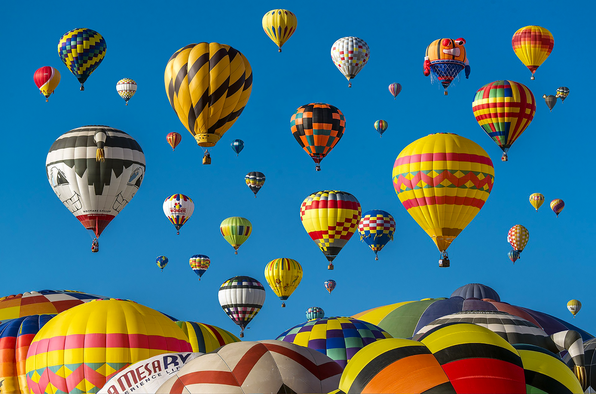
In the Make Your Own Hot Air Balloon project, students launch hot-air balloons, powered by a toaster, and see how the size of the balloon affects its flight. Question: Does size affect how long a hot-air balloon can fly?
13. Frisbee Science
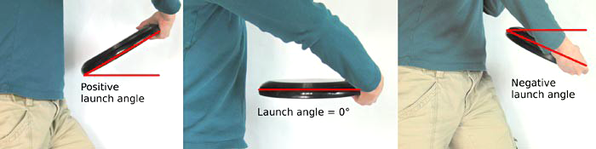
In the The 'Ultimate' Science Fair Project: Frisbee Aerodynamics project, students explore the key forces that act on a Frisbee during its flight and experiment to see how the launch angle affects the distance a Frisbee will fly. Question: Which forces act on a Frisbee in flight? For another Frisbee science project, see Why Do Flying Rings Go So Much Further Than Frisbees?. A STEM Activity is also available.
14. How Big Should a Parachute Be?
In the Parachutes: Does Size Matter? project, students experiment to see how a parachute slows down a fall by creating air resistance. Using homemade parachutes, students will test to see how the size of the parachute relates to the speed of the fall. Question: Do bigger parachutes have more drag force? The related Skydive Into Forces lesson plan is available for elementary school teachers. See also the Make a Parachute activity.
15. Hovercraft
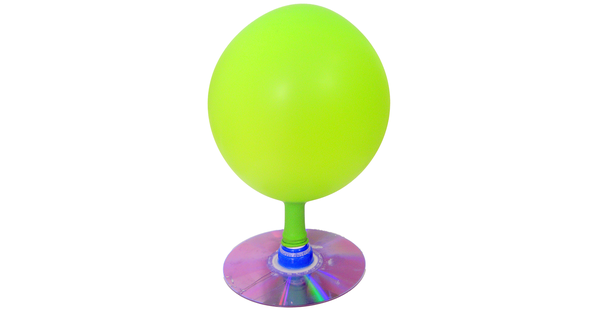
In the How Does a Hovercraft Work? project, students make mini hovercraft using a CD (or DVD) and a balloon and experiment to find out how the amount of air in the balloon relates to how long the hovercraft hovers. Questions: What creates the cushion of air that allows a hovercraft to glide? How do the air currents around a hovercraft relate to friction? For a similar STEM activity, see How Does a Hovercraft Hover?. To build a larger hovercraft, see the Riding on Air—Build a Real Hovercraft project.
16. Butterfly Flight
In the Butterfly Wings: Using Nature to Learn About Flight project, students investigate how studying butterfly flight can help in the design of small flying robots that can glide for short periods of time. Question: How is the angle of a butterfly's wing, relative to the wind, related to the lift force of the wing?

/-/https/www.sciencebuddies.org/cdn/Files/19882/4/aerodynamics-hotairballoons.png)
/-/https/www.sciencebuddies.org/cdn/Files/19881/5/aerodynamics-frisbee.png)
/-/https/i.ytimg.com/vi/6RA9x4wlnW8/maxresdefault.jpg)
/-/https/www.sciencebuddies.org/cdn/Files/19880/4/aerodynamics-hovercraft.png)
/-/https/www.sciencebuddies.org/cdn/Files/19879/4/aerodynamics-butterfly.png)
Bernoulli's Principle and Other Air Pressure and Air Flow Projects
17. Bernoulli's Principle
In the Studying Bernoulli's Principle project, students use soda cans and a hair dryer as a source of wind to explore how wind changes air pressure, which can be observed in how objects move. Question: How does the speed of the wind relate to the air pressure and movement? A related STEM activity that uses balloons and a cardboard tube is also available.
18. Is an Empty Bottle Empty?
In the How Empty Is an Empty Bottle? activity, students experiment to see if they can blow a small object into an empty bottle. They may be surprised at the results! Question: How does Bernoulli's principle help explain the problem and the solution?
19. Car Design and Airflow
In the Modifying a Car for Better Aerodynamics project, students investigate how the shape of a car relates to airflow over the car. Question: How is airflow related to fuel economy?
/-/https/i.ytimg.com/vi/l_kIbu1kOwo/maxresdefault.jpg)
/-/https/i.ytimg.com/vi/T36Th5UPb3I/sddefault.jpg)
/-/https/i.ytimg.com/vi/YTnjxnA292E/maxresdefault.jpg)
Build a Wind Tunnel
Students working on advanced aerodynamics projects may need to use a wind tunnel. The How to Build and Use a Subsonic Wind Tunnel guide details how to build a DIY subsonic wind tunnel.
Educator Lesson Plans
Paper Rockets
The following lessons for elementary and middle school teachers involve a hands-on paper rocket experiment by which students learn about about the scientific method:
- Paper Rockets to Learn the Scientific Method (grades 3-5)
- Teaching the Scientific Method with Paper Rockets (grades 6-8)
/-/https/i.ytimg.com/vi/0hThMoHB88w/maxresdefault.jpg)
For other lessons that include aerodynamics, see:
- Drones in High-Tech Farming (Grades 3-5) (grades 3-5)
- Drones in High-Tech Farming (Grades 6-8) (grades 6-8)
- Solar Sails: The Future of Space Travel
- Design a Paper Airplane Launcher
- Skydive Into Forces
Related Educator Resources
/-/https/i.ytimg.com/vi/k_1-fmQCjWo/maxresdefault.jpg)
For related educator resources, see:
- Lift and Drag on Planes, Parachutes, and Rockets
- Teach Newton's Laws of Motion
- Forces and Laws of Motion Lessons
Vocabulary
The following word bank contains words that may come up when experimenting with aerodynamics and the science of flight.
- Aerodynamic
- Aeronautics
- Air cushion
- Air cushion vehicle (ACV)
- Airflow (air flow)
- Air pressure
- Air resistance
- Airfoil
- Anemometer
- Angular momentum
- Archimedes' principle
- Bernoulli's principle (Bernoulli effect)
- Blade
- Buoyancy
- Catapult
- Center of lift
- Center of gravity
- Center of mass
- Center of pressure
- Drag
- Drone
- Fins
- Force
- Gravity
- Helicopter
- Hovercraft
- Launch angle
- Lift
- Newton's third law of motion
- Pascal (Pa)
- Payload
- Pound per square inch (psi)
- Propeller
- Quadcopter
- Reaction engine
- Rocket
- Rotational speed
- Rotor
- Stabilizer
- Surface area
- Thrust
- Turbulence
- Unmanned aerial vehicle (UAV)
- Vortices
- Weight
- Wind tunnel
- Wing tip vortices
- Winglets
Related STEM Careers
Bookmark this Resource!
/-/https/www.sciencebuddies.org/cdn/Files/19887/4/aerodynamics-science-rockets-IG.png)
/-/https/www.sciencebuddies.org/cdn/Files/19889/4/aerodynamics-science-whirlybird-helicopter-IG.png)
/-/https/www.sciencebuddies.org/cdn/Files/19890/4/aerodynamics-science-launcher-IG.png)
/-/https/www.sciencebuddies.org/cdn/Files/19888/4/aerodynamics-science-payload-IG.png)
Thematic Collections
Collections like this help educators find themed activities in a specific subject area or discover activities and lessons that meet a curriculum need. We hope these collections make it convenient for teachers to browse related lessons and activities. For other collections, see the Teaching Science Units and Thematic Collections lists. We encourage you to browse the complete STEM Activities for Kids and Lesson Plans areas, too. Filters are available to help you narrow your search.
Understanding Science Buddies' STEM Resources
Lesson Plans contain materials to support educators leading hands-on STEM learning with students. Lesson Plans offer NGSS alignment, contain background materials to boost teacher confidence, even in areas that may be new to them, and include supplemental resources like worksheets, videos, discussion questions, and assessment materials.
Video Lessons include NGSS alignment and offer a plug-and-play option for teaching a STEM lesson. Each Video Lesson asks a science question, teaches students about the relevant science, and guides students in a hands-on experiment that will help them answer the question. Video Lessons are NGSS-aligned and bring core science concepts to life with storytelling, animation, and photos using a self-paced engage, explore, and reflect format.
Activities are simplified explorations that can be used in the classroom or in informal learning environments.
Projects are written to support students doing independent science projects or science fair projects. Projects can be adapted for classroom use.
Categories:
You Might Also Enjoy These Related Posts:
- Teach About Biodiversity with Free STEM Lessons & Activities - Biodiversity Month
- Teach Newton's Laws of Motion - STEM Resources for Teachers
- Sun and Solar Science Projects - Solar Energy STEM
- Beaches and Sand Science Projects
- July 4th STEM! Summer Science Picks for Independence Day!
- Ocean Science Projects, Lessons, and Experiments
- Boredom Busters: STEM Activities for End-of-Year and Summer Fun
- 14 Paper STEM Activities! - Science and Engineering with Simple Materials
/-/https/img.youtube.com/vi/s13ESfc4KYg/0.jpg)
/-/https/img.youtube.com/vi/2G4pTsKW_pU/0.jpg)
/-/https/img.youtube.com/vi/IFJGr29oWso/0.jpg)