/-/https/www.sciencebuddies.org/Files/21464/5/sb-logo.png)
/-/https/www.sciencebuddies.org/Files/21464/5/sb-logo.png)
Star Wars STEM for May the 4th Be With You
May the 4th be with you! Tie simple science explorations to Star Wars for Star Wars Day. Connect favorite characters, epic movie scenes, Star Wars lore, and more with hands-on STEM learning in the classroom or for family science with kids at home.
/-/https/www.sciencebuddies.org/Files/17280/9/2021-starwars-stem-drone-light-saber.png)
May the 4th Be with You (AKA Star Wars Day)
May 4th is a day of epic proportions for Star Wars fans. Echoing the classic movie line, the day is celebrated as May the 4th Be with You. (You know, the Force.) It's also known as Star Wars Day.
In the name of intergalactic, pop culture fun, we have a list of easy STEM connections you can make to turn everyday science learning into Star Wars-infused STEM exploration.
40+ Science Projects and STEM Activities with a Star Wars Spin
1. DIY Mini LED Lightsaber
Make an LED Lightsaber with a Straw: Set the stage for Star Wars STEM by making mini lightsabers. You'll need a large straw, a 10mm LED, a CR-1220 battery, and some electrical tape. When finished, just press the straw handle to activate and let the Force shine through.
2. Ultrasonic Levitation
Build an Ultrasonic Levitator: Use sound waves to make small pieces of foam float in midair, echoing the Force-like ability to lift and move objects without direct contact. How can invisible waves create enough pressure to counter gravity? Experiment with transducers, ultrasonic standing waves, positioning, and frequency to see what it takes to hold objects steady in the air.
3. Make Walking AT-ATs
Build an Arduino Walking Robot: All Terrain Armored Transport, more commonly known as AT-ATs, were huge, lumbering, tank-like quadruped vehicles that were part of the Galactic Empire's ground force. In The Empire Strikes Back, AT-ATs were famously used in the Battle of Hoth. With the Build an Arduino Walking Robot project, students can experiment with building their own quadruped robot. What does it take to make these four-legged robots smooth walkers? (For an introductory project with a two-legged robot and a single motor, see Build a Simple Walking Robot.)
4. Starfighter Launchers
Build a Paper Airplane Launcher: TIE fighters, X-wing, A-Wing, or Y-Wing. No matter what type of starfighter you like most, this airplane launcher activity is an easy STEM tie-in. Kids will need airplanes, too, and finding the best design for paper airplanes is a great way to explore aerodynamics and forces like drag. See the Paper Airplane Folds activity to turn airplane folding into a STEM adventure. Combine these activities with craft materials to customize the planes and launchers for Star Wars-inspired, warp-speed STEM fun.
(NGSS-aligned Lesson Plans are available for educators: See Paper Airplane Launcher and Paper Airplanes)
5. Lightsaber Greetings
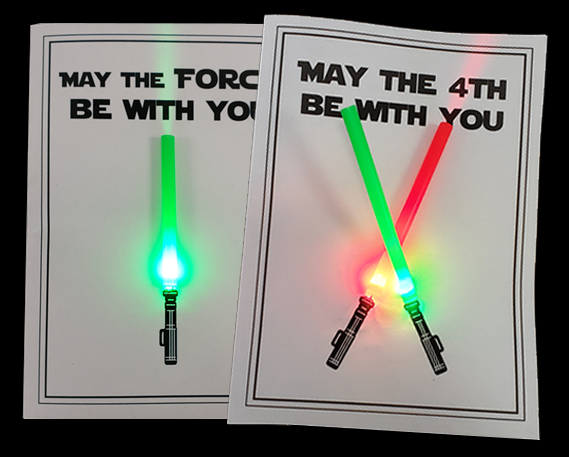
Make a Paper Circuit: With copper tape, LEDs, and a coin cell battery, kids can learn about circuits while making light-up lightsaber cards or light-up art. What color LEDs will they use?
6. Rise of the Drones
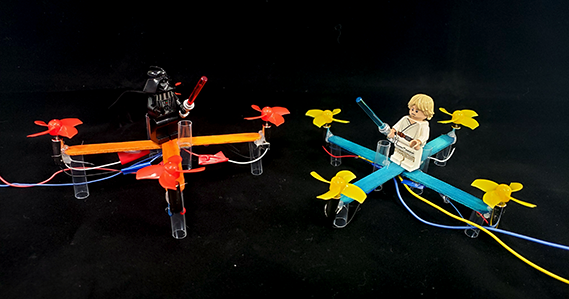
Popsicle Stick Drones: Assembling a starfleet worthy of the Galactic Empire or the Rebel Alliance at home can be a lot of fun, and mini popsicle stick drones are a great way to give your minifigures a platform on which to rise or battle. (Note: start with the basic mini drone and then continue with the progressive series to explore altitude control, steering, and more.)
7. Droid Factory Robotic Arm
Build a Robotic Arm: Robotic arms, often used in manufacturing, are designed to perform specific tasks. You might think of the droid factory on Geonosis as you build a robotic arm that uses servo motors and has "three degrees of freedom."
8. Code an AI Game Player
Can You Create a Strategic Connect 4 AI Opponent?: "Let the Wookie win." Remember when Chewbacca and R2-D2 played Dejarik, or holochess? Explore the Minimax algorithm with alpha-beta pruning to code an AI player for a Connect 4 game or for tic-tac-toe.
9. Stuck in a Wampa Cave (or Not!)
Colorful Patterns in Melting Ice: Remember when Luke was frozen to the ceiling upside down in a wampa cave on the ice planet Hoth? Explore the structure of ice, and ice melting, in this colorful activity.
10. Build Junk Droids
Junkbots: Robots from Recycled Materials: Lots of robots in Star Wars are "junk droids," robots made from salvaged and assorted parts. With a few simple electronic parts, kids can design and build their own droid-inspired junkbots or vibrobots using materials from the recycling or craft supplies bin.
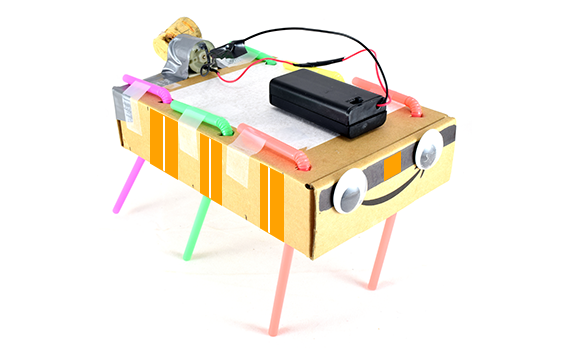
(Lesson plans for educators: Building Junkbots—Robots from Recycled Materials and Vibrobots— Tiny Robots from Scratch. For other lessons and activities to explore robotics and robotics engineering with students, see the 25+ Robotics Projects, Lessons, and Activities collection.)
11. Landspeeders
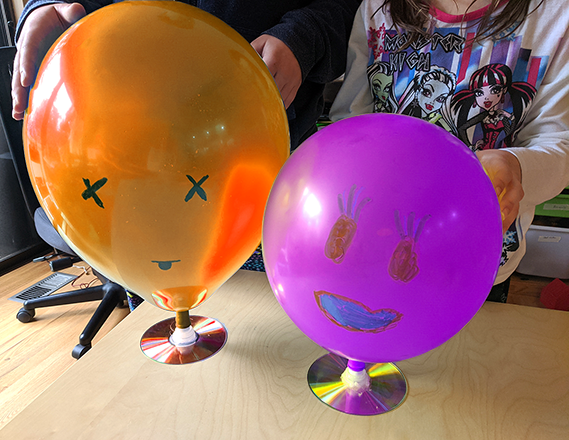
How Does a Hovercraft Hover?: Landspeeders and hovercraft appear in many places in Star Wars. In this activity, kids make a simple hover-inspired vehicle using a balloon and CD. These air-powered vehicles are great for backyard fun.
12. Robots of All Shapes and Sizes
Human-Robot Interaction: Do Looks Matter?: What difference does how a robot looks make in how humans interact with it? Robots in Star Wars tend to be metal (think C-3PO and R2-D2) even if they have humanoid characteristics. What characteristics of a robot determine how humans respond to it? Students investigate in this project. For a related project, turn a stuffed animal into a robot companion or an activity timer.
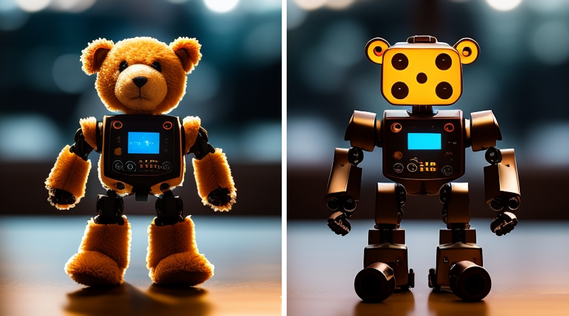
13. Soft Robotic Skin
Make Soft Robotic Skin: Create flexible, sensor-enabled "skin" that can detect touch, similar to how droids or advanced prosthetics in Star Wars respond to their environment. How might this kind of technology help robots better interact with people or handle delicate objects? Connect your artificial skin to a microcontroller and explore how input can trigger different outputs. To extend this project, students can explore embedding LEDs directly in the silicone rubber of the robotic skin.
14. Magnetic Security Door
Build a Magnetic Pet Door: Automated doors in Star Wars rely on sensors and control systems to decide when to open. From secure bases to restricted areas, access control is a constant theme. In this project, students design a magnetic system that opens only under specific conditions (or for a specific pet), similar to how automated doors might respond to authorized entry.
15. Underwater Vehicle
Build a Remotely Operated Vehicle (ROV) for Underwater Exploration: In Episode I, Qui-Gon Jinn, Obi-Wan Kenobi, and Jar Jar Binks are chased through Naboo in a Gungan Bongo submarine. The underwater ROV is remote-controlled, but this can make for an interesting electronics project tie-in. To explore submarine science with a low-tech project, see Bottled-up Buoyancy.
16. Domes on Planet Tatooine
Build a Gumdrop Geodesic Dome: The desert planet of Tatooine where Luke Skywalker grows up is spotted with dome-shaped structures. When this family built domes at home, they gave the activity a geometry focus. This family built an impressively large dome from straws.
17. Slime Worthy of Jabba the Hutt
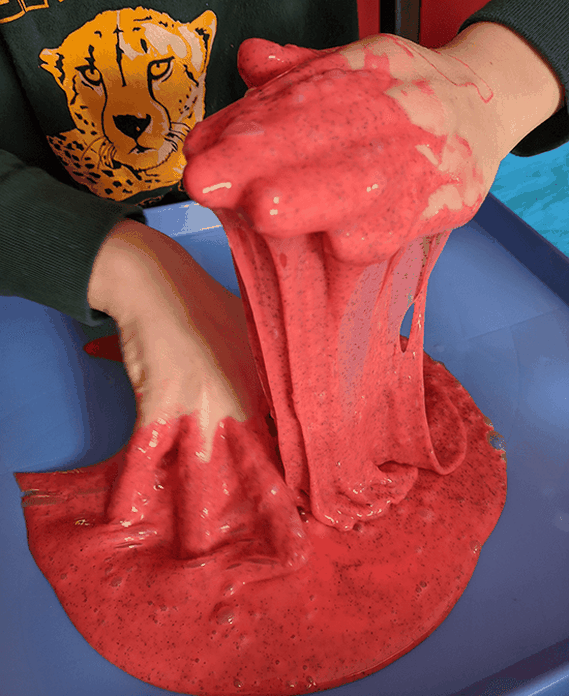
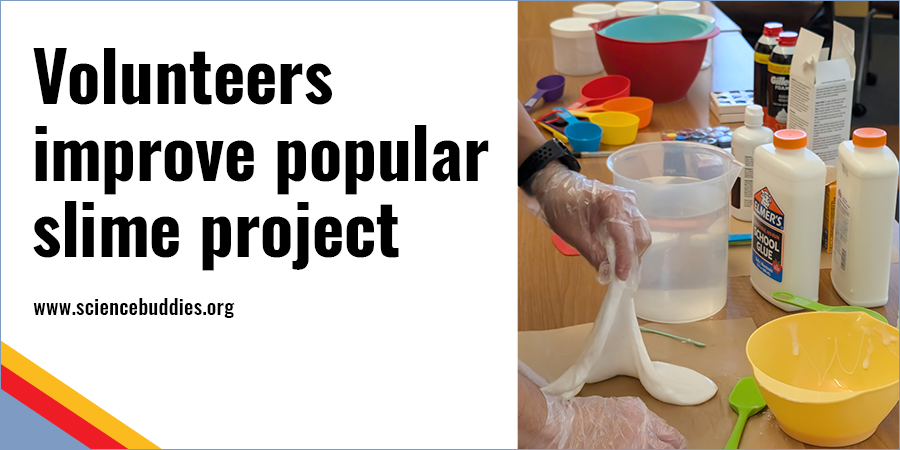
How to Make Slime: Jabba the Hutt brings icky slime to mind. Slime is simple to make, but it's a great chance for kids to experiment and develop their own secret formula to mix up slime with specific characteristics. What will their Jabba the Hutt-inspired slime be like? When this family experimented with slime at home, they made magnetic and "fluffy" slime, too. (Educators: NGSS-aligned lesson plan available.)
18. Balance the Forces
Circus-Trick Science: How to Balance Anything and Balance the Forces Within a Mobile: Bringing balance to the Force is a big part of the Star Wars storyline. These activities are about using physics to make things balance (literally). You could also use light and dark objects on each side of your balancing activities to see if you can use STEM to bring things into perfect, balanced harmony. This kid made a great mobile (as tall as the door!) featuring mythical and fantastical creatures. When kids make mobiles, "Learning about physics they will be." (Hint: Say it like Yoda.)
19. Stuck in the Mucksand
Oobleck: A Recipe for a Mesmerizing Mixture: There are numerous quicksand (or mucksand) pits in the Star Wars saga. Exploring the non-Newtonian characteristics of Oobleck is a great opportunity for tactile fun with colloids.
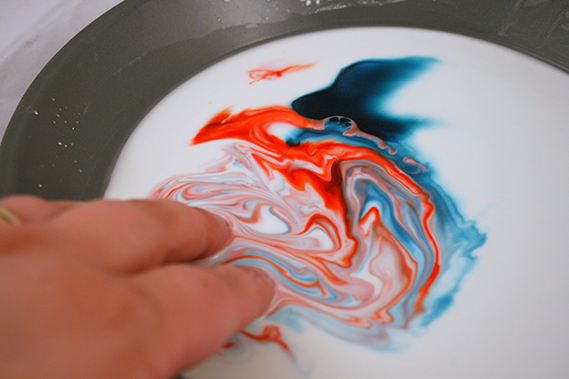
Fingers in a bowl with oobleck ingredients and swirling orange and blue coloring
20. Moisture Farms
How to Harvest Water from Fog: Moisture farms on Tatooine use "vaporators" to harvest moisture from the air. Kids can explore similar concepts with a homemade fog catcher.
21. Droid Hand
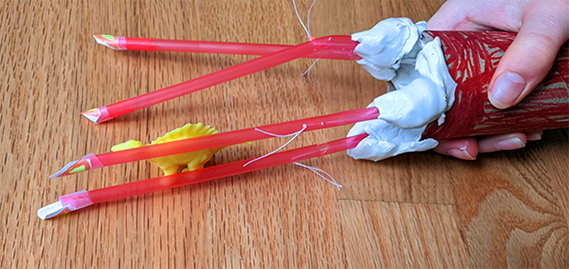
Build a Robot Hand: Luke ends up with a cybernetic hand, but fixing robots and droids is also a recurring theme in Star Wars. In this activity, experiment with making and using a simple robot hand from recycled materials and thread. Can you make a robot hand like this student did that can pick up small objects?
22. Wearable Glove
Build a Haptic Glove with Arduino: Design a wearable glove with vibration feedback, similar to the advanced prosthetics used by characters like Luke Skywalker after his hand injury. How can sensors and motors work together to simulate a sense of touch? Experiment with different inputs to control how and when the glove responds.
23. Garbage Pit
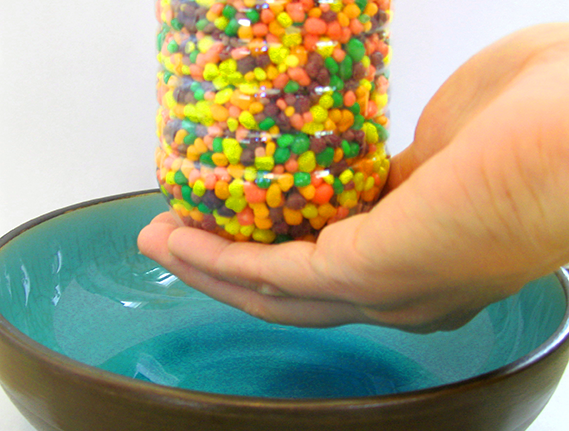
Candy Waterfalls: Can Candy Flow Like Water?: Garbage pits and compactors involve piles and piles of trash and recycling that are sometimes sorted along the way. In this activity, kids explore what circumstances make it possible for a material to flow like water. For a related engineering design challenge on sorting materials, see the Marble Machine project. For an engineering lesson plan about using magnets to create a sorting machine, see Build a Recycling-Sorting Machine.
24. Voice-Controlled Appliances
Build a Voice-Controlled Lamp: In a world populated by droids and bots with artificial intelligence, voice recognition is important. Students can get started exploring speech recognition technology by using Arduino to program a lamp for voice-activated control.
25. Search for Exoplanets
Using Kepler Space Telescope Data to Identify an Exoplanet: The planets in Star Wars are not real planets, but they do build upon the idea that there may be other habitable worlds beyond our own solar system. With projects like this one, students can use Kepler's data to identify and investigate the characteristics of stars with exoplanets. (Related reading: Meet 8 'Star Wars' Planets in Our Own Galaxy.)
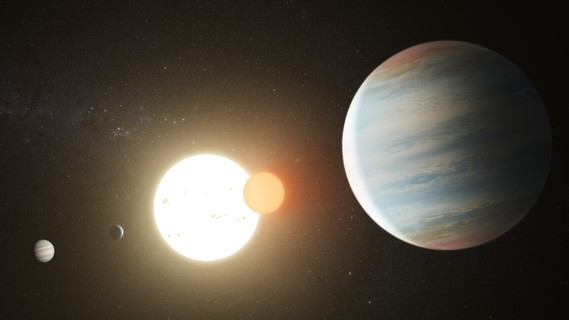 Image: Artist's rendition of the Kepler-47 circumbinary planet system with its three planets. Source: Wikipedia
26. A Wind Fleet
Build a Rubber Band-Powered Car and Build a Wind-Powered Car: There are many kinds of vehicles in Star Wars. Designing vehicles for different terrain and using various means of alternative or renewable power is good practice for thinking about engineering and vehicle design to meet the needs of specific locations.
27. Impact Craters
Creating Craters: The massive crater on Jakku wasn't formed naturally, but with this activity, kids can learn how impact craters are created when meteorites crash into a planet or moon and experiment with making big and small craters. This activity can be messy, but it's a great opportunity for a cool, slow-motion video.
28. Language and Meaning
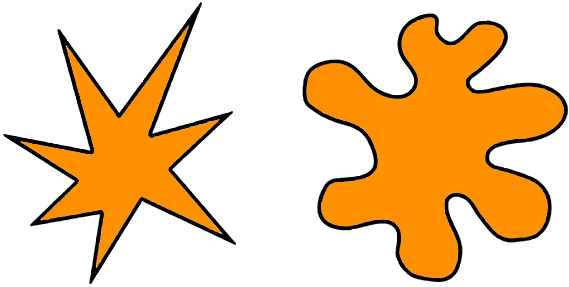
The Bouba-Kiki Effect: There are many races and languages in Star Wars. This activity is a simple way to explore how people make associations between sounds and shapes — and to think about communication.
29. Interspecies Communication Device
Make a Communication Aid To Help People Show Their Feelings: For another exploration of interspecies communication, use micro:bit to build a communication device that can help convey thought or emotion with the press of a button.
30. Bubble Tea
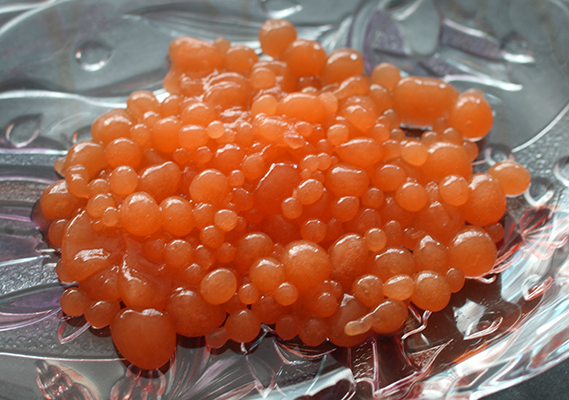
Gelatin Pearls and Make Boba for Bubble Tea: We aren't sure, but you might be able to order boba tea at the Mos Eisley Cantina on the planet Tatooine, even if your name isn't Boba Fett. Both of these activities help you make a version of this popular drink at home.
31. Make Biofabrics
Make Sustainable Fabrics from Seaweed: There are many types of natural fabrics in Star Wars. Exploring the idea of robes and clothing made from biofabrics or plants is a natural fit. With projects like Make Sustainable Fabrics from Seaweed, Grow Vegan Kombucha Leather, and LivingLoom: Clothing With Live Plants, students can engage with cutting-edge exploration in biofabrics, with sustainability and green chemistry in mind.
32. Ion Thrusters for Space Travel
Ion Thruster: Build an Ion Wind Rotor: Ion engines (or ion drives) are used by starships to travel at sublight speeds. If you have a Van de Graaff generator available, students can build a model of an ion thruster using either a piece of aluminum foil mounted on a nail or copper pipe and nails that act as electrodes.
33. Practice Docking
Make a Spacecraft Motion Simulator!: Good docking and landing skills might be as important as in-space maneuvers. In the Make a Spacecraft Motion Simulator! project, students use PVC pipe to build a cable-driven motion simulator to explore translational and rotational degrees of freedom. (For an advanced project that uses Arduino, see Motorized Arduino Cable-Driven Spacecraft Motion Simulator.)
34. Model Mass Driver to Launch Projectiles
Build a Model Mass Driver for Launching Objects into Space: How are massive space stations built? A mass driver could be part of the solution to launching payloads of materials into space in the future. A mass driver (also called an electromagnetic catapult, space gun, or coil gun) is a linear motor that uses a series of electromagnets to accelerate an object to high speeds. This science project guides students in building a model and exploring how it works.
35. Visualize the Flight
Motor Imagery Visualization's Impact on Fine Motor Skills for Space Flight: Flying a TIE fighter, X-wing, or other spacecraft is intense, especially when the fate of the Resistance is at risk. Remember Luke's daring and twisty flight during the Battle of Yavin in Star Wars: Episode IV when he destroyed the Death Star? Flying like that takes practice and might benefit from pre-flight visualization. Students explore visualization as a tool for preparing to do a complex task. Can visualization improve the accuracy of fine motor skill performance? (For a related project that focuses on gross motor skills, see the Can Visualization Improve Your Sports Performance? project.)
36. Crowded Space
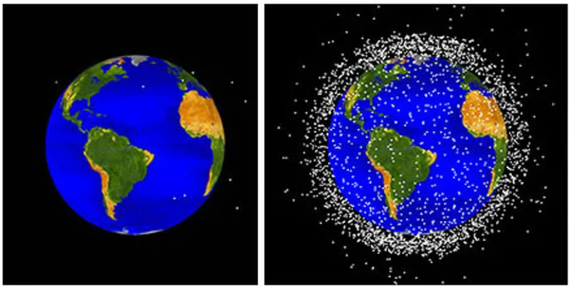
Simulating the Kessler Syndrome: Model how cascading debris in orbit can make space travel dangerous, much like navigating crowded or hazardous regions of space in the Star Wars galaxy. What happens as collisions increase and more debris is created? Is disaster unavoidable? Explore how quickly orbital environments can become unsafe and what strategies might reduce the risk.
37. Protect Against Collisions
How Do You Protect Spacecraft from Space Debris?: There are millions of objects hurtling through space in Star Wars, some natural and various types of space junk from other collisions, damaged spacecraft, battles, and missions. Spacecraft use various shields for protection against accidental or intentional damage. In the How Do You Protect Spacecraft from Space Debris? project, students make a model to see how a Whipple shield works.
38. Clear the Mind to Tap Into the Force
Astronaut Stress Management Training for Space Flight: Mastering the Force takes intense practice and concentration. Jedi masters have to clear their minds to tap into the energy that connects all life. They also often find themselves in incredibly stressful situations. Students experiment to see how cyclic breathing techniques can improve the type of fight-or-flight response induced by stressful situations.
39. Map the Galaxy
Can AI Classify Stars?: What planets are nearby? Where are different species from? Where are civilizations hiding? Understanding the galaxy (or galaxies) requires also understanding the starfield. Most planets orbit some form of star. In the Can AI Classify Stars? project, students use a boosted tree model to see if AI can classify celestial objects based on spectral characteristics.
40. Remote Control Navigation
Mars Rover Obstacle Course: Han Solo beat the odds when navigating the Millennium Falcon through the Hoth asteroid field. He was at the controls, but you can simulate the challenge by giving someone else directions and seeing if you can guide them through a tricky maze.
41. Programming Droids
Robot, Make Me a Sandwich!: Which robots are your favorites in Star Wars? Most of the droids operate based on their programming. In this no-tech activity, students practice thinking through and giving step-by-step directions for performing a task. (See the Artificial Intelligence area for additional projects, lessons, and activities to explore AI and machine learning.)
42. Survival on a Tidally Locked Planet
How Can Life Survive on a Planet with Extreme Tidal Locking?: Explore how life might adapt to extreme heat and cold, like conditions found on planets with harsh, unbalanced environments. What kinds of organisms could survive constant daylight or perpetual darkness? Test how microbes respond to extreme conditions and consider what this might mean for life beyond Earth. Students curious about the origin of life can also test how microorganisms handle extreme conditions, similar to how life might arise or persist on distant planets.
43. Build a Droid that Balances Deliveries
A Robot Waiter That Can Carry Drinks: Build a self-leveling platform that keeps items steady, similar to how droids might serve drinks in a busy intergalactic cantina without spilling. How do sensors detect changes in motion, and how can a system respond quickly to keep balance? Experiment with adjusting the design to improve stability.
/-/https/i.ytimg.com/vi/cRAwbHwYjdY/maxresdefault.jpg)
/-/https/i.ytimg.com/vi/WcMT-MGv2cw/maxresdefault.jpg)
/-/https/i.ytimg.com/vi/tCtgt-VoPUk/maxresdefault.jpg)
/-/https/i.ytimg.com/vi/9Fv0-501msc/maxresdefault.jpg)
/-/https/i.ytimg.com/vi/6fLh8eswOn0/maxresdefault.jpg)
/-/https/www.sciencebuddies.org/Files/17299/4/starwars-papercircuits-light-saber-forcebewithyou.png)
/-/https/www.sciencebuddies.org/Files/17301/5/starwars-drones-luke-and-vader.png)
/-/https/i.ytimg.com/vi/Q-BluEJBHLw/maxresdefault.jpg)
/-/https/i.ytimg.com/vi/2MOFAHGUGps/maxresdefault.jpg)
/-/https/i.ytimg.com/vi/5y2a0Zhgq0U/maxresdefault.jpg)
/-/https/i.ytimg.com/vi/5FkKL7k6QwA/maxresdefault.jpg)
/-/https/www.sciencebuddies.org/Files/17274/4/starwars-junkbot.-stripes.png)
/-/https/www.sciencebuddies.org/Files/17273/4/starwars-hovercraft.png)
/-/https/www.sciencebuddies.org/Files/20347/5/starwars-robotlooks.png)
/-/https/i.ytimg.com/vi/M8e6T-Hc9wE/maxresdefault.jpg)
/-/https/i.ytimg.com/vi/wY5hJMfVA7o/maxresdefault.jpg)
/-/https/i.ytimg.com/vi/Djzx54j-2ZU/maxresdefault.jpg)
/-/https/i.ytimg.com/vi/wRco4tGXrzw/maxresdefault.jpg)
/-/https/i.ytimg.com/vi/sjHCztFSxTw/maxresdefault.jpg)
/-/https/www.sciencebuddies.org/Files/14790/5/doing-science-home-activity-day-25-slime-stretchy.png)
/-/https/i.ytimg.com/vi/bcfzUOdM8lg/hqdefault.jpg)
/-/https/i.ytimg.com/vi/Wg8VoLTMz1M/maxresdefault.jpg)
/-/https/i.ytimg.com/vi/SD6LToUppRk/maxresdefault.jpg)
/-/https/www.sciencebuddies.org/Files/17275/4/starwars-oobleck.png)
/-/https/i.ytimg.com/vi/mabHwDuuLfU/maxresdefault.jpg)
/-/https/www.sciencebuddies.org/Files/17276/4/starwars-robothand.png)
/-/https/i.ytimg.com/vi/ZAsGHhWxwpM/maxresdefault.jpg)
/-/https/www.sciencebuddies.org/Files/17277/4/starwars-candywaterfall.png)
/-/https/i.ytimg.com/vi/Th6GQiSHfKk/maxresdefault.jpg)
/-/https/i.ytimg.com/vi/C0IAQzxgQa8/maxresdefault.jpg)
/-/https/www.sciencebuddies.org/Files/20343/6/Kepler-47-System-Artist-Impression.jpeg)
/-/https/i.ytimg.com/vi/lyvWd-TqqLI/maxresdefault.jpg)
/-/https/i.ytimg.com/vi/KuA_tjYqODc/maxresdefault.jpg)
/-/https/www.sciencebuddies.org/Files/17279/4/starwars-bouba-kiki.png)
/-/https/i.ytimg.com/vi/yEciiScv3Gw/maxresdefault.jpg)
/-/https/www.sciencebuddies.org/Files/17278/4/starwars-poppingboba.png)
/-/https/i.ytimg.com/vi/P8RtSQ9az2U/maxresdefault.jpg)
/-/https/i.ytimg.com/vi/SYJP36RJKPA/maxresdefault.jpg)
/-/https/i.ytimg.com/vi/XNB3Ch-RIIU/maxresdefault.jpg)
/-/https/i.ytimg.com/vi/_bKn2_AAMnU/maxresdefault.jpg)
/-/https/i.ytimg.com/vi/GFJSwrSvlN4/maxresdefault.jpg)
/-/https/i.ytimg.com/vi/JKCYcYp3ebQ/maxresdefault.jpg)
/-/https/www.sciencebuddies.org/Files/21278/7/blobid1750678532998.png)
/-/https/i.ytimg.com/vi/shrrwhTZ-kA/maxresdefault.jpg)
/-/https/i.ytimg.com/vi/hcPOTrnRzFU/sddefault.jpg)
/-/https/i.ytimg.com/vi/fS6_nfThADc/maxresdefault.jpg)
/-/https/i.ytimg.com/vi/tTPIdqicIC0/maxresdefault.jpg)
/-/https/i.ytimg.com/vi/xDuu6knUm3w/maxresdefault.jpg)
Making Science Fun
There are all kinds of holidays celebrated throughout the year, including pop culture-inspired days like Star Wars Day and Mario Day. With a little bit of planning and creative thinking, special days on the calendar can often be connected to science inquiry for unexpected classroom or family fun.
Bookmark the STEM Calendar to make connections in science class all year long.
See also:
- Arduino Projects for Students
- Student AI and Machine Learning Projects
- 7 Wearable Circuits Science Projects
- DIY Popsicle Stick Drone STEM
- Paper Circuits Science Projects
/-/https/www.sciencebuddies.org/Files/17302/6/starwars-drone-lightsaber-black.png)
Categories:
You Might Also Enjoy These Related Posts:
- Teach Chemical Reactions - 20+ Chemistry Lessons and Activities
- Teach About Biodiversity with Free STEM Lessons & Activities - Biodiversity Month
- Teach Newton's Laws of Motion - STEM Resources for Teachers
- Sun and Solar Science Projects - Solar Energy STEM
- Beaches and Sand Science Projects
- July 4th STEM! Summer Science Picks for Independence Day!
- Ocean Science Projects, Lessons, and Experiments
- Boredom Busters: STEM Activities for End-of-Year and Summer Fun
/-/https/img.youtube.com/vi/n--zawliqvA/0.jpg)
/-/https/img.youtube.com/vi/YTnjxnA292E/0.jpg)
/-/https/img.youtube.com/vi/tz_9OInLRIU/0.jpg)
